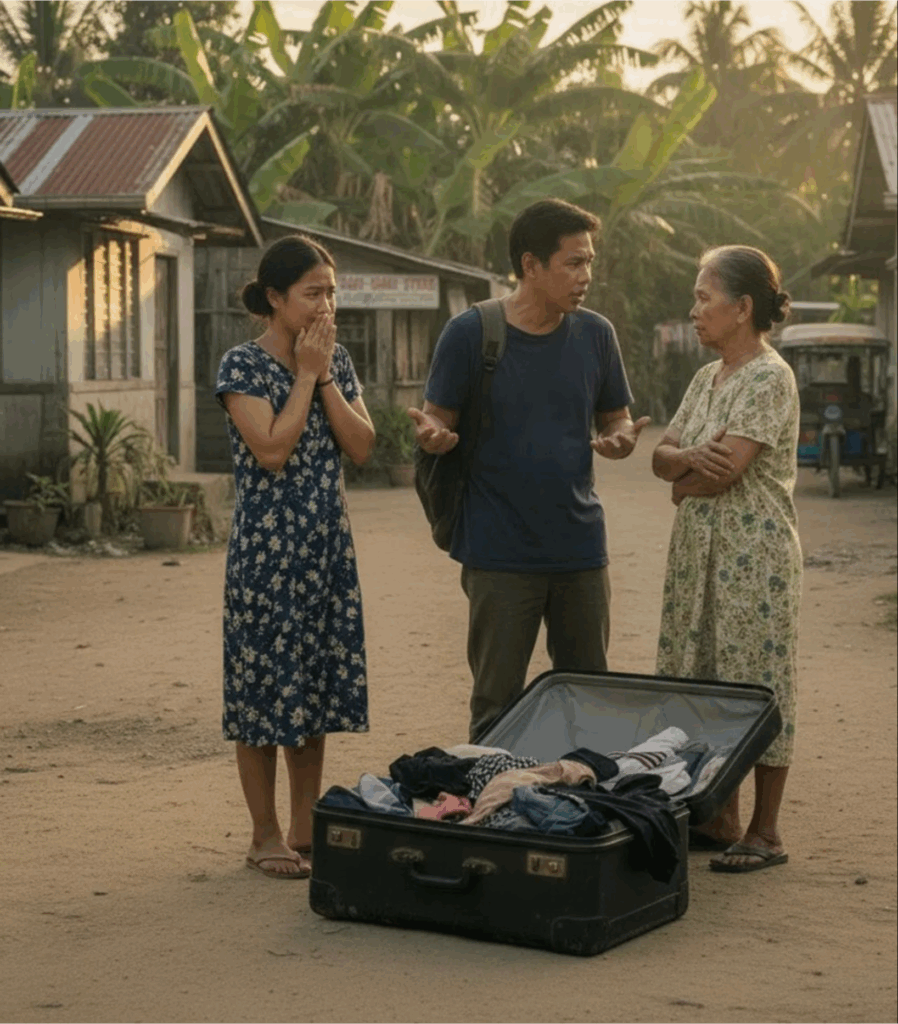
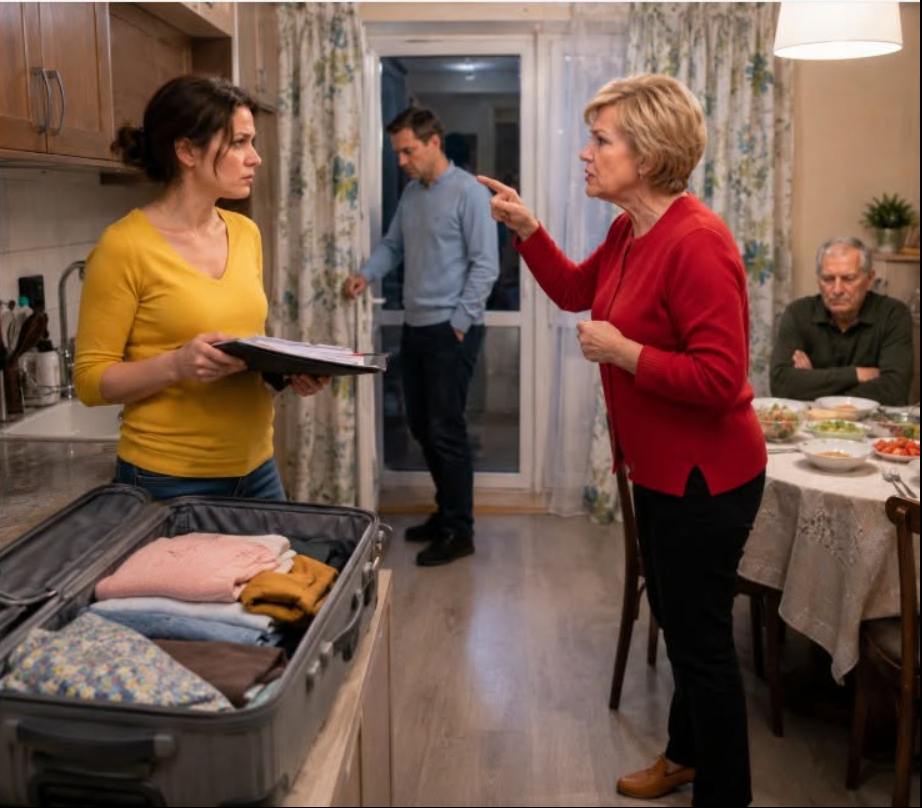
“We don’t speak to our elders like that in this family.”
Raisa Semyonovna’s voice was calm, but it cut through the kitchen like a knife.
Nadia stood at the sink, washing the last of the dinner dishes. The hot water stung her fingers. She had been on her feet all day—working, attending a doctor’s appointment, grocery shopping, and helping prepare lunch because her mother-in-law believed that “a proper wife never comes to a family gathering empty-handed.”
Slowly, Nadia turned off the faucet.
“What exactly did I say wrong?” she asked quietly.
At the table, Anton stared at his phone. His father studied the remains of his dinner with unusual concentration.
“Talking back,” Raisa replied. “Especially to people who are older and know more about life.”
Nadia took a deep breath.
They had been married for only eight months, but it felt much longer.
Eight months of criticism.
Eight months of judgment.
Eight months of feeling like a guest in her own marriage.
And there was one thing Raisa never let her forget:
Nadia had grown up in an orphanage.
“I only asked a question,” Nadia said.
“Of course you did,” Raisa replied with a thin smile. “Girls like you always have questions.”
The words landed exactly where they were meant to.
Girls like you.
Not one of us.
No family.
No roots.
No place here.
Anton finally looked up.
“Nadia, don’t make a big deal out of this.”
She stared at him in disbelief.
“I’m making a big deal out of it?”
“Mom didn’t mean anything by it.”
The familiar excuse.
Mom didn’t mean it.
That was the answer every time.
When his mother criticized Nadia’s clothes.
When she questioned how much money she earned.
When she suggested that children raised in orphanages didn’t understand what real families were.
When she walked into their bedroom without knocking.
Mom didn’t mean it.
Raisa pushed back her chair and stood.
“Let me be honest,” she said. “Don’t think a pregnancy can tie my son to you forever.”
The kitchen fell silent.
Anton’s father froze.
Anton lowered his eyes.
Nadia instinctively placed a hand on her stomach.
“This is your grandchild,” she said softly.
Raisa shrugged.
“That remains to be proven.”
For several seconds nobody spoke.
Then Anton’s father cleared his throat.
“Raisa, enough.”
“You stay out of this,” she snapped. “You’ve been silent your whole life. Don’t start now.”
Anton stood.
For one brief moment, hope flickered inside Nadia.
Maybe this time.
Maybe he would finally say something.
Maybe he would tell his mother to stop.
Maybe he would choose his wife.
Instead, he sighed.
“Everyone’s overreacting.”
Something broke inside Nadia.
Not loudly.
Not dramatically.
Just permanently.
She nodded.
Then she walked into the bedroom without another word.
The gray suitcase sat on top of the closet.
It had been there for weeks.
Ever since the day Raisa casually remarked that women from orphanages should learn gratitude before having children.
Back then, Nadia had still believed Anton would change.
That he would stand up for her.
That he would notice how much she was hurting.
He never did.
Now there was nothing left to wait for.
As she began folding clothes into the suitcase, Anton appeared in the doorway.
“What are you doing?”
“Leaving.”
“Come on, don’t be ridiculous.”
“I’m serious.”
“Where are you going?”
“To a place where I’m not insulted at every family dinner.”
Anton rubbed the back of his neck.
“You know how Mom is.”
Nadia looked directly at him.
“And why exactly should I accept that?”
He had no answer.
Because silence was easier.
It had always been easier.
That night she left.
No screaming.
No crying.
No slammed doors.
She simply picked up her suitcase and walked away.
The rented room she found was tiny.
A bed.
A wardrobe.
A small desk by the window.
Nothing more.
Yet when she closed the door behind her, she felt something she hadn’t felt in months.
She could breathe.
The landlady, Tamara Ilyinichna, was a sharp-eyed elderly woman who spoke bluntly.
After showing Nadia the room, she pointed toward the kettle.
“One rule.”
“What is it?”
“If you need to cry, cry into your tea, not your pillow. Pillows make your face swell.”
For the first time that evening, Nadia smiled.
The months that followed were difficult.
She worked.
She saved every penny.
She prepared for motherhood.
And when her son Matvey was born during the final weeks of winter, she discovered a strength she never knew she possessed.
The little boy was tiny, serious, and stubborn.
But from the moment his fingers wrapped around hers, she understood one thing:
She was no longer living only for herself.
There were nights when exhaustion nearly broke her.
Matvey cried.
Bills piled up.
Work deadlines never stopped.
Yet every morning she got up again.
Because she had to.
Because her son needed her.
Anton appeared five months later.
Holding flowers.
And a bag of baby food.
“I want to see my son,” he said.
Nadia looked at him carefully.
“Now you do?”
“A lot has happened.”
“In five months?”
He lowered his eyes.
The same way he had lowered them in the kitchen.
The same way he always did.
And Nadia realized that nothing had changed.
Years passed.
Matvey learned to walk.
Then to run.
Then to read.
Meanwhile Nadia worked tirelessly, building a stable life piece by piece.
Then one day a letter arrived.
A letter from a lawyer.
At first she thought it was a mistake.
It wasn’t.
The truth was almost impossible to believe.
Her biological father—a man she had never met—had spent years searching for her.
Before his death, he left instructions that the search continue.
When she was finally found, everything was verified.
The result changed her future.
Apartments.
Investments.
Savings.
An inheritance large enough to guarantee security for the rest of her life.
But Nadia did not celebrate wildly.
She didn’t buy luxury cars.
She didn’t show off.
She simply created stability.
A safe home.
A better future for her son.
A few weeks later, she ran into Raisa Semyonovna outside a grocery store.
The older woman smiled warmly.
Warmer than ever before.
“My grandson has grown so much!”
Nadia immediately understood.
News travels fast.
“Grandson?” she asked.
The smile faltered.
“Well, of course.”
“That’s interesting.”
“Why?”
“Because there was a time when you weren’t sure he belonged to the family.”
The color drained from Raisa’s face.
“You’re still holding onto old grudges.”
“No,” Nadia said calmly. “I simply remember the truth.”
For the first time, Raisa understood something important.
Some doors close forever.
Some words can never be taken back.
And some people only realize what they lost after it’s gone.
That evening Nadia returned home.
Matvey sat on the living room floor, building a train track across the carpet.
His laughter filled the apartment.
She looked around.
At the warm lights.
At the peaceful rooms.
At the life she had built with her own hands.
The silence was still there.
But it was a different kind of silence now.
Not loneliness.
Not heartbreak.
Peace.
The kind that comes after surviving what was meant to destroy you.
As her son laughed nearby, Nadia finally understood something.
The inheritance had not changed her life.
The money had not saved her.
The real turning point had happened years earlier.
On the night she packed a suitcase.
On the night she walked away from people who demanded gratitude for cruelty.
On the night she chose herself.
And looking back, she knew it was the best decision she had ever made.