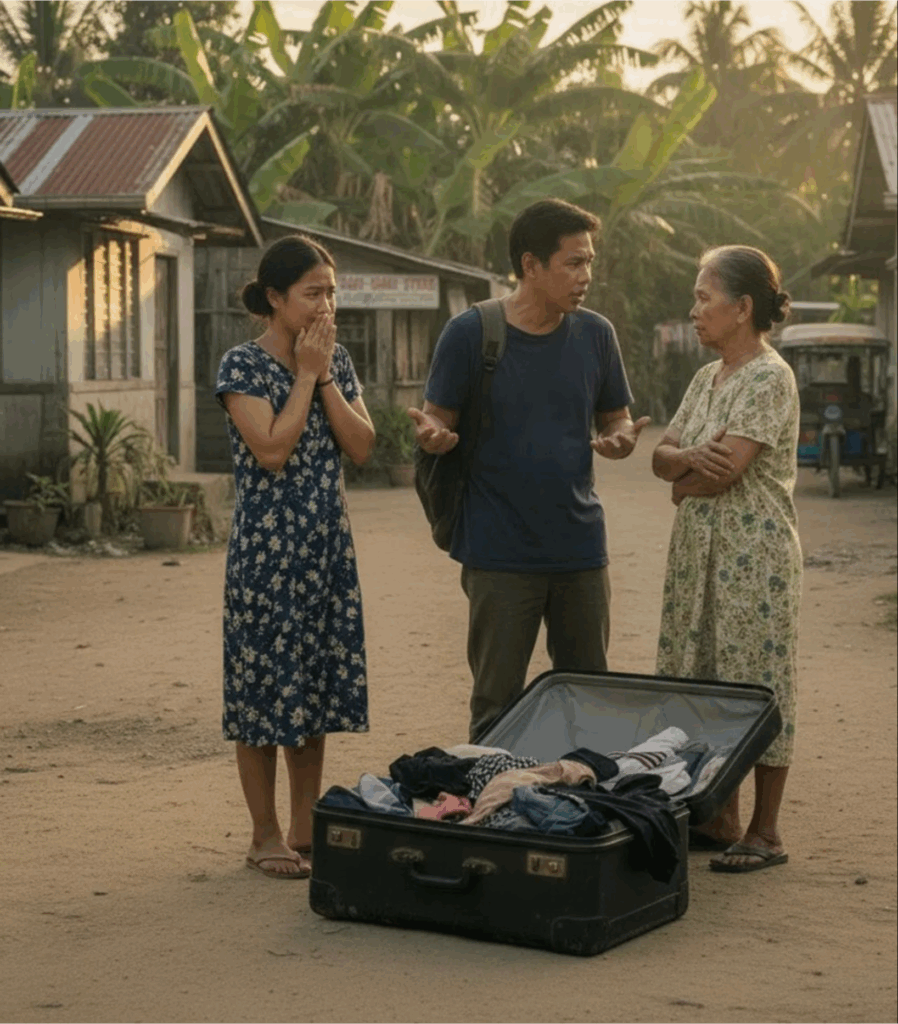
I am thirty-eight years old, and if someone looked at me from the outside, they would probably think my life is fine. Quiet, predictable, like a carefully sealed box where everything has been put in its place. Yet inside, nothing is fully arranged. There is something in me that never became a memory — it only learned to stay silent so it wouldn’t break the rhythm of everyday life.
I live in a house, I work, I go through my days. My father also lives with me now, in the guest room. He used to be the one who made decisions for me. Now he is the one who is increasingly dependent on me, as if time were slowly paying back what it once took away.
I was seventeen when I got pregnant.
There were no scenes in our house. In our family, emotions were not expressed — they were erased. Quickly, efficiently, as if they had never existed.
My mother called. Often. Short, precise conversations after which everything became more and more final. And my father looked at me from one day to the next as if a stranger had entered his own home.
They said it would only be for a short time. That it would be “better this way.” That I would understand later.
But then every word felt more like a lock than an explanation.
They took me to an institution. They called it a clinic, but in reality it was more like silence than a place. There were no phones, no visits, and no questions that would receive answers. Time there didn’t pass — it only stretched, like a thread too thin, about to snap.
I will never forget the moment I heard it.
His first sound.
It was a small, pure, living cry. I didn’t know it then, but it was the only proof that everything was real.
I wanted to go out. I screamed. I begged. I pleaded. After a while, my words became nothing but noise that no one responded to.
Then my mother came.
Calmly. Too calmly.
She said the baby hadn’t survived.
There was no argument. No breaking point. Just one sentence that closed the world.
And I said I had heard him.
She replied that I needed to rest.
Later they gave me something, and when I woke up, what was strongest in me was no longer pain but emptiness. The kind of emptiness that doesn’t mean absence, but erasure.
I asked again and again where he was. But the answer was always the same: don’t ask. Move on. Forget.
And after a while, I learned to stay silent.
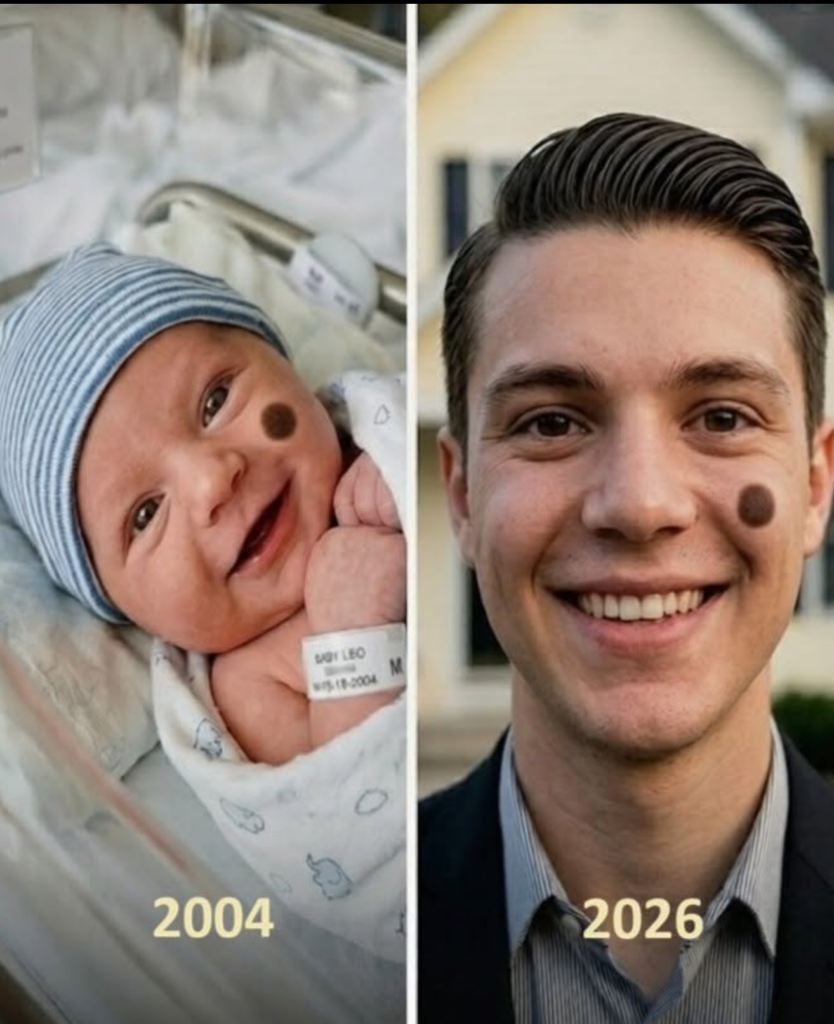
Before I was discharged, a nurse came back.
She secretly gave me a piece of paper.
She said I could write a message if I wanted.
I wrote only one sentence:
“Tell him he was loved.”
I gave that paper away together with a small blanket. I had sewn it myself — it was blue, with yellow birds along the edge. Back then I still believed something would remain as proof of what had happened.
Then everything disappeared.
And they said it was better that way. Easier to forget.
But forgetting does not ask permission.
Life went on.
Too smoothly. Too straight.
As if I had simply been moved into another room without anyone explaining why the previous one had been closed.
My mother died two years ago. My father has been living with me since then. Sometimes he confuses days, names, stories — but there are things he still knows precisely, even now, only he does not say them out loud.
Then one day a new neighbor moved in.
At first, I only saw the car, the boxes, the movements.
Then his face.
And something inside me suddenly stopped.
It was too familiar. Almost impossibly familiar.
Dark hair, strong features, a gaze that seemed to reflect something I had been trying not to remember for years.
“Hi. I’m Miles. We’ll be neighbors.”
That’s all he said.
And I replied, but my voice didn’t feel like mine.
Two days later he came over.
He invited me for coffee because he had “made too much.”
I agreed. I don’t know why.
When I entered his house, the air felt different.
And it was there.
On the chair.
The blanket.
Blue. With yellow birds.
The one that was supposedly destroyed.
I couldn’t help but ask:
“Where did you get this?”
He just shrugged.
“I’ve had it my whole life.”
Then he added:
“I was adopted. I only had one document.”
The silence that followed was not empty.
It was too dense.
As if twenty-one years were suddenly pressed into the room at once.
And then my father walked in.
He stopped in the doorway.
In an instant, he understood everything.
He didn’t speak right away. He only sat down slowly, as if his body could no longer carry the secret.
Then he said:
“We didn’t take him… we gave him away.”
And with that sentence, he didn’t explain anything. He only closed something that had been open for far too long.
Miles remained still.
Then he looked at me.
And he said:
“I’ve been looking for you my whole life.”
The air changed.
There was no explosion. No drama.
Just a realization that had finally arrived.
“I thought you hadn’t survived,” I said at last.
He shook his head.
“I survived. And I always kept moving toward you.”
My father lowered his head.
And in that movement, something finally broke in him: not guilt, not the past — only the strength of denial.
Now the silence no longer separated us.
It connected us.
Miles finally smiled, as if suddenly everything too heavy had become simple.
“The coffee’s cold,” he said softly.
And in that sentence there was not an ending to a story.
But something beginning.
Something that could no longer be undone.