The Father’s Anniversary
Roman behaved at my father’s sixtieth birthday as if the evening had been organized not for Pavel Sergeyevich, but for him. He greeted the guests at the door, seated the aunts, laughed too loudly at the waiter’s jokes, and adjusted the thin scarf on my shoulders—always in front of others, with that carefully measured attention that makes strangers immediately think: “what a loving husband.”
From the outside, it was a model marriage. A slightly tired wife, a confident husband, a festive table, long tablecloths, porcelain, compote jugs, and that reassuring illusion that the family is together, that everything is fine, in its place.
Only I hadn’t slept at home for six nights already.
But in my car.
Not as a dramatic breakup, not as a “he’ll calm down tomorrow” kind of night. Properly, methodically: in the back seat of the crossover my father had bought me a month before his birthday. I knew which parking lots didn’t ask questions, where you could buy tea in a paper cup, how to lie so your neck wouldn’t go numb, and which gas stations looked through you as if you no longer existed.
In the trunk were two bags of clothes, my work jacket, chargers, documents, and a blue mug—which I couldn’t bring myself to leave behind on the first night for some reason.
Roman was sitting next to me now as well. Shaven, calm, too calm. Sometimes his hand touched mine: “are you drinking water?”, “are you tired?”, “do you want to step outside for air?”. And with every such touch, I felt like pulling away.
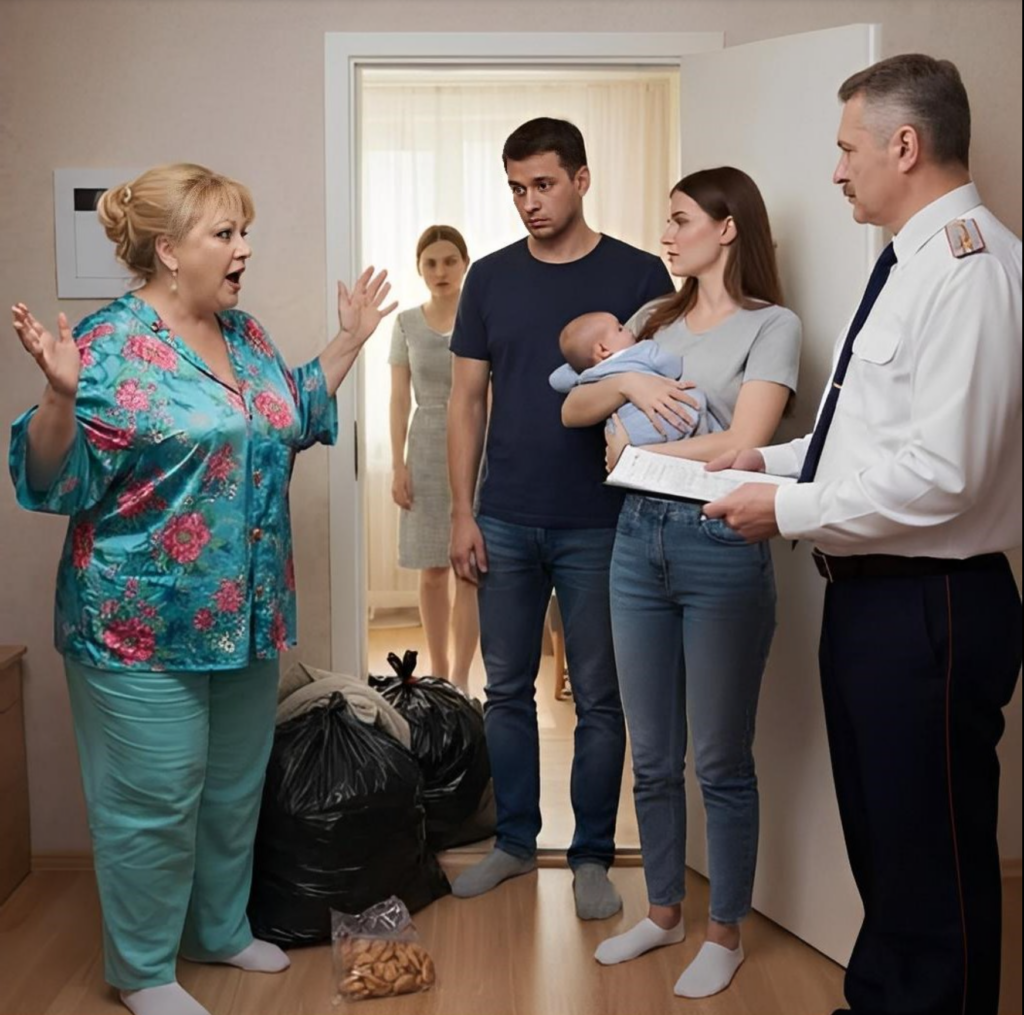
That same hand had placed my things outside the apartment door six days earlier.
“I’ll change the lock in the morning,” he said then. “Don’t make a scene, Dasha. It’s decided.”
“Who decided it?” I asked.
He didn’t look at me. He looked past me, as if a stranger were standing there.
“You have somewhere to go. Your father’s.”
And indeed, I did. That was the worst part.
Because I could have left immediately. But I didn’t. Not the first night, when I waited in the courtyard hoping he might call me back. Not the next day, when the key no longer turned in the lock. Not the third day either, when I bought a toothbrush at a pharmacy and felt like a temporary person.
I wasn’t afraid of my father.
I was afraid of how he would look at me.
That evening was my father’s celebration. He rarely celebrated anything, but this time he had put everything together: relatives, colleagues, old friends. Pavel Sergeyevich sat at the head of the table with a straight back, in a new tie, looking around as if he were seeing everyone happy at the same time for the first time.
Roman stood up in the middle of dinner.
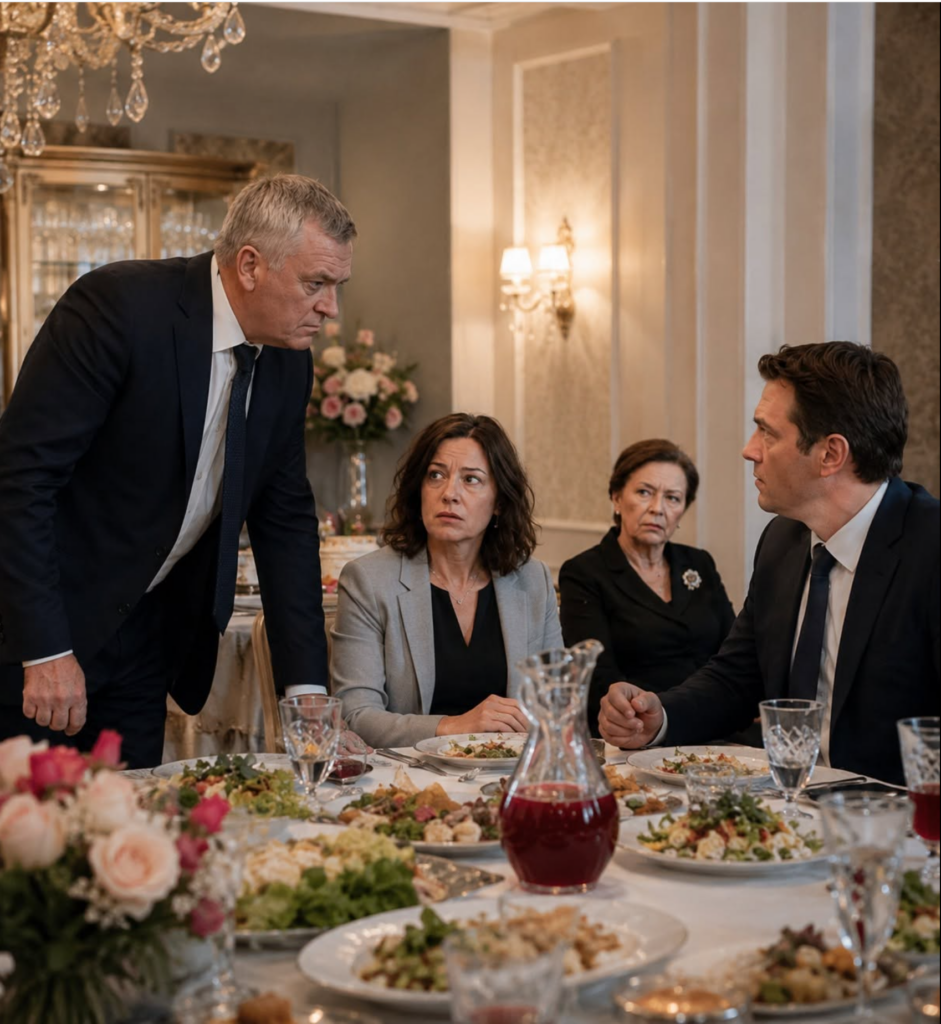
He gave a toast.
Too well.
“Pavel Sergeyevich, thank you for Dasha,” he began. “For her upbringing. Your patience. For giving such a woman to the world.”
The room smiled.
My father looked at me.
And then he asked:
“Dasha, tell me, how is the car? Comfortable? I was worried it might be too big.”
A moment.
That was all it took.
Roman’s hand tightened on the table.
Everyone was looking at me.
Waiting for me to smile.
“It’s comfortable, Dad,” I said quietly.
A pause.
Then:
“I live in the car.”
At first, he didn’t understand.
The smile stayed on his face like a poorly removed mask.
“What… did you say?”
My voice didn’t shake when I said it:
“Roman kicked me out. Changed the lock. I’ve been sleeping in the car for six days.”
Silence fell.
Not the kind that passes. The kind that settles on the table.
Roman set down his glass.
“It’s a family misunderstanding,” he said calmly. “Dasha is exaggerating emotionally.”
My father looked at him.
“She sleeps in the car,” he said slowly. “Which part of that is exaggeration exactly?”
Then Roman’s mother spoke.
Zoya Arkadyevna.
Calmly, almost tired:
“Marriages sometimes end. There’s no need to make a scandal out of it.”
My father no longer asked questions.
He just stood up.
“Marriage ends in court,” he said. “Not at the door, with bags.”
Then he took my hand.
And led me out.
What came after wasn’t fast.
There were lawyers, documents, statements.
And a realization that hits slower than any shouting:
money had been disappearing from our joint account.
Not all at once.
But carefully, in parts.
And every transfer required my signature.
My name.
My “yes.”
When I looked at it, I didn’t cry.
I just sat there.
My father beside me.
And that silence was worse than anything.
Later, I sold the car too.
“Do you regret it?” my father asked.
“Yes,” I said. “But I can’t live in it anymore.”
I rented a small room in an old building.
Shared kitchen, unfamiliar voices through the walls.
My father wanted me to move in with him.
I didn’t.
I needed my own air.
One evening I was at his place.
He was baking a pie.
He mixed sugar with salt.
We laughed.
We drank hot tea, and for the first time there was nothing to survive.
“So now what?” he asked.
“Now I’m okay, Dad,” I said. “Really.”
Later I went home.
A bag of apples was waiting by my door in the hallway.
I locked the new lock.
Stood by the window.
Outside, a car’s light slid across the wall and disappeared.
Back then I used to wait for morning in moments like this.
Now I didn’t have to wait for anything anymore.
Morning simply became morning.
And it was finally mine.