People talk about silence as if it is something gentle.
As if it heals.
It doesn’t.
Silence can sit across from you at the kitchen table, watching your coffee go cold, reminding you—without a single word—of the person who will never walk through the door again.
My son, Daniel, died in December.
He was thirty-two years old.
He left behind his wife, Rachel, his seven-year-old son, Noah, and me.
For months after the funeral, I kept hearing the back door.
Daniel never used the front entrance. He always came in through the back, grocery bags in his hands, calling out before he even stepped inside.
“Mom, I’m starving!”
And right behind him would come Noah, running like the world itself was chasing him.
Then one day, that sound stopped.
The back door never opened again.
All that remained of Daniel was Noah.
Same brown eyes. Same uneven smile. And that same stubborn way of holding his emotions inside, as if crying would break something beyond repair.
In the early months, Rachel still accepted my help.
I brought meals no one really ate. I folded laundry that was already folded. I picked Noah up from school when she said she was too exhausted to drive.
And every time, he would run straight into my arms.
“Grandma!”
“There’s my brave boy.”
Daniel had called him that first.
Noah loved it because it made him feel like his father was still speaking through someone else.
One afternoon, driving home, he asked quietly,
“Did Dad really always call me that?”
“Every day,” I said.
“Even when I was little?”
“Especially then.”
He stared out the window for a long time.
“Was Dad brave?”
“Yes,” I said.
“Even when he was scared?”
I nodded.
“That’s when bravery matters most. When you keep going anyway.”
He absorbed that in silence, like it was something he would carry forever.
Then spring arrived.
And with it came Brent.
At first, he was just around occasionally. Then more often. By summer, his shoes sat by the door like he belonged there, replacing the space where Daniel’s boots used to be.
The first time I visited after Brent started staying over, Noah ran to me as usual.
“Grandma!”
Before I could even bend down to hug him, Rachel stopped him.
“Noah. We talked about this.”
He froze.
“About what?” I asked.
Rachel folded her arms.
“Don’t call her that.”
I blinked.
“That’s my name to him. I’m his grandmother.”
Rachel shook her head.
“We’re trying to build something stable. Noah gets confused when everything keeps pulling him back.”
“I’m not the past,” I said quietly. “I’m his family.”
Brent leaned against the kitchen counter, watching.
“Kids adjust better when adults don’t turn everything into a tragedy,” he said casually.
I looked at him.
“Daniel wasn’t a tragedy. He was Noah’s father.”
That was the beginning of the distance.
My visits became shorter.
First thirty minutes.
Then ten.
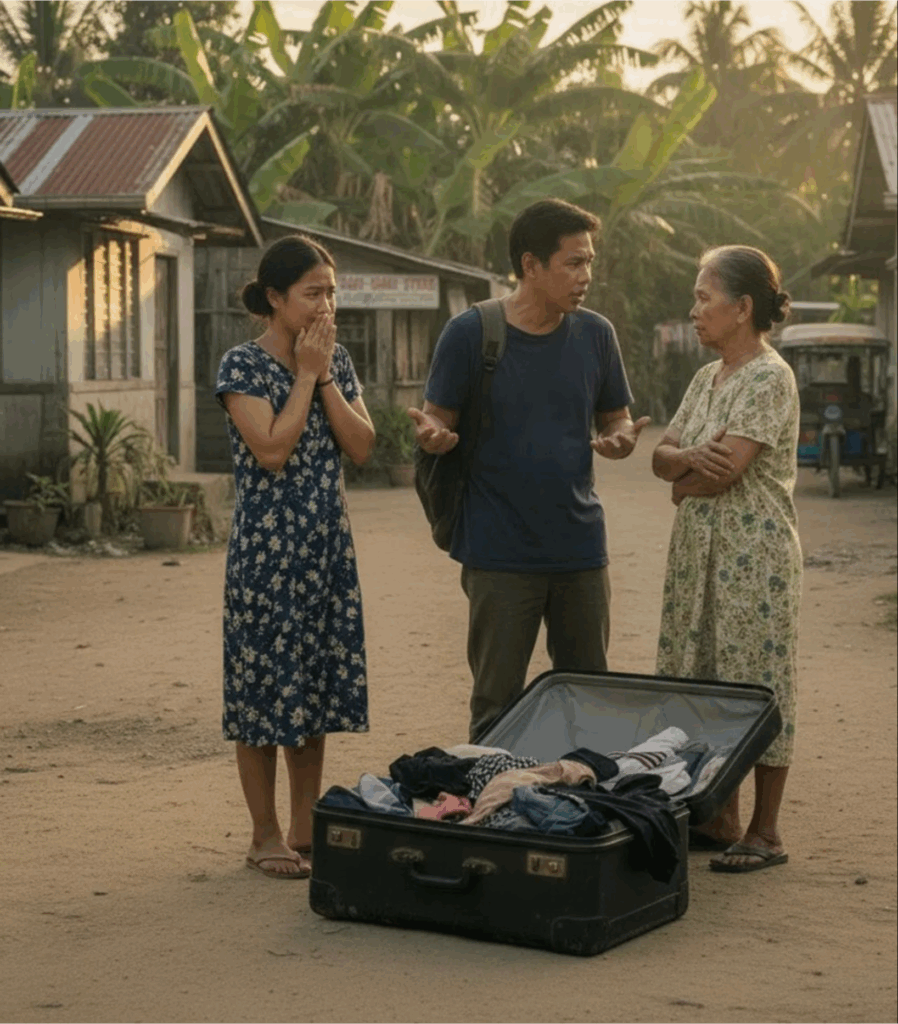
Eventually, I stood on the doorstep, speaking through a half-open door.
“Is Noah home?”
“He’s tired.”
“I brought soup.”
“We already ate.”
“Can I just say hello?”
“Not today.”
Once, I heard Brent’s voice from inside.
“Rachel, we agreed on boundaries.”
Boundaries.
As if love needed permission slips.
A few weeks later, I saw a photo online.
Brent stood behind Noah in the backyard, both wearing matching caps.
The caption read: “My boys. Fresh start.”
I stared at it far too long before closing the screen.
Something inside me tightened and refused to let go.
Then came the school music teacher.
I met her by chance at a grocery store. She hesitated before speaking.
“There’s an upcoming school performance on Friday,” she said gently. “Noah has a solo.”
My stomach dropped.
“I didn’t know.”
Her face changed.
“Oh… I thought you did.”
She lowered her voice.
“Today in class, Noah asked if people disappear forever when no one says their name anymore.”
I couldn’t breathe properly.
“What did you tell him?”
“That they don’t disappear as long as someone remembers them.”
On Friday, I went.
I sat in the back row, hands clenched in my lap.
When Noah stepped onto the stage, he scanned the audience.
And found me.
His face softened instantly.
He sang like something inside him had been waiting for that moment all along.
After the performance, he ran straight to me.
“Grandma!”
I almost lost my balance catching him.
“I knew you’d come,” he whispered.
“I always come when I can.”
Before Rachel reached us, he slipped something into my hand.
“Don’t show Mom,” he said quickly.
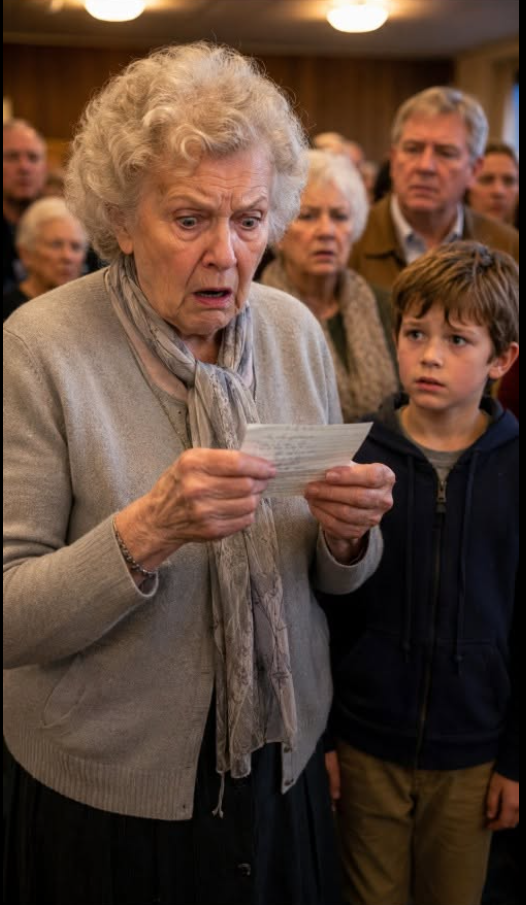
In the car, I unfolded the paper.
My hands shook too much to smooth it out.
Six words, written in a child’s uneven handwriting:
Grandma, I want to go home.
I turned it over.
On the back, another sentence:
Brent says I can’t talk about Dad anymore.
I sat there for a long time, the engine off, the world too quiet.
Because I understood something then.
Noah didn’t mean a house.
He meant a place where his father still existed.
That night, I called Rachel.
It ended in anger.
So I stopped calling.
Instead, I opened Daniel’s old box of memories.
Photographs. Letters. Scraps of life that still carried his presence.
And I began writing.
Stories about him.
How he burned pancakes every Saturday but served them proudly anyway.
How he sang completely out of tune in the car.
How he called Noah his “brave boy” after every hard day.
I sent Rachel one page each day.
At the bottom of every page, I wrote the same line:
Noah deserves both his future and his father’s memory.
At first, there was silence.
Then returned envelopes.
Then, slowly, a message:
Did Daniel really call him brave every day?
I replied:
Every single day.
Three weeks after the school performance, a car pulled into my driveway.
Rachel stepped out.
Noah was beside her.
When I opened the door, he looked up at me.
“Can I call you Grandma again?”
I opened my arms.
“Always.”
He ran into me, holding on like he never wanted to let go.
Rachel wiped her eyes.
“I thought moving forward meant leaving Daniel behind.”
“No,” I said softly. “It means carrying him without letting him weigh you down.”
Noah looked up.
“Can we talk about Dad again?”
Rachel squeezed his hand.
“Yes, sweetheart. We can.”
And in that moment, silence didn’t disappear.
But it finally stopped controlling the room.