The weight of grief had frozen Mrs. Carter’s world from the moment her thirteen-year-old daughter, Lily, passed away after a long illness. Their home, once filled with warmth, laughter, and the quiet rhythm of daily life, slowly turned into something lifeless and preserved
—like a museum of a past that no longer moved forward. Every room seemed suspended in time, holding onto “before,” while Mrs. Carter herself remained trapped in “after,” unable to cross the invisible boundary of her loss.
She avoided the outside world, conversations, and even simple routines, as if stepping back into life would betray the memory of her daughter.
Months passed in this heavy silence until an unexpected phone call from Lily’s school broke through it. The voice on the line belonged to Lily’s English teacher, hesitant yet urgent. She explained that something unusual had been discovered:
Lily had left behind a key and a handwritten note addressed specifically to her mother. The message felt impossible, yet undeniably real. For the first time in months, Mrs. Carter left her house with a strange mix of disbelief and fragile hope.
At the school, the teacher handed her the items. The handwriting was unmistakably Lily’s—neat, delicate, and carefully formed. The note contained an address to an old storage room near the school grounds,
a place Mrs. Carter had never even known existed. Each step toward it felt heavy, as if she were walking between two worlds: one defined by loss, and one waiting with unknown meaning.
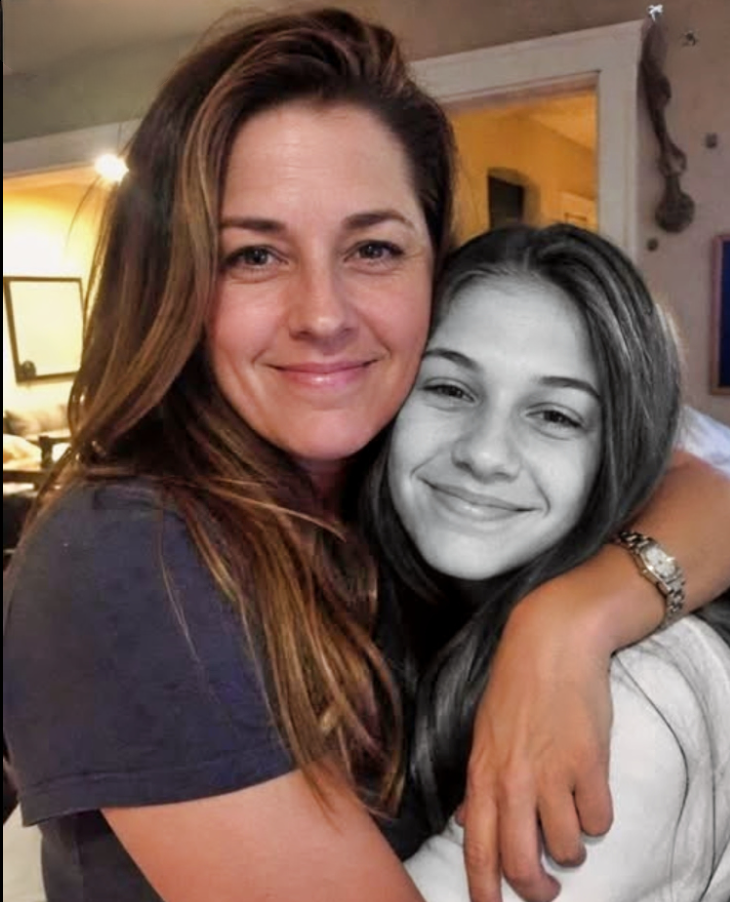
When she finally opened the door to the storage room, she was met not with emptiness, but with intention. Dust floated in the dim light, yet everything inside was carefully arranged. Shelves lined the walls,
filled with boxes labeled in Lily’s handwriting. Dates, instructions, and short messages covered each one. It quickly became clear that this was not random—it was a carefully constructed plan.
Inside the boxes were letters written by Lily, each one intended for a future moment in her mother’s life. Some were meant for days when grief would feel unbearable. Others contained simple instructions
—small reasons to get up, places to go, people to call. There were even lists of names: people Lily trusted, individuals who could support her mother when loneliness became too heavy to carry alone. It was a roadmap through sorrow, created with extraordinary foresight and love.
As Mrs. Carter tried to process what she was seeing, her sister Judy arrived. With tears in her eyes, Judy admitted she had helped Lily in secret for months. She had assisted with renting the storage space and organizing everything,
following Lily’s wishes to keep it hidden. The revelation struck Mrs. Carter deeply. While she believed she had been protecting her daughter from the reality of illness, Lily had been quietly preparing to protect her mother from the reality of loss.
In the final box, there was a video. With trembling hands, Mrs. Carter played it. Lily appeared on the screen—alive, bright, and calm in a way that contrasted painfully with the story behind it. She spoke directly to her mother,
her voice steady but gentle. She did not say goodbye in despair. Instead, she spoke with purpose.
Lily urged her mother not to remain trapped in grief. She asked her to return to the school library, a place where she could help children who felt invisible and alone—just as Lily herself sometimes had.
Her words were not only a farewell but a direction, a carefully chosen path forward. She was giving her mother permission to live again.
After the video ended, the silence in the storage room felt different—less like emptiness, more like something unfinished but no longer closed. For the first time, Mrs. Carter felt a small shift inside herself,
as if a door she had kept locked for months had finally begun to loosen.
The next morning, following the instructions in Lily’s first letter, she returned to the secondary school. The library was quiet, filled with students lost in books and thoughts of their own.
There, she noticed a girl sitting alone in a gray hoodie, withdrawn and unnoticed, mirroring the same quiet isolation she once saw in her own daughter.
This time, Mrs. Carter did not turn away. She sat down beside her. She did not try to fix everything or speak perfect words. She simply stayed. In that small act of presence, something new began
—an unspoken continuation of Lily’s final gift. Not just memories, but a path forward, where love did not end with loss but transformed into action, meaning, and connection.