The key turned in the lock with a harsh metallic screech, as if even the apartment resisted letting Vera in. She hadn’t even taken off her coat when she was hit by a thick, heavy smell of overheated sunflower oil and burnt frying food. The air inside felt wrong—too dense, too чуж.
On the bright stone-tiled floor in the hallway stood unfamiliar, worn-out shoes, caked with street dirt. Not guests’ shoes. Not temporary ones. Shoes that belonged to people who had already decided they lived here.
“She’s here again,” Vera thought instantly.
From the kitchen came a cheerful, overly confident woman’s voice:
— Oleg, have another piece! I made fresh cutlets!
Vera slowly took off her shoes. Ten hours at the dental clinic still pulsed in her head—patients, pain, stress, endless demands. All she wanted was silence and a hot shower. Instead, she was walking into someone else’s control over her own home.
In the kitchen, Nina Fedorovna stood by the stove as if she had always belonged there. A faded apron was tied over her floral blouse, her movements confident and possessive. Oleg sat at the table eating hungrily, as if he hadn’t been fed in days. Grease shone on his chin.
— Oh, Vera, you’re back — the mother-in-law turned to her. — Wash your hands, sit down. I cooked for you so you won’t have to bother this weekend.
Vera leaned against the counter.
— Good evening. Thank you, but we planned to go to a restaurant tomorrow.
Nina Fedorovna snorted.
— A restaurant? Waste of money. Home food is better.
Oleg only nodded, continuing to eat, as if decisions were something made for him by others.
Vera opened the trash bin—and froze.
An empty bottle of pumpkin seed oil lay inside. Expensive. Cold-pressed. Special dietary oil.
Her stomach tightened.
— You fried with this? — she asked quietly.
— Yes, well, the other oil ran out. This was in the cupboard — the woman shrugged. — It has a strange smell, but it turned out fine.
— This isn’t for frying, — Vera said slowly. — It’s medically recommended for cold use only.
The kitchen went silent for a moment.
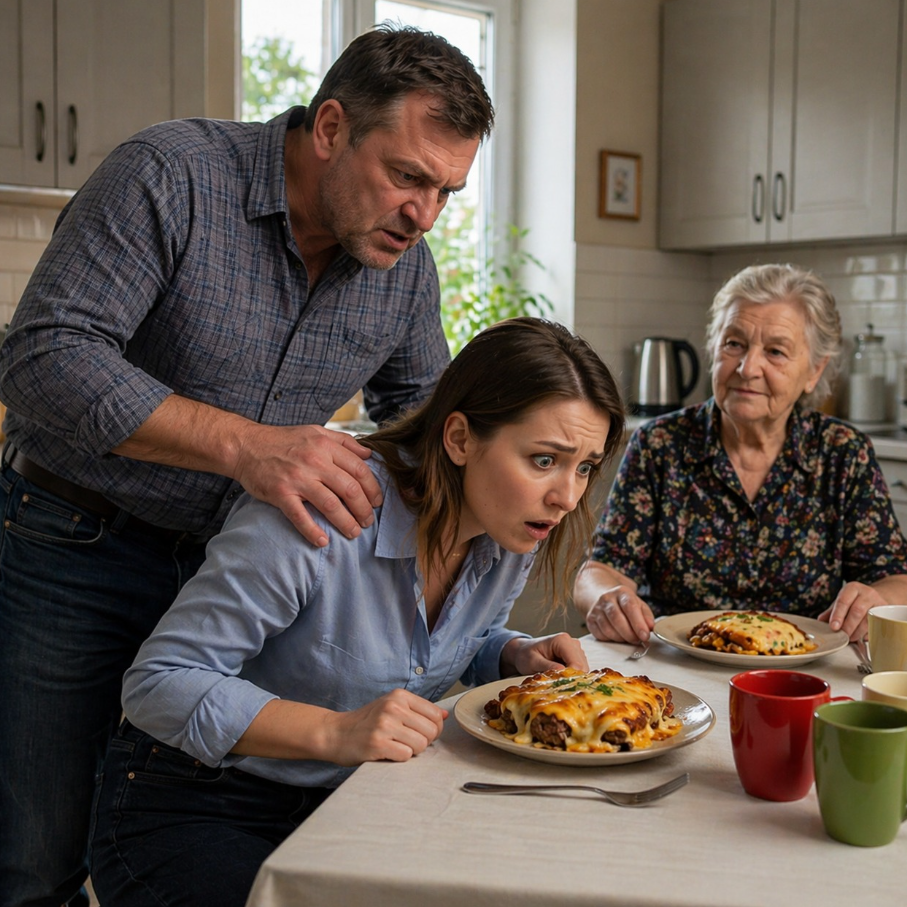
Then Oleg spoke.
— Vera, don’t make a drama out of nothing. Mom is just helping.
And just like that, the old pattern returned: Vera was “too sensitive,” the mother-in-law was “just helping,” and Oleg always stood safely in the middle—leaning away from responsibility.
Vera didn’t argue anymore. She left the room.
The next morning, the air in the apartment felt tense and sharp.
— You embarrassed us, — Oleg said. — Mom left crying.
— And what did I do wrong? — Vera replied calmly. — Strangers are in my home, using my things, and no one even asks what I want.
Oleg’s face tightened.
— This is family!
— This is my apartment.
Silence fell.
And Oleg left.
The following days were strangely calm, but it was a fragile calm. Oleg became attentive, overly so, trying to smooth things over as if that could erase what had already cracked.
Vera almost believed it.
On Friday, she came home late.
The moment she opened the door, she was hit by a thick, greasy smell of food.
In the kitchen stood Nina Fedorovna again, as if she had never left. A large baking tray sat in the oven.
— Surprise! — she announced proudly.
Inside the tray was Vera’s carefully chosen turkey meat—destroyed. Mixed with cheap cheese, potatoes, heavy sauce, and overcooked vegetables.
— I looked in your fridge, — the woman said cheerfully. — That green stuff is just grass anyway. I made it into real food.
Vera didn’t move.
Then she spoke very quietly:
— I asked you not to touch my food.
— Oh, come on — the mother-in-law waved her hand. — I cooked dinner for you.
Oleg was already eating.
And in that moment, Vera understood there was nothing left to discuss.
Everything after that escalated quickly.
Arguments. Accusations. Demands.
Then silence.
Lawyer.
Documents.
Evidence.
And finally—an ending that could no longer be avoided.
The court was cold and procedural. Words, numbers, files.
Oleg’s lawyer spoke about “shared contribution” and “family investment.”
But paper doesn’t feel emotion.
And the papers were all on Vera’s side.
After the hearing, Nina Fedorovna stopped her in the corridor one last time.
— You ruined his life!
Vera looked at her calmly.
No anger. No tears.
— No. I just stopped letting others live it for me.
And she walked away.
Six months later, Vera stood in her own kitchen.
There was silence—not empty, but clean. Safe.
Warm light filled the room. The smell of roasted vegetables drifted from the oven. No shouting. No intrusion. No one rearranging her life without permission.
Her phone vibrated.
A message from an unknown number:
“Vera… I was wrong about everything… I miss you…”
She read it once.
Then again.
There was no anger left.
No pain either.
Just distance.
She deleted the message, blocked the number, and set the phone down.
Outside, city lights slowly turned on one by one.
And for the first time in a long time, her life belonged only to her.