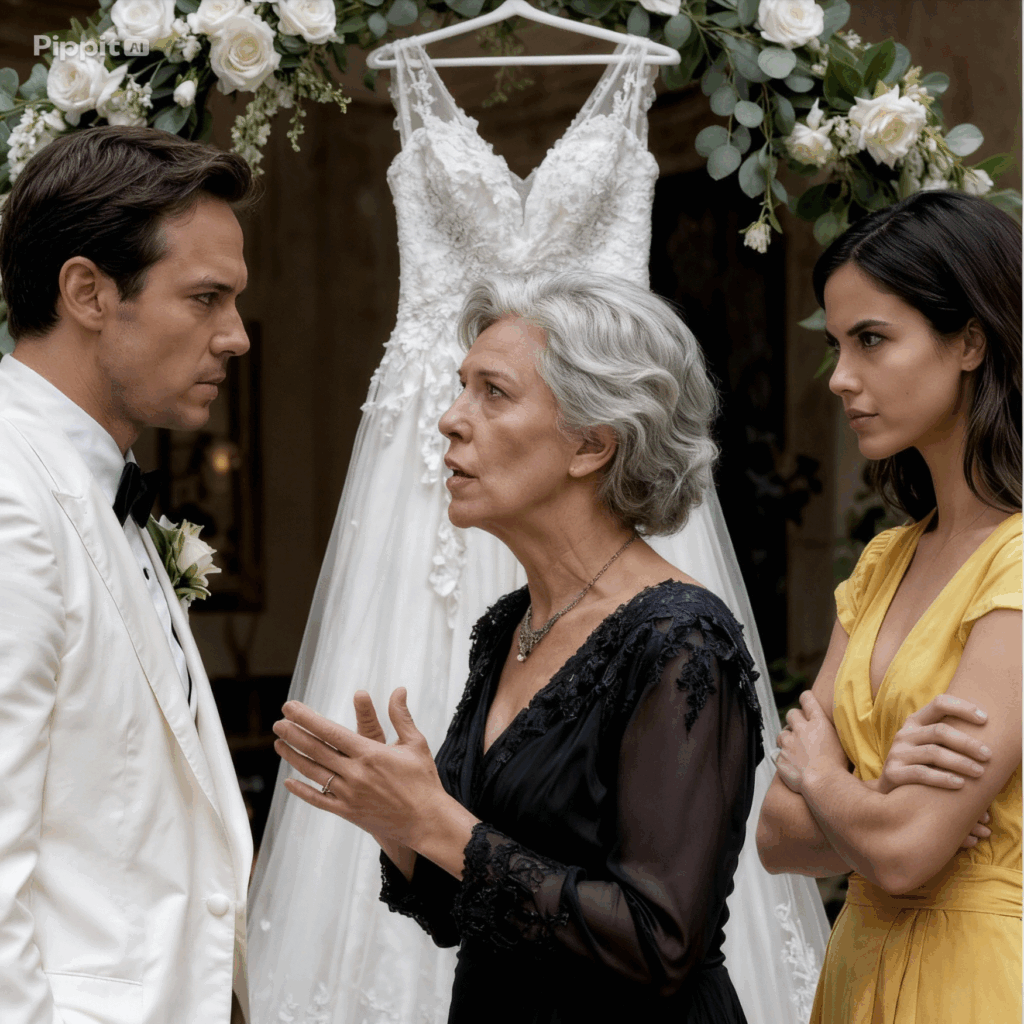
That morning, snow fell in thick, silent flakes, blanketing my mother’s driveway in Portland with a pristine coat. Everything looked soft, peaceful, almost unreal—a lie my heart desperately wanted to believe.Evan, eight, and Lily, six, bolted from the car before I even had a chance to turn off the engine.
Their excitement formed little clouds in the cold air as they ran toward the house, as if it held treasure.I followed, brushing snow off my coat, and stepped inside. The scent of cinnamon and pine enveloped us immediately, familiar, comforting… almost.
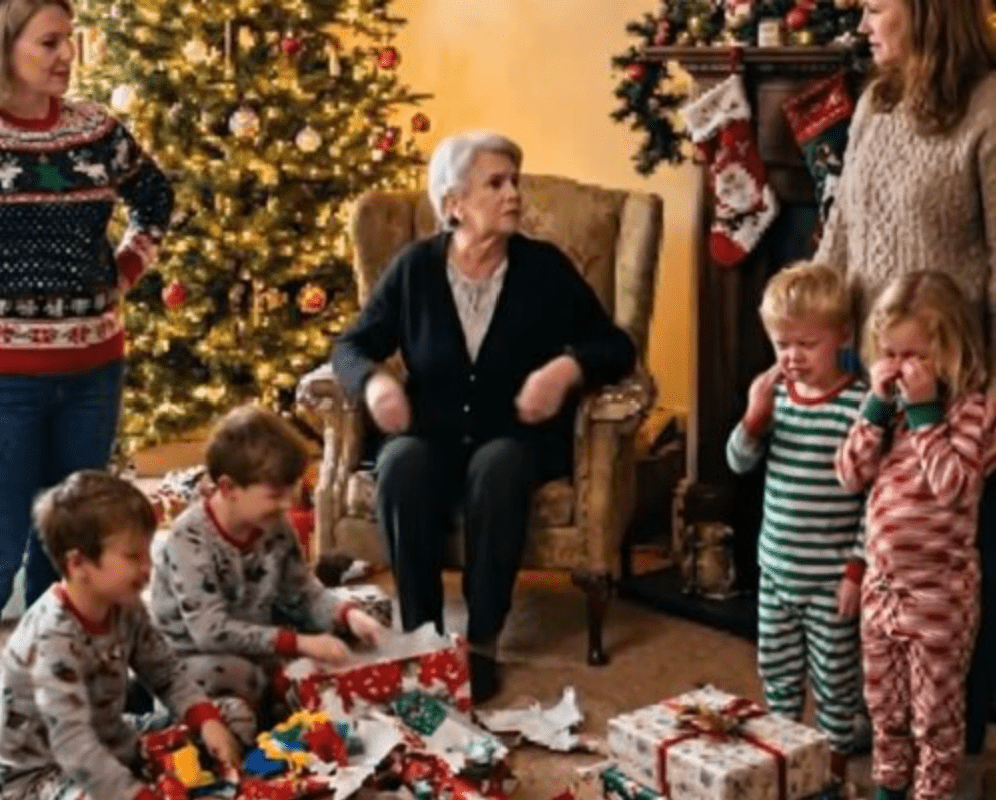
In the living room, my sister Rebecca sat like a queen in a glittering holiday kingdom. Her twin boys dived into piles of presents almost as tall as they were, while she held her phone high, capturing every reaction for an invisible but demanding audience.
My children froze at the doorway, eyes wide.“Grandma…?” Lily whispered.“And our presents…?”My mother didn’t even glance up. A dry, cruel little laugh escaped her—the kind that cuts deeper than words ever could.“Maybe Santa skips kids who don’t appreciate what they have,
” she said, as if it were a universal law.Evan slumped, and Lily pressed against my leg. I stepped forward, trying to keep my voice calm.“Mom, this isn’t fair. You could’ve warned me there wouldn’t be any gifts.”Rebecca sighed dramatically, not pausing her recording.
“Oh, please, Alex.Don’t make this personal.My kids are good; they deserve their rewards. If anything extra appears, it’s obviously for them.”Then, to her sons:“Show the camera your new tablets! Hold them up high, my darlings!”
Another explosion of wrapping paper filled the air. And my children—who had spent weeks crafting homemade decorations, dreaming of this morning—stood there helplessly, watching.Something inside me broke, quietly, permanently.
“Come on,” I murmured to Evan and Lily.“Put your coats back on.”We left without saying goodbye.Back in our small apartment, I tried to recreate Christmas: fun-shaped pancakes, steaming hot chocolate piled high with marshmallows, a mound of blankets for an impromptu movie.
The children’s laughter slowly returned, but my mother’s words clung to me like stubborn smoke.That night, after they’d fallen asleep, I sat alone on the couch, wondering how a family could look a child in the face on Christmas morning and decide they didn’t deserve joy.
Three days later, my phone vibrated violently in my hand. Rebecca’s voice trembled on the other end:“Alex… oh my God… please, pick up! We need $50,000. We’re going to lose the house!”Before I could answer, the receiver was snatched. My mother’s voice thundered, harsh and accusatory:
“You have to help your sister! This family has supported you for years—now it’s your turn!”Support? On Christmas morning, they hadn’t even managed a hint of kindness, let alone generosity.Still, I forced myself to ask:“What happened?”
Her response was a chaotic mix of rage, half-truths, and panic—utterly useless. Then she barked:“Come. NOW.” and hung up.I wanted to throw the phone across the room. Instead, I found someone to watch the kids and went straight to their house,
a part of me still trying to understand how everything had collapsed so quickly.When I walked in, the shock hit me full force. Rebecca’s pristine house looked like a battlefield: boxes everywhere, frames stripped from the walls, mail scattered like confetti of failure.
Rebecca paced barefoot, mascara running, ghostly, unrecognizable.“What’s happening?” I asked.Before she could answer, our mother shoved a pile of foreclosure notices into my hands.
“You’re going to fix this,” she said. “Your sister is losing her house.”
I skimmed the letters: months of unpaid bills, ignored warnings, a mountain ready to collapse.“Why didn’t you say anything?” I asked quietly.Rebecca crumpled onto the couch, trembling.
“Thomas lost his job eight months ago… I thought he’d find another. I didn’t want anyone to know.”
“And now?”She looked away.Our mother erupted:“This isn’t about marriage. THIS is YOUR responsibility. Use your inheritance.”My heart stopped.“…What inheritance?”The air shifted, heavy, like just before a window shatters. The truth, buried for years, was about to surface.
Rebecca whispered, trembling:“Dad left money when he died. But Mom…” she cast a fearful glance, “…Mom said you didn’t need it. You’d waste it.”I realized the man I’d mourned five years ago had actually left me an inheritance. And they had stolen it.
Eighty thousand dollars. Gone. Spent. Hidden. Lied about.My anger turned into resolve.The next day, I called an experienced lawyer. What I had lived through wasn’t just family betrayal—it was financial exploitation.In the weeks that followed, the truth came out.
My father had left $150,000, not $80,000. My mother and sister had drained the inheritance to fund their lives, vacations, and their children’s private school.And they had tried to involve me, even threatening my children for money.For the first time, I chose my family.
Not the ones who had broken me, but mine. Ours. And I ended the cycle.Two weeks later, the house was foreclosed. Peace finally came into our home.“My children will never be treated the way you treated yours,” I whispered as I closed the door.And this time, it was truly over.