
I Married a 31-Year-Old Millionaire at 64—Then I Discovered What He Had Been Putting in My Nightly Drink
The first time I caught my husband secretly adding something to my bedtime drink, I told myself I was being foolish.
The second time, I began to worry.
But the night I overheard him whispering, “We’re running out of time. She can’t find out what happened to the others,” I realized that the man sleeping beside me every night might be hiding a truth far more terrifying than anything I could have imagined.
My name is Margaret Bennett. I was sixty-four years old when I married Daniel, a handsome, wealthy thirty-one-year-old entrepreneur who seemed to have everything a person could want.
Money. Success. Charm.
And, apparently, an extraordinary interest in a retired schoolteacher more than twice his age.
Six months after our wedding, I would discover that our love story had begun long before our first meeting—and that my husband had chosen me for a reason he had never intended to reveal.
But I am getting ahead of myself.
To understand what happened, you need to know how desperately I wanted to believe in Daniel.
The Man Who Seemed Too Good to Be True
My younger sister, Helen, had never trusted him.
“Margaret, please explain something to me,” she said when I first introduced them. “He’s thirty-one, wealthy, and successful. He could marry almost anyone. Why would he choose a woman your age?”
“Perhaps because he loves me,” I replied.
I smiled when I said it, but a small, uncomfortable voice inside me asked the same question.
I had spent thirty-eight years teaching children to read, write, and believe in themselves. My husband had died years earlier, and I had grown accustomed to a quiet life filled with books, gardening, and occasional visits from friends.
I wasn’t looking for a millionaire.
I wasn’t looking for a younger man.
I certainly wasn’t looking for another complicated relationship.
Then Daniel appeared at a charity fundraiser supporting retired teachers.
He listened to me speak about the importance of children’s literacy. Afterward, he approached me with such warmth and genuine-seeming interest that I forgot the considerable difference in our ages.
He asked thoughtful questions. He remembered my answers. He made me laugh.
A few days later, he called.
Then he called again.
Before long, he was sending flowers, inviting me to dinner, and telling me that talking to me made him feel peaceful in a world that never stopped demanding something from him.
“You make everything quiet,” he once told me. “When I’m with you, I can finally breathe.”
I thought those words were beautiful.
Now, I sometimes wonder whether I should have asked why a man with so much money and so many opportunities seemed so desperate to escape his own life.
Daniel owned a successful medical technology investment company and lived in a magnificent mansion with tall windows, polished floors, and gardens that looked as though they belonged in a magazine.
My world was much smaller.
But he never made me feel that way.
He learned my favorite recipes, bought me books by authors I loved as a child, and remembered the names of flowers my mother had grown in our garden.
Our wedding was intimate and beautiful.
Even Helen, despite her reservations, admitted that I looked happy.
For the first few months, I was.
I believed I had been given an unexpected second chance at love.
I had no idea that Daniel had already begun making decisions about my future without my knowledge.
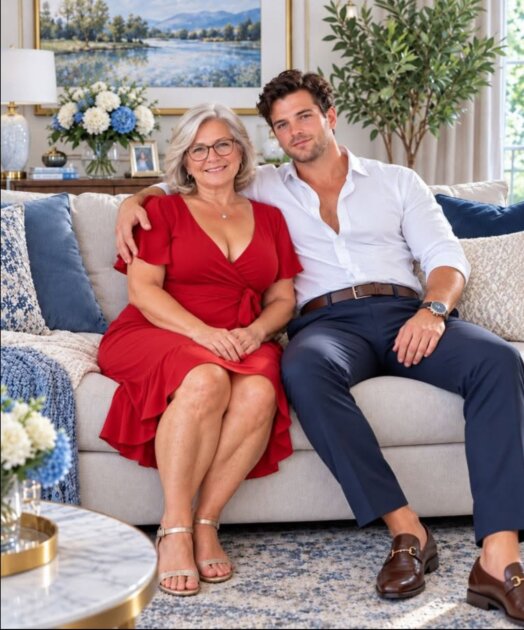
Three months after our wedding, Daniel suggested that I undergo a comprehensive medical examination.
“Sweetheart, you’re sixty-four,” he said one morning over breakfast. “I want to make sure you’re healthy.”
“I already see my regular doctor.”
“This is different. They have advanced screening equipment. It would put my mind at ease.”
He sounded so concerned that refusing him felt unnecessarily cruel.
Eventually, I agreed.
The clinic occupied several floors of a sleek building with mirrored windows and a reception area that smelled faintly of disinfectant and expensive perfume.
A physician named Dr. Adrian Cole greeted us.
He spoke confidently about innovative medical research, personalized screening, and the possibility of identifying health concerns before they became serious.
I underwent several examinations and was given a thick stack of documents.
Some of the terminology meant nothing to me.
I began reading the forms carefully, but Daniel placed a reassuring hand on my shoulder.
“Don’t worry, darling. I’ve already reviewed everything. They’re standard medical documents.”
I trusted him.
I signed.
That signature would later become one of the most disturbing details of my entire marriage.
A few weeks afterward, Daniel introduced a new evening ritual.
Every night, he prepared me a warm drink made with milk, honey, cinnamon, and vanilla.
“My mother used to make something like this,” I told him the first evening.
“I remembered you mentioning it.”
He placed the cup beside my favorite reading chair, kissed my forehead, and encouraged me to relax.
It was such a small, thoughtful gesture.
At least, that’s what I believed.
Then my health began to change.
I woke up exhausted despite sleeping for hours. I struggled to concentrate on books I had once read effortlessly. I misplaced my glasses, forgot appointments, and occasionally lost track of conversations halfway through them.
At first, I blamed my age.
Daniel seemed to encourage that explanation.
“You’ve been under a lot of pressure lately,” he would say. “You need more rest.”
Whenever friends asked me a question, he increasingly answered for me.
“Margaret gets tired easily these days.”
“She hasn’t been sleeping well.”
“She needs to take things slowly.”
He said it all with such tenderness that nobody questioned him.
Eventually, I began questioning myself.
Perhaps I really was becoming forgetful.
Perhaps I really did need someone to take care of me.
Perhaps Daniel knew what was best.
That was the most frightening part: I was beginning to lose confidence in my own judgment long before I understood why.
The Bottle I Was Never Supposed to See
One afternoon, Helen visited and immediately noticed that something was wrong.
“You look exhausted,” she said.
“I’m fine.”
“You’re not. You’ve barely finished a sentence without losing your train of thought.”
I forced a laugh.
“I’m getting older. It happens.”
Helen took my hands.
“Margaret, look at me. Are you happy?”
The question caught me off guard.
I wanted to say yes. I wanted to reassure her that her concerns were unfounded and that I had made the right decision.
Instead, I whispered, “Sometimes I don’t feel like myself anymore.”
Her expression changed.
“You need to see your own doctor. Someone who has nothing to do with Daniel.”
Before I could answer, Daniel appeared in the doorway carrying a bouquet of flowers.
When Helen suggested arranging an independent appointment, his smile faltered for just a second.
Then it returned.
“Of course,” he said. “I’ll take care of it.”
But he never arranged the appointment.
That evening, I went into the kitchen earlier than usual.
Daniel was standing beside the counter, holding my familiar white cup in one hand and a small, dark bottle in the other.
I watched as he carefully added several drops to my warm milk.
Then he slipped the bottle into his pocket.
My stomach tightened.
“What did you just put in my drink?”
He spun around so quickly that some of the milk spilled onto the counter.
“Margaret! You startled me.”
“The bottle. What was in it?”
“Just a flavoring.”
“Then let me see it.”
For the first time since our wedding, I saw something in his expression that I couldn’t explain away as fatigue or stress.
Fear.
Not the fear of someone caught doing something embarrassing.
The fear of someone who knows a secret is about to escape his control.
“Darling, you’re overthinking this,” he said, placing the cup in front of me. “It’s getting cold.”
I didn’t touch it.
“Show me the bottle, Daniel.”
His jaw tightened.
“Why are you making this into a problem?”
The question hurt more than it should have.
I was his wife. I was asking a simple question about something I was drinking every night.
Yet somehow, he was making me feel guilty for asking.
I finally took the cup, but I couldn’t bring myself to drink it while he watched.
That night, I pretended to fall asleep early.
Hours later, I woke to the sound of Daniel speaking on the telephone near the bedroom window.
His voice was barely audible.
“Yes, I’m following the instructions.”
Silence.
Then, more urgently, he whispered, “She’s becoming suspicious.”
My entire body went still.
“I can’t keep increasing anything. She’s already having difficulties.”
I held my breath.
Another pause followed.
Then he said the words that changed everything.
“We’re running out of time. If this continues, we could lose her.”
I pressed my hand against my mouth.
Lose me?
What did that mean?
Then came the sentence I would hear in my nightmares for weeks.
“I know what happened to the others. I’m not letting that happen again.”
The call ended.
Daniel stood by the window for a long time before returning to bed.
I kept my eyes closed and listened to him settle beside me.
For the first time, I was afraid of the man I had married.
And I knew I couldn’t wait for him to explain himself.
The next evening, I made a decision.
I would find out what was in that bottle.
When Daniel received a telephone call and stepped into the hallway, I carefully poured a small sample of my drink into a clean container and put it away.
The following morning, after he left for work, I took it to an independent laboratory.
I explained that I was concerned about an unfamiliar substance being added to a beverage I drank regularly.
The technician told me that identifying unknown compounds could require specialized testing.
I left feeling frightened, but for the first time in months, I also felt something else.
I felt as though I was finally doing something to protect myself.
Two days later, the laboratory called.
“Mrs. Bennett, Dr. Samuel Reeves would like to discuss your results in person.”
I arrived at his office that afternoon with trembling hands and a thousand unanswered questions.
Dr. Reeves examined the report in silence.
Then he closed the office door.
“Does your husband know you’re here?”
“No.”
He studied me for a moment before speaking.
“I strongly recommend an independent medical assessment before you consume any more of this beverage or continue any treatment associated with it.”
My throat tightened.
“Doctor, what did you find?”
“The sample contains an unfamiliar medical compound associated with an experimental research program. We need further evaluation to establish exactly what it is and whether it could explain your symptoms.”
I stared at him.
“An experimental program? I’m not part of any experiment.”
“Have you recently attended a private clinic?”
I nodded.
“My husband arranged a medical examination.”
“Was the physician named Adrian Cole?”
My hands went cold.
“Yes. How do you know?”
Dr. Reeves opened a file on his computer.
“My laboratory has worked with organizations connected to that facility. Your name appears in records associated with a research program.”
He turned the screen toward me.
My name.
My date of birth.
My home address.
And beneath those details, a classification that made my stomach drop.
RESEARCH PARTICIPANT.
I stared at the words until they blurred.
“I never volunteered for medical research.”
According to the records, I had been enrolled in an experimental program studying biological processes associated with aging.
The clinic had attached consent forms bearing my signature.
The signature was mine.
But I had never knowingly agreed to participate in such a study.
I remembered Daniel’s hand on my shoulder. His reassuring smile. His insistence that the documents were routine.
I had trusted him to explain what I didn’t understand.
Instead, he had used that trust to keep me from asking questions.
“His company is listed among the financial backers,” Dr. Reeves said quietly.
I felt as though the floor had disappeared beneath my feet.
My husband hadn’t simply arranged a medical examination.
He was financially connected to a research program in which I had apparently been enrolled without my informed consent.
Then the doctor’s telephone rang.
He glanced at the screen, and the color drained from his face.
“It’s Daniel.”
I stared at him.
“How does he know I’m here?”
“I don’t know.”
Dr. Reeves let the call go unanswered. Then he opened a cabinet and removed a sealed envelope.
“Someone delivered this yesterday. I was instructed to give it to you if your results revealed a connection to the research program.”
My name was written across the front.
Inside was an old photograph.
It showed a hospital room, a narrow bed, and a young man standing beside a silver-haired woman.
The woman looked astonishingly like me.
The same eyes.
The same mouth.
Even the same hairstyle.
But the photograph was dated twenty-seven years earlier.
I turned it over.
On the back, someone had written a message in dark ink:
MARGARET IS NOT THE FIRST. ASK DANIEL WHAT HAPPENED TO THE OTHER THREE.
My hands began to shake.
I looked again at the young man standing beside the bed.
His face was unmistakable.
He looked exactly like Daniel.
But the photograph had been taken twenty-seven years earlier.
My thirty-one-year-old husband should have been about four years old at the time.
Who was this man?
And why did he look so much like the person I had married?
Before I could ask another question, someone knocked on the office door.
Three sharp knocks.
Then Daniel’s voice came from the other side.
“Margaret? Sweetheart, I know you’re in there.”
I clutched the photograph against my chest.
“Then explain why you’ve been hiding this research from me!”
Silence.
For several seconds, neither of us spoke.
Finally, he answered.
“Because I thought I could protect you.”
“Protect me from what?”
His voice broke.
“From what happened to the others.”
Dr. Reeves moved closer to me.
I looked at the closed door and realized that whatever happened next would change the rest of my life.
“Let him in,” I said.
“But he must tell me everything.”
The Truth About the Other Three Women
Daniel entered slowly.
He looked nothing like the confident millionaire who had swept me off my feet six months earlier. His expensive suit was wrinkled, his face was pale, and his hands trembled at his sides.
I remained seated beside Dr. Reeves.
“Stay where you are,” I told him.
Daniel stopped.
I held up the photograph.
“Who is this woman?”
He stared at it.
“Her name was Evelyn Mercer.”
“And the man beside her?”
“My father.”
I looked at the photograph again.
The resemblance between Daniel and his father was extraordinary.
At least one mystery had been solved.
But the others remained.
“Why does Evelyn look like me?”
Daniel lowered his eyes.
“She was very important to my father. She helped raise him, and later she developed a complicated neurological condition.”
His father had become a physician and devoted years to studying her illness. He became convinced that certain biological processes involved in her condition might be connected to aging.
He believed experimental treatment could help people like Evelyn.
But his early research failed.
Evelyn died after struggling with her condition.
Rather than abandon the work, Daniel’s father continued studying the same theories, eventually involving three additional women whose characteristics he believed might be relevant to the research.
Dr. Reeves interrupted.
“Physical resemblance alone is not a scientifically valid reason to select research participants.”
Daniel nodded.
“I understand that now.”
I leaned forward.
“What happened to the other three women?”
He swallowed.
“All three experienced serious medical difficulties. Two eventually died. The third survived, but she continued to suffer from long-term health complications.”
The room seemed to tilt around me.
“And you knew this?”
“Not when we first met. But before we married, I learned about the earlier trials.”
I stared at him.
“You knew before our wedding?”
He nodded.
I thought about the flowers, the promises, the beautiful ceremony, and all those evenings when he had looked into my eyes and told me I was the one person who made him feel at peace.
“Did you choose me because I looked like Evelyn?”
Daniel’s eyes filled with tears.
“Not only because of that.”
I almost wished he had lied.
“How did you find me?”
“At a charity fundraiser.”
“No. How did you find me before that?”
He said nothing.
Then, finally, he admitted that he had seen my photograph in a database associated with the research program.
He had learned about my age, my background, and my personal history before approaching me at the fundraiser.
He knew I had been a teacher.
He knew certain details about my family.
He knew things about my preferences that I had assumed he learned through our conversations.
I remembered the childhood recipes. The books. The flowers.
Had those thoughtful gestures been signs of love?
Or had they been part of a plan to make me trust him?
“Did you ever really love me?” I asked.
“Yes,” he whispered.
“Or did you love the possibility of continuing your father’s research?”
Daniel covered his face.
“At first, I wanted to meet you because of the program. But after hearing you speak, I felt differently. I fell in love with you.”
I wanted to believe him.
That was the terrible thing.
Even then, a part of me wanted to believe him.
But love could not erase what he had done.
He explained that his father had died without resolving the questions that had consumed his life. Daniel inherited his research files and became determined to continue the work.
He had invested heavily in medical technology and believed that newer methods might succeed where earlier experiments had failed.
Dr. Cole had convinced him that the program could help me.
“When your screening suggested certain medical concerns,” Daniel said, “I thought the treatment might benefit you.”
“My regular doctor said I was healthy!”
He looked away.
Three weeks earlier, he had discovered inconsistencies between my original screening results and the records being used to justify my participation.
The original tests did not support the condition the researchers claimed I had.
“Then the records were inaccurate?”
“It appears so.”
“And you still gave me that drink every night?”
“Dr. Cole told me that changing the routine without supervision could create additional problems.”
Dr. Reeves spoke firmly.
“That is not an acceptable justification for continuing an experimental intervention without informed consent. Any medical concerns should have been reviewed independently.”
I turned toward Daniel.
“You watched me become exhausted. You watched me forget things. You watched me lose confidence in myself.”
He began to cry.
“I know.”
“And you said nothing.”
“I thought I could fix it before you found out.”
I shook my head.
“No. You thought you could decide what I was allowed to know.”
He had no answer.
For months, I had blamed myself for my confusion. I had wondered whether age was stealing my independence, whether my memory was failing, and whether I had become too fragile to manage my own life.
Meanwhile, the man who claimed to love me had been withholding information that could have helped me understand what was happening.
Whatever Daniel’s intentions had been, he had placed his own judgment above my right to make decisions about my health.
I turned to Dr. Reeves.
“I want every record reviewed. I want an independent medical examination. And I want to know exactly what I was given.”
Daniel stepped toward me.
“Margaret, please—”
I raised my hand.
“No more decisions on my behalf. Not one.”
For the first time since our wedding, he obeyed without arguing.
The Woman Who Had Tried to Warn Me
Dr. Reeves helped arrange an independent medical evaluation and preserve the laboratory findings. I also made sure the research records were secured for review.
Then I called Helen.
The moment she heard my voice, she knew something was wrong.
“Margaret, what happened?”
“I need you.”
She arrived as quickly as she could.
When I told her everything, she wrapped her arms around me and held me while I cried.
She never said, I told you so.
She simply whispered, “You’re coming home with me.”
For the first time in months, I felt safe enough to let myself fall apart.
The following morning, Daniel delivered copies of the research files.
Some confirmed what we already knew.
Others were worse.
My original medical screening had not supported the condition used to justify my participation. Notes documenting my dizziness, confusion, and excessive sleeping had been added to the file, yet the program had continued without properly addressing my concerns.
Some documents also carried Daniel’s initials.
He could no longer pretend he had been completely unaware.
An investigation into the clinic’s practices began, and the records of the earlier participants were reviewed.
The third woman’s file was especially troubling.
It suggested that she had withdrawn her consent and attempted to report the program after experiencing serious health problems.
Then her records ended abruptly.
No clear explanation.
No confirmation that her complaint had been heard.
I couldn’t stop thinking about the photograph.
Someone had known the research might begin again.
Someone had known that I might become another woman whose concerns were ignored.
A few days later, Daniel called me.
“Margaret, Dr. Cole knows the documents have been released.”
“Good.”
“He says you agreed to everything.”
“Then he’ll have to explain why nobody properly informed me about the research.”
Daniel was silent.
Then he told me he had discovered a written statement from the third woman. In it, she described how her concerns had been dismissed even after she reported changes in her health.
I asked the question that had been haunting me.
“If I hadn’t discovered that bottle, would you ever have told me the truth?”
For a long time, he said nothing.
Then he whispered, “I don’t know.”
That answer hurt more than any excuse could have.
Because it meant that even after everything we had shared, he could not promise that my right to know would ever have mattered more than his desire to finish the research.
The Identity of the Person Who Sent the Photograph
Several weeks later, I returned to the mansion with Helen to collect my belongings.
I wasn’t going back to reconcile.
I wanted my books, my mother’s photographs, and the handmade quilt Helen and I had sewn together years earlier.
Daniel waited in the entrance hall.
He looked older, as though the weight of his decisions had finally caught up with him.
“How are you feeling?” he asked.
“Better.”
His eyes filled with tears.
“I’m glad.”
He told me that Dr. Cole had been removed from the research program pending further review and that the clinical trial had been suspended. Daniel had begun cooperating with investigators.
Then I asked about the photograph.
“Did anyone discover who sent it?”
He nodded.
“Yes.”
“Who?”
“The third woman.”
My chest tightened.
“She’s alive?”
“Yes. Her name is Laura Mitchell.”
Laura had survived the earlier trial but continued living with significant health challenges. When she learned that the research might have resumed, she began investigating.
Eventually, she found my name and arranged for the photograph to reach Dr. Reeves.
“Why didn’t she contact me directly?” I asked.
“She was afraid you wouldn’t believe her.”
I looked down at the photograph.
She was probably right.
Six months earlier, I might have dismissed her warning. I might have defended Daniel, insisted that everything had been misunderstood, and returned to the comfortable illusion that my marriage was exactly what it appeared to be.
Trust can be a beautiful thing.
But when it is used against you, it can become the very thing that keeps you trapped.
I looked back at Daniel.
“Did you ever intend to tell me the truth?”
“I kept waiting for the right moment.”
“When would that have been?”
“When the research produced something positive.”
“And if it never did?”
He looked away.
I already knew the answer.
“You weren’t simply trying to protect me, Daniel,” I said quietly. “You were trying to make things right for Evelyn. You wanted to finish your father’s work, and somewhere along the way, you convinced yourself that my life was yours to manage.”
He began to cry.
“I really did love you.”
“I believe that.”
He looked up, surprised.
“But love doesn’t give you the right to take away my choices.”
His shoulders slumped.
“I’m sorry.”
I believed his regret was genuine.
But regret could not give me back the months I had spent questioning my own mind. It could not erase the fear I felt whenever I saw that white cup on the kitchen counter.
And it could not transform secrecy into love.
“I’ve decided our marriage is over,” I told him.
He begged me to reconsider.
I shook my head.
“If you truly want to do something for me, cooperate fully with the investigation. Tell the truth, even when it makes you look bad.”
He nodded.
I gathered my belongings and walked out of the mansion.
This time, I didn’t look back.
Learning to Trust Myself Again
Recovery was not immediate.
My doctors continued monitoring my health, and I needed time to understand what had happened and what it might mean for my future.
But gradually, I began to feel more like myself.
I remembered the names of books I loved. I kept appointments without checking my calendar three times. Conversations became easier, and the exhaustion slowly began to lift.
Most importantly, I stopped treating every forgotten detail as proof that I could no longer trust myself.
I moved into Helen’s guest room while I made arrangements for a new home.
She never rushed me.
She never told me what I should feel.
And she never tried to make my decisions for me.
One afternoon, I finally met Laura Mitchell.
She arrived at a small café carrying a handbag and walking with a cane. Her movements were slower than mine, and there was a sadness in her eyes that no amount of time could entirely erase.
Yet she smiled warmly when she saw me.
We sat together for nearly two hours.
She told me how she had initially trusted the researchers, believing they genuinely wanted to help her. She had agreed to participate because she hoped the treatment might improve her health.
When troubling symptoms appeared, she asked questions.
Her concerns were dismissed.
She asked again.
She was told she was worrying too much.
Eventually, she began to doubt her own judgment.
Listening to her felt like hearing my own story told in another voice.
“Why did you warn me?” I asked.
Laura looked down at her hands.
“Because nobody listened when I first tried to warn them. I couldn’t bear the thought of another woman going through what I did.”
I reached across the table and squeezed her hand.
“Thank you for making sure someone finally listened.”
She smiled sadly.
“Don’t thank me by being afraid for the rest of your life, Margaret. Live well. That’s enough.”
I carried those words with me long after we said goodbye.
The investigation continued, and eventually my marriage formally ended.
Daniel did not contest our separation.
He sent one final letter in which he admitted that he had mistaken control for protection and allowed his father’s unfinished research to overshadow my well-being.
One sentence stayed with me:
I thought I was helping you have a better future, but I forgot to respect the life you already had.
I folded the letter and placed it in a drawer.
I didn’t respond.
Some apologies deserve to be heard.
But forgiveness does not always require reconciliation, and understanding why someone hurt you does not mean you must allow them to hurt you again.
The Cup I No Longer Had to Finish
A year after I discovered the bottle, I moved into a small house near Helen.
It wasn’t a mansion.
There were no marble floors, enormous windows, or expensive gardens maintained by a team of workers.
There was a sunny kitchen, a modest garden, and enough shelves for all my beloved books.
It was perfect.
Twice a week, I volunteered at a children’s reading program.
One morning, a little girl approached me with a book clutched against her chest.
“Can you help me read this?”
I smiled.
“Of course, sweetheart. Let’s start with the first page.”
As she sounded out the words, I felt something I hadn’t felt in a very long time.
I felt like myself again.
Not a millionaire’s wife.
Not a research participant.
Not a woman whose future was being decided behind closed doors.
Just Margaret Bennett, a retired teacher who still had something meaningful to give the world.
One evening, after working in my garden, I went into the kitchen and prepared myself a warm drink.
Milk.
Honey.
Cinnamon.
A touch of vanilla.
As I stirred it, I paused.
For a moment, I could see Daniel standing at the counter, carefully adding drops from that little dark bottle.
I remembered his reassuring smile.
His gentle voice.
The way he insisted that everything he did was for my own good.
Then I looked around my kitchen.
My kitchen.
Nobody was watching me.
Nobody was questioning my judgment.
Nobody was telling me what I needed to drink, what I needed to believe, or what I was allowed to know about my own life.
I carried the cup to the window and took a sip.
It tasted exactly as I remembered from childhood, when my mother used to prepare something similar on cold evenings.
Warm.
Sweet.
Comforting.
I drank a little more.
Then I set the cup down.
Half of it remained.
And suddenly, I smiled.
Because for the first time in a very long while, I understood that I didn’t have to finish it.
I could drink the rest.
I could leave it untouched.
I could pour it down the sink.
I could change my mind halfway through.
The decision belonged entirely to me.
It was such a small thing, an ordinary cup of milk on an ordinary evening.
Yet I stood there looking at it with tears in my eyes, because that simple choice represented something I had nearly lost.
My freedom.
My independence.
My right to decide what happened to my own body and my own life.
I had once believed that love meant trusting someone enough to let them take care of everything.
Now I understood that real love asks for trust but never demands blind obedience. It offers protection without taking away independence. It listens when you have questions instead of making you feel guilty for asking them.
Daniel may have loved me in his own way.
But love without honesty can become manipulation, and protection without consent can become control.
I learned that lesson at sixty-four, after losing a marriage I had desperately wanted to believe in.
And although I cannot change what happened, I can decide what happens next.
That evening, I left half my drink on the table and walked into the garden.
The air was cool, the flowers were beginning to close for the night, and somewhere down the street, a child was laughing.
I breathed deeply.
For the first time in months, I wasn’t afraid of what tomorrow might bring.
I didn’t need a wealthy husband to secure my future.
I didn’t need someone else to tell me what was best for me.
And I didn’t need to prove that I was still young, still useful, or still worthy of love.
I was Margaret Bennett.
I was sixty-five years old.
And my life still belonged to me.
That was the truth Daniel had forgotten—and the truth I would never surrender again.

