
# My Husband Demanded That I Choose Between Him and My Dying Father—But When He Learned My Decision, Nothing Was Ever the Same Again
Claire’s days seemed to grow longer and her evenings shorter. Every morning, she woke the children, prepared breakfast, made sure they were ready for school, and then hurried through her work, trying to keep up with the endless responsibilities waiting for her at home. Yet when the afternoon chores were finally finished, she never settled down to rest. Instead, she put on her coat, picked up her shopping bags, and headed straight to her father’s house.
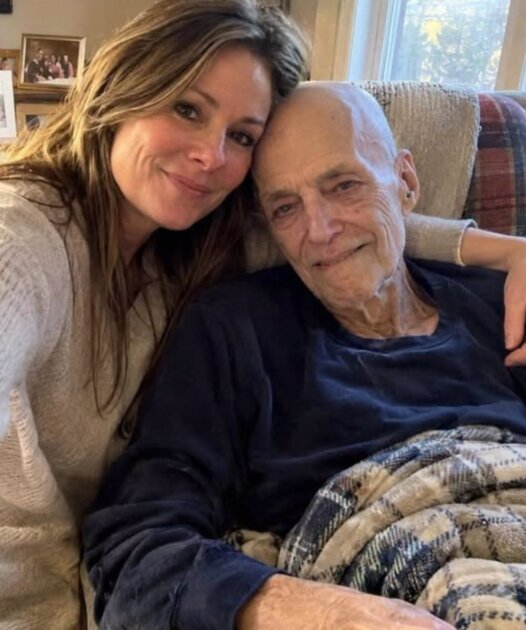
Her father was terminally ill. Claire knew that every passing day brought them closer to a goodbye she was not ready to face. They no longer made grand plans or talked about all the things they would do someday. Their world had become smaller, filled with quiet conversations, familiar memories, and precious moments that neither of them wanted to waste.
Sometimes, Claire bought groceries, tidied the kitchen, changed his bed linens, and made sure everything he needed was within reach. Other evenings, she simply made him a cup of tea, sat beside his bed, and listened as he told stories from his younger years—stories she had heard countless times as a child but now treasured more than ever.
Sometimes, they sat together without speaking. Her father would hold her hand while the fading sunlight slipped through the curtains, and Claire would silently pray that time might slow down, even if only for a little while.
For her, these visits were not an obligation. They were moments she knew she would carry in her heart for the rest of her life.
Her husband, Eric, however, saw things very differently.
At first, he had appeared understanding. He acknowledged that Claire was going through an incredibly difficult time and occasionally even encouraged her to stay with her father as long as she needed.
But as the weeks passed, his patience began to wear thin.
It started with small complaints.
“Are you going to be home late again?” he asked one evening, sitting at the kitchen table and scrolling through his phone.
“Dad was feeling particularly weak today,” Claire explained, setting her keys on the counter. “I had to get his groceries, and I waited until the caregiver arrived. I’m sorry I couldn’t get home earlier.”
Eric barely looked up.
“There’s always something. The groceries, the caregiver, another appointment. Meanwhile, there are things that need to be done here, too.”
Claire looked at him wearily. Her feet hurt, her head was pounding, and she had already made three trips to the pharmacy that afternoon because one of her father’s medications had been out of stock.
“Eric, my father is dying,” she said quietly. “I’m not away on vacation. He needs me.”
“I understand that,” he replied irritably. “But you have a family here, too.”
Claire said nothing. She did not want another argument. She hoped that, eventually, her husband would understand why being with her father mattered so much, especially now, when their time together was running out.
She never imagined that Eric’s resentment would soon lead him to do something far more disturbing than complain.
## The Man Who Tried to Take Control Behind His Wife’s Back
One afternoon, while Claire was sitting beside her father, her phone rang. It was a member of the hospice team calling to discuss some details of his care.
Near the end of the conversation, the staff member casually mentioned that Eric had called earlier and requested that future updates about the patient’s condition be sent to him instead of Claire.
For a moment, Claire thought she must have misunderstood.
“My husband requested that?” she asked in disbelief.
“Yes. He explained that he wanted to manage the family’s affairs because you had been under a lot of stress lately.”
Claire stared at her phone, unable to speak.
On the kitchen table lay her father’s shopping list, several medication boxes, and a cup of tea that had gone cold. Her father was resting in the next room, unaware of what had just happened.
What hurt Claire most was not simply that Eric had contacted the hospice team. It was that he had tried to take control of decisions concerning her father’s care without even discussing them with her.
She was the one who visited her father every day. She was the one who bought his groceries, checked his medication, spoke with his caregivers, and made sure he was comfortable.
Yet Eric had apparently decided that he had the right to determine who should receive information about her father’s condition.
It was no longer just a disagreement about household responsibilities. He was trying to control how much time Claire spent with the person she loved most.
That evening, she confronted him.
“Why did you call my father’s hospice team?” she asked after the children had gone to bed.
Eric glanced away from the television and shrugged.
“Someone has to keep things under control in this family.”
“I am keeping things under control. I’m the one caring for Dad. I speak to his doctors, arrange his groceries, and make sure someone is there when he needs help.”
“Exactly! That’s the problem!” Eric snapped. “You’re only concerned about him now. What about us? What about the children? What about our home?”
Claire took a deep breath.
“The children are not being neglected. I take care of them. I do what I can around the house, too. But I’m not going to pretend my father has years ahead of him when we both know that isn’t true.”
Eric turned away.
“We’ll see how long this goes on.”
His words were cold, almost cruel.
For the first time, Claire began to understand that her husband was not simply struggling with the circumstances. He resented the fact that her father’s illness demanded a place in her life that Eric seemed to believe belonged exclusively to him.
## The Father Who Refused to Stay Silent While His Daughter Was Being Hurt
Claire’s father had noticed the change in her long before she admitted what was happening.
Although his illness had weakened him considerably, and even the simplest movements had become exhausting, he could still read his daughter’s face.
Claire tried to hide her troubles whenever she visited. She would smile as she entered his room, ask whether he had eaten, and quickly change the subject whenever he asked if everything was all right at home.
But the man who had raised her knew her too well.
One Saturday morning, while Claire was changing his bed linens, he spoke.
“There’s something wrong between you and your husband, isn’t there?”
Claire paused, clutching a pillowcase in her hands.
“Nothing serious, Dad. We’re just tired.”
Her father slowly shook his head.
“Don’t lie to me just to spare my feelings. I may not have the strength I once had, but I can still see what’s happening around me.”
Claire lowered her eyes. She did not want to burden her father with her marital problems when he was already facing so much.
Eventually, however, she told him about Eric’s complaints and the phone call to the hospice team.
Her father remained silent for a long time.
“I don’t want you two fighting because of me,” he finally whispered.
“We’re not fighting because of you,” Claire replied, taking his hand. “I just want to be here with you.”
The old man gently squeezed her fingers.
“Then don’t let anyone convince you that you should feel guilty for that.”
That afternoon, he invited Claire, Eric, and the children to his home the following Saturday. He said he wanted to have lunch with everyone and then speak privately with Eric.
Claire tried to discourage him.
“Dad, you don’t need to sort anything out for me.”
“I’m not going to sort anything out for you,” he replied. “I simply want your husband to understand that I’m not his enemy.”
Claire looked at him, her heart aching.
She knew her father had very little strength left. The last thing she wanted was for him to spend what precious time remained worrying about her marriage.
But her father had made up his mind.
And the following Saturday, everything would come to a head.
## The Saturday Afternoon When Everything Finally Came to Light
The family gathered at her father’s house the following weekend.
The living room smelled faintly of coffee. Afternoon sunlight filtered through the curtains, and the remains of lunch still sat on the kitchen counter. The children were playing in another room while Claire arranged cups on a tray.
Her father asked Eric to sit beside him.
“I’d like to talk to you about something,” he said calmly.
Eric leaned back in his chair.
“Go ahead.”
“I know you called the hospice team and asked them to send you the updates about my condition. I also know that you’re unhappy about how much time Claire spends here.”
Eric’s expression tightened.
“I wasn’t trying to do anything wrong. I’m just trying to keep my family’s life in order.”
“Your family’s life?” the older man repeated. “Claire is my daughter. She is the one who comes here, helps me, takes care of me, and leaves every time wondering whether she will still have another opportunity to visit me.”
Eric shifted impatiently.
“I have responsibilities, too! You can’t expect my wife to organize her entire life around her father!”
“I’m not asking you to do that,” Claire’s father replied. “I’m not asking you to take care of me. But I am asking you not to prevent my daughter from being here when I need her.”
Silence settled over the room.
The old man continued, his voice quiet but firm.
“I may not have much time left. I don’t know whether I have weeks or months. But I know one thing: Claire should not have to feel guilty for loving me. If you truly love her, you shouldn’t be asking when she is finally coming home. You should be asking how you can help her get through this.”
Eric’s face reddened.
“I’m not going to sit here and let you lecture me about my own marriage!”
“I’m not trying to lecture you,” the older man answered. “I simply want you to understand that my daughter is not your property.”
That was the moment Eric lost his temper.
He sprang to his feet, pushing his chair backward so forcefully that its legs scraped sharply against the floor.
“Claire! Get the children! We’re leaving. Right now!”
Claire stood frozen in the kitchen doorway, holding the tray.
She was stunned by her husband’s anger, but what hurt her even more was that he had chosen to behave this way in the home of a dying man who had done nothing except defend his daughter.
“Eric, please don’t do this,” she said softly.
“Don’t do what? Let everyone make me out to be the bad guy? I’ve had enough of this!”
He grabbed his coat and stormed out of the house.
Claire remained motionless for several seconds, staring at the open doorway.
When she finally turned around, she saw her father sitting quietly in his chair, his head lowered. He suddenly looked even more exhausted than before.
“I’m sorry, sweetheart,” he whispered.
Claire set down the tray, crossed the room, and wrapped her arms around him.
“You have absolutely nothing to apologize for, Dad.”
But deep inside, she knew that something had changed that afternoon—something that might never be repaired.
## Eric Had Turned His Own Family Against Her
Over the following days, Claire hoped her husband would calm down.
Perhaps he would realize that he had gone too far. Perhaps he would acknowledge that he had behaved unfairly and offer an apology.
Instead, she began receiving strange messages from Eric’s relatives.
Her mother-in-law, who had once called her almost every day, suddenly asked in a cold tone whether Claire was really spending so little time with her children.
One relative wrote that a wife should put her husband and children first. Another suggested that Claire was exaggerating her father’s illness and creating unnecessary tension in her marriage.
At first, Claire had no idea where these accusations were coming from.
Then she discovered the truth.
Eric had been telling his family a carefully distorted version of events. According to him, Claire disappeared almost every evening, left the children to fend for themselves, neglected the house, and spent all her time caring for her father while he struggled to hold the family together.
He had portrayed himself as an abandoned husband whose wife no longer cared about anything except her dying parent.
The story was convincing enough that several relatives had already judged Claire without asking her a single question.
What hurt most was that these were people who knew her. They had seen how hard she worked and how devoted she was to her children.
Yet they had accepted Eric’s accusations without even giving her the chance to explain.
Claire was furious, but she did not want to argue through a series of messages or defend herself individually to every relative.
Instead, she decided that if the family was going to judge her, they would at least hear the truth.
When another family dinner was arranged, Claire agreed to attend.
She was not going there to shout, humiliate anyone, or seek revenge.
She simply wanted one thing: for people to stop judging her based on a story Eric had twisted to suit himself.
## The Family Dinner That Brought Eric’s Lies Crashing Down
Almost everyone gathered around the table that evening. Eric’s mother was there, along with several relatives, Claire, and her husband.
At first, the conversation revolved around ordinary family matters, but the tension was unmistakable.
Eric seemed confident that Claire would sit quietly through the evening and avoid bringing up what had happened.
Then she put down her fork.
“I’d like to clear something up before anyone makes any more assumptions about me,” she said calmly.
Eric immediately turned toward her.
“Do we really have to do this here?”
“Yes,” Claire replied. “Because apparently everyone has an opinion about how I live, but nobody has bothered to ask me what actually happened.”
She took several printed documents from her bag. Among them were records that helped establish the timing of Eric’s calls to the hospice team and clarify what had happened behind her back.
Claire explained that her husband had contacted the hospice service and tried to arrange for information about her father’s condition to be sent to him instead of her, even though she was the one providing most of the day-to-day support.
Then she addressed the accusations Eric had made to his family.
“You told them I was neglecting our children,” she said, looking directly at him. “You told them I wasn’t taking care of our home. You told them you had to do everything alone. But you never told them that I was still organizing the children’s daily lives while working, or that I was visiting my father because he could no longer manage everything by himself.”
Eric opened his mouth to interrupt, but Claire continued.
“I’m not asking anyone to pity me. I’m not expecting anyone to take my place and care for Dad. But I will not accept being portrayed as a bad mother and a terrible wife simply because I refuse to abandon my dying father.”
Silence fell over the table.
Eric’s mother read through the documents again before slowly raising her eyes to her son.
“Eric, is this really what you told us?”
He nervously adjusted his napkin.
“You have no idea how difficult this has been for me!”
“Perhaps it has been difficult,” his mother replied. “But why did you have to make Claire sound like a terrible mother?”
Another relative spoke up.
“If you needed help, you should have said so. You shouldn’t have told us things that made everyone turn against her.”
Claire felt no sense of victory.
She was not pleased to see her husband embarrassed. She was simply exhausted from having to prove, over and over again, that loving her father did not mean she had forgotten about her own family.
Even then, Eric refused to apologize.
By the end of the dinner, he had lost control of the conversation, and he could not bear it. Claire’s calm explanation and the evidence she had brought spoke more loudly than any argument could have.
On the way home, Eric remained silent.
Claire wondered whether he was finally thinking about what had happened.
But once they arrived home, he delivered an ultimatum that she had never imagined hearing from the man she had married.
## “Choose Between Me and Your Father!”
The children were already in their rooms when Eric closed the bedroom door behind them.
“I’m not putting up with this anymore,” he said.
Claire slowly removed her earrings and placed them on the dresser.
“Putting up with what?”
“Everyone making me out to be the bad guy! Your father constantly taking priority over me! Having to adjust my entire life around him!”
Claire stared at him in disbelief.
“You told your family things about me that weren’t true. You called the hospice team behind my back. You demanded that we leave my father’s house. All I did was tell everyone what actually happened.”
“You always have an excuse!”
“This isn’t an excuse, Eric. My father is dying.”
The muscles in Eric’s jaw tightened.
“Then listen carefully. I’m not going to wait until our marriage is completely destroyed. Either you stop running over there all the time and start focusing on your own family, or you make a choice.”
Claire said nothing.
Eric stepped closer.
“Choose! Me and your children, or your father!”
For a moment, the words seemed to hang in the air.
Claire felt as though the floor had disappeared beneath her feet. It wasn’t that she had any doubt about how much her father meant to her. What hurt was that the man with whom she had shared years of her life was now asking her to turn her back on someone who needed her more than ever.
“Are you serious?” she finally asked.
“Absolutely.”
Claire studied her husband’s face.
She thought about their wedding day, the birth of their children, the difficult years they had survived together, and all the plans they had once made for their future.
It was painful to admit that the relationship she had fought so hard to preserve no longer offered her the understanding or security she needed.
Then she remembered her father’s hand in hers as he sat beside his bed.
Don’t let anyone convince you that you should feel guilty for loving me.
Claire slowly nodded.
“All right,” she said.
For a brief moment, Eric looked satisfied. Perhaps he believed she had finally accepted that she needed to obey him.
“I’m glad you finally understand,” he replied.
But Claire looked him in the eyes and added:
“You’re right. I’ve made my decision.”
“So you’re not going to your father’s tomorrow?”
“No, Eric. I’m leaving this house.”
## That Night, Claire Packed Her Bags
The next few hours remained in Claire’s memory as a painful blur.
She did not slam doors, shout, or beg Eric to change his mind. She simply took out several bags and began packing the essentials.
The children woke to the sound of movement. Claire sat on the edge of their bed, gently stroked their hair, and explained that they would be staying somewhere else for a while.
She did not want to put them in the middle of their parents’ conflict. She did not speak badly about their father, and she did not expect them to choose between him and her.
She wanted only to protect them from the tension that had gradually taken over their home.
Eric watched from the bedroom doorway.
“Are you actually leaving?” he finally asked, as though he had only just realized that she meant what she said.
Claire zipped up one of the bags.
“You told me I had to choose.”
“I didn’t think you’d actually do this!”
Claire looked up at him, exhausted.
“I never thought you’d ask me to abandon my dying father to prove that I love you.”
Eric had no answer.
Claire looked around the room one last time. The family photographs, books, and children’s drawings were still in their familiar places.
It felt strange to leave a house she had considered home for so many years.
But she knew she could not stay simply because she was afraid of what came next.
That night, she took the children somewhere safe and reached out to relatives she trusted for support.
Her marriage was now uncertain, and she had no idea how she would rebuild her life. She knew there would be difficult conversations, practical challenges, and painful decisions ahead.
But she was certain of one thing: she would not spend her father’s final weeks or months worrying about the argument waiting for her at home every time she visited him.
## The Final Gift Claire’s Father Gave His Grandchild
In the days that followed, Claire returned to her father’s home regularly.
Now, she no longer had to keep checking the clock. She did not have to rush through the dishes or rehearse explanations in case Eric became angry.
Of course, the pain did not disappear.
Sometimes, when she was alone in the evening, Claire cried. She mourned her marriage, the future she had once imagined, and the man she had believed would stand beside her when life became difficult.
But whenever she entered her father’s room, she tried to smile.
His condition continued to deteriorate. He spent more time resting, and even short conversations became exhausting.
Claire read to him, showed him old photographs, or simply sat beside him, holding his hand.
One afternoon, her father motioned for her to come closer.
“I want to give something to my grandchild,” he whispered.
He reached into the drawer of his bedside table and took out his old camera.
The camera was worn, its corners marked by years of use, and its strap had faded with time. Claire recognized it immediately. Her father had used it to capture countless important moments in their family’s life.
It had recorded summer holidays, birthdays, family gatherings, and ordinary afternoons that had seemed unremarkable at the time but had later become some of their most treasured memories.
“I promised I’d give it to them one day,” he said. “I want them to understand that family history isn’t just something you tell stories about. It’s something you preserve.”
Tears filled Claire’s eyes.
“Dad, you can still give it to them yourself much later.”
Her father smiled faintly.
“I wish that were true, sweetheart.”
Claire could not answer. She bent down, kissed his forehead, and held his hand for a long time.
Later, she gave the camera to her child, just as her father had asked. The child turned it over curiously in their hands while Claire explained how many memories it held and why it meant so much to their family.
At that moment, she understood that there were things no failed marriage and no family conflict could ever take away.
The time they had shared. The love they had given one another. The memories they had created. And the knowledge that they had mattered deeply to someone.
Those things would remain with them long after everything else had changed.
## Claire Finally Learned What Loyalty Really Meant
After her father passed away, Claire needed a long time to process everything that had happened.
She was not only grieving his loss but also trying to come to terms with the fact that her marriage had ended in a way she had never imagined.
Some days, she questioned herself.
Had she acted too quickly? Could she have handled things differently? Could their relationship have been saved if she had been more patient, more understanding, or more willing to compromise?
But whenever she remembered Eric’s ultimatum, she understood again why she had left.
She had not walked away because she was unwilling to fight for her marriage. She had walked away because one person cannot save a relationship alone when the other uses guilt and threats to control them.
Claire did not want her children to grow up believing that love meant giving up who you were. She did not want them to think that loyalty meant unquestioning obedience, or that keeping the peace in a family required someone to remain silent about the truth.
Slowly, she began building a new life for herself and her children.
There were setbacks, uncertain days, and moments when everything felt overwhelming. But she was surrounded by people who genuinely cared about her—people who listened instead of judging, offered help instead of criticism, and understood that grief required compassion rather than demands.
Over time, Claire stopped thinking about that Saturday afternoon with anger. Instead, she remembered it with gratitude, because it was then that she had truly understood the lesson her father had tried to teach her throughout her life: no one should have to surrender their dignity to earn someone else’s acceptance.
And later, when her child began taking their own photographs with the old camera, Claire thought about everything her father had left behind.
Perhaps he had given them something far more valuable than an old possession.
He had left them a story about love, courage, and the importance of having the strength to walk away when staying means betraying yourself.
Because real love never demands that you abandon the people who need you most. It does not force you to choose, use guilt as a weapon, or claim ownership over your heart.
Real love understands that family is not a competition in which one person must lose for another to win.
And Claire finally learned that sometimes, the only way to protect the most precious things in your life is to find the courage to leave the place where someone demands that you give them up.

