
For eighteen years, I convinced myself that keeping a terrible secret from my daughter was an act of love.
I told myself I was protecting her.
Then, on her eighteenth birthday, my husband placed a wooden box in front of her and finally revealed the truth.
Hannah had been born with a twin sister.
Her name was Rosie.
And Hannah had never known she existed.
Rosie was eleven minutes younger. She had dark hair, weighed six pounds, one ounce, and had a tiny crease beside her left eye that appeared whenever she cried.
Hannah was the louder baby.
Rosie was quiet.
I used to joke that Hannah cried enough for both of them.
Then Rosie died.
She was only nine days old.
The doctors called it SIDS. There was no warning, no explanation, and no one to blame.
After Rosie died, I couldn’t even look at her crib.
While my husband, David, was at the funeral home, I dismantled it myself. When he came home, the pieces were already stacked in the garage.
He stared at me.
“You did this?”
“I couldn’t look at it.”
He didn’t argue.
We were twenty-seven years old and had no idea how to grieve.
But Hannah was still there.
She needed to be fed, held, changed and comforted. Every night, I watched her sleep and felt overwhelming relief that she was still breathing.
Then I hated myself for feeling relieved.
Somewhere in that grief, David and I made a decision.
Hannah didn’t need to know.
At first, it seemed reasonable. She was a baby.
Then she was three.
Then five.
Every year, there was another reason to wait.
When Hannah was seven, David finally said, “She deserves to know about Rosie.”
“She’s too young.”
“Then when?”
I had no answer.
And so we waited.
At twelve, Hannah was struggling at school.
At fifteen, she was dealing with anxiety.
At sixteen, she suffered her first heartbreak.
At seventeen, she was preparing for college.
There was always another reason.
Every September 9, we celebrated Hannah’s birthday.
Cake.
Balloons.
Presents.
Laughter.
And every September 9, I secretly thought about Rosie.
What would she look like at eighteen?
Would she and Hannah have been close?
Would they have shared secrets?
Would they have fought over clothes?
I never said her name.
Neither did anyone else.
Our entire family helped keep the secret.
Then Hannah turned eighteen.
We had about thirty people at our house. Her biggest present was a used car, and she was absolutely thrilled.
After everyone finished eating, David suddenly stood up.
“Can everyone give us a minute?”
I looked at him.
My heart dropped.
“No,” I whispered.
He looked at me calmly.
“Today is the day.”
A few minutes later, he returned from the garage carrying a wooden chest.
I had never seen it before.
He placed it in front of Hannah.
“Dad, what’s this?”
“There’s something we should have told you a long time ago.”
I couldn’t breathe.
David looked at her.
“You weren’t born alone.”
Hannah frowned.
“What?”
“You had a twin sister.”
She froze.
“Her name was Rosie.”
Silence.
“She was born eleven minutes after you,” David continued. “She died nine days after you were born.”
Hannah stared at him.
Then she asked the question that broke my heart.
“Does everyone know?”
David nodded.
“Grandma?”
“Yes.”
“Uncle Matt?”
“Yes.”
“Aunt Lisa?”
“Yes.”
She slowly looked at me.
“Everybody knew?”
I swallowed.
“Yes.”
Her shock turned into something much worse.
Betrayal.
“You all kept this from me?”
“We thought we were protecting you,” I whispered.
“Protecting me from what?”
“From feeling guilty.”
“For being alive?”
I couldn’t answer.
Hannah looked at the wooden chest.
“What’s inside?”
David opened it.
Inside were two hospital bracelets.
Two newborn hats.
A tiny pink blanket.
Photographs.
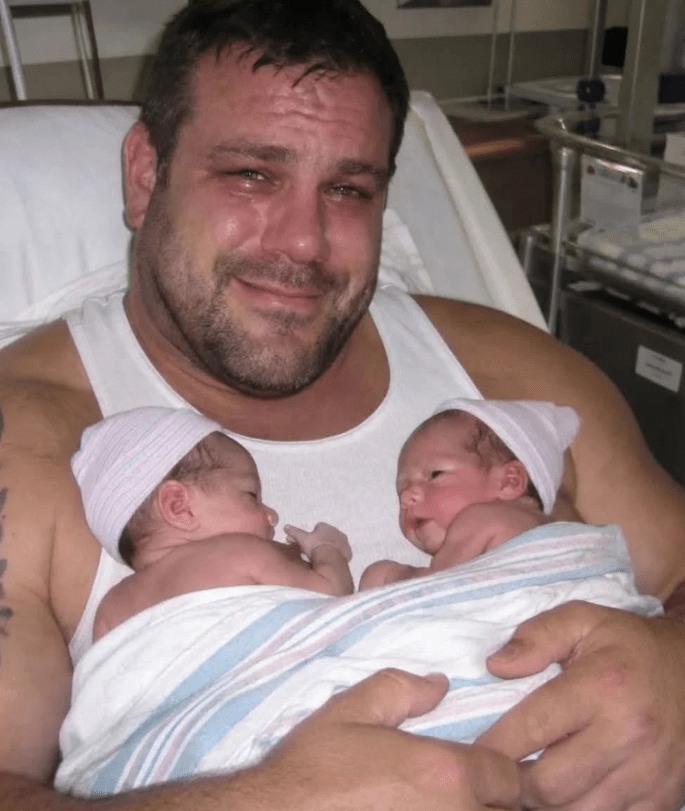
Photographs of me holding both babies.
Photographs of the twins lying beside each other.
And then Hannah saw the envelopes.
There were eighteen of them.
One for every birthday.
“What are those?”
“Letters,” David said.
“To who?”
“To you.”
“About what?”
“Rosie.”
Hannah stared at him in disbelief.
“You wrote me letters about my twin every year, but you still didn’t tell me?”
“Yes.”
She stood up.
“This is insane.”
She left that night and stayed at my sister’s house.
For three days, she barely spoke to us.
Then she began reading David’s letters.
On the fourth evening, she came into the kitchen holding one.
“You wanted to tell me when I was twelve?”
David nodded.
“You wrote that Mom thought I couldn’t handle it.”
I looked down.
Hannah’s eyes filled with tears.
“I don’t feel guilty that I lived.”
I looked at her.
“I feel sad that Rosie died. I feel strange knowing I had a twin I’ve never met.”
She took a breath.
“But I am angry that you decided for me how I would feel.”
“You’re right,” I whispered.
“I should have known her name.”
“Yes.”
“I should have had photographs.”
“Yes.”
“I should have known why Grandma cried on my birthday.”
I covered my mouth.
Then Hannah said quietly,
“I know you didn’t want to hurt me.”
She looked at both of us.
“But you did.”
“Yes,” David said.
That was the first honest conversation our family had ever had about Rosie.
A week later, Hannah asked where her sister was buried.
We had never taken her there.
So the three of us went together.
Rosie’s grave was small.
Hannah stood in front of it for a long time.
Then she touched the stone.
“Hi.”
David started crying.
So did I.
Hannah placed one of David’s old birthday letters beside the flowers.
On the way home, she carried the wooden chest beside her.
Before we left the cemetery, she had told us,
“I don’t want Rosie forgotten.”
“She won’t be,” I promised.
For eighteen years, I believed silence could protect my daughter from grief.
I was wrong.
Silence didn’t erase the pain.
It only postponed it—and added another wound: betrayal.
Rosie had always existed.
There had always been two babies in that photograph.
Two names.
Two daughters.
And after eighteen years, we finally stopped pretending there was only one.

