
At 62, I thought my chance to become a father had passed forever.
Then I met Noah.
He was seven years old.
Fourteen families had already considered adopting him.
All fourteen had walked away.
And Noah hadn’t spoken a single word in nearly three years.
They told me he understood everything. He could hear. He could see. He paid attention. Doctors had found no physical reason for his silence.
But no one really knew what had happened to him three years earlier.
And no one prepared me for what would happen on a rainy night.
My wife had died twelve years before.
We had never had children.
After she died, our house suddenly felt enormous.
Far too large for one person.
I left almost everything exactly where she had left it.
Her favorite mug was still in the kitchen cupboard.
Our wedding photograph remained on the table in the hallway.
I even kept the old wooden chair she used to complain about because it hurt her back.
Over the years, the pain became easier to carry.
It never disappeared.
I simply learned how to live with it.
My days became predictable.
Coffee in the morning. The newspaper. Fixing things around the house. Grocery shopping. A few conversations with the neighbors.
Then evening came.
And I always returned to the same quiet house.
Until one day, a social worker from the adoption agency told me about Noah.
I met him in a small office.
He was sitting on a chair that seemed far too big for him, holding a blue pencil between his fingers.
He was drawing.
He didn’t look at me.
The social worker opened his file.
“Noah has already met fourteen families.”
I remember staring at that number.
Fourteen.
“And none of them adopted him?”
She shook her head.
“They all changed their minds.”
I looked at the boy.
He kept drawing as if we weren’t even there.
“Why?”
She hesitated.
“He hasn’t spoken for almost three years.”
“He can’t speak?”
“Medical tests haven’t found anything physically wrong. He understands what people say to him. He hears. He watches. But he doesn’t respond.”
I stepped closer.
Noah immediately lowered his shoulders.
As if he wanted to make himself smaller.
And something about that broke through to me.
I knew what silence felt like.
For twelve years, I had lived with words I could no longer say to the person I most wanted to say them to.
So I didn’t ask Noah to speak.
I simply said:
“Hi, Noah.”
He didn’t look up.
I smiled.
“You don’t have to answer me.”
A few seconds later, he continued drawing.
I signed the papers.
My friends tried to talk me out of it.
“Edward, you’re 62.”
“I know.”
“A seven-year-old is a huge responsibility.”
“I know.”
They were right.
I wasn’t young anymore.
I knew I couldn’t chase after a child the way a thirty-year-old man could.
But I knew something else, too.
Noah had already watched fourteen families leave.
I didn’t want to be the fifteenth.
The first few weeks were difficult.
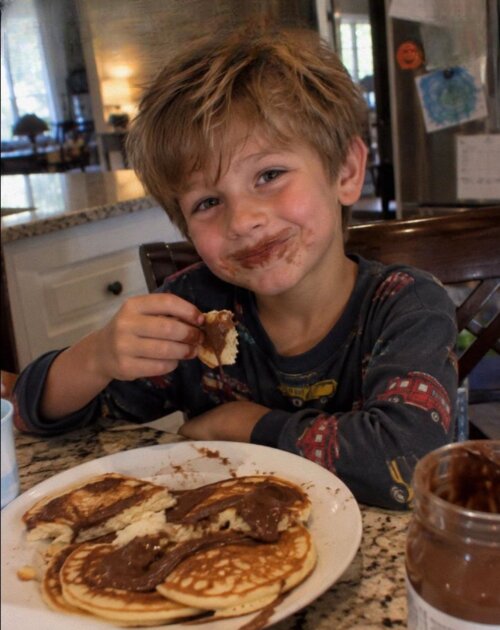
On his first morning with me, I made pancakes.
Noah sat at the table without saying a word.
I put a plate in front of him.
“Maybe you don’t like pancakes. That’s okay if you don’t want any.”
He waited until I sat down before touching his fork.
He watched everything.
Where I put my keys.
Which cupboard held the glasses.
When I went outside for the mail.
How long I stayed away.
If I moved too quickly behind him, he flinched.
But nighttime was worse.
He slept with the light on.
The first time I tried to turn it off, Noah suddenly sat upright in bed.
The fear in his eyes made me pull my hand away immediately.
“Okay. The light stays on.”
From that night on, I never tried to turn it off again.
Every evening, Noah checked the doors and windows.
Once.
Twice.
Sometimes three times.
He pulled on every handle to make sure it was locked.
I thought it was simply a habit.
I didn’t know why he did it.
So I tried to make our life as predictable as possible.
Dinner at the same time.
His schoolbag always in the same place.
And whenever I left the house, I told him exactly when I would be back.
If I said twenty minutes, I made sure I was home within twenty minutes.
Slowly, things began to change.
One day, I burned lunch.
Smoke filled the kitchen.
I stared at the blackened sandwich in my frying pan.
“Well… I suppose we can call this a new recipe.”
I heard a tiny sound behind me.
I turned around.
Noah was smiling.
Barely.
But he was smiling.
I said nothing.
I didn’t want to scare him.
A few weeks later, he started staying in the kitchen with me.
I handed him a wooden spoon.
“Want to stir?”
He hesitated.
Then he took it.
That became our little ritual.
He still didn’t speak.
But he stayed beside me.
And to me, that was already enormous.
He started drawing, too.
Houses.
Trees.
People.
One day, he drew two stick figures beside a house.
One was tall.
The other was small.
He didn’t have to explain.
I kept every drawing.
I stopped measuring his progress in words.
I measured it in smiles.
In eye contact.
In small gestures.
Then, three months after he came to live with me, everything changed.
It was a rainy night.
Rain had been pounding against the windows for hours.
We were having dinner when someone knocked on the front door.
Noah’s spoon fell from his hand.
I looked at him.
His entire face had changed.
He was terrified.
“It’s okay,” I said. “I’ll see who it is.”
I stood up.
And suddenly Noah grabbed my wrist.
Hard.
I turned around.
He was trembling.
Then his lips parted.
A sound barely escaped them.
I froze.
For a moment, I wasn’t even sure I’d heard anything.
Someone knocked again.
Noah stepped backward.
“Hey… look at me.”
He couldn’t.
His eyes were fixed on the front door.
Then my phone rang.
It was his social worker.
I answered immediately.
“Hello?”
Her voice was tense.
“Edward, do not open the door.”
My heart started beating faster.
“Why?”
“Is Noah with you?”
“Yes.”
“Get him away from the windows. Now.”
I looked at Noah.
“Who’s outside?”
Silence.
Then she said:
“The police are on their way.”
I stood up.
“What is happening?”
“A person connected to Noah’s previous placement was released two weeks ago. We learned today that he may know Noah’s address.”
Before I could respond, a floorboard creaked outside on the porch.
Noah moved behind me.
I reached back and took his hand.
“I’m here.”
The doorknob moved.
Once.
Then again.
And suddenly, I understood.
All those nights when Noah checked the locks.
All those times he flinched when someone approached him too quickly.
Maybe it wasn’t just a habit.
He wasn’t checking whether the door was locked.
He was checking whether someone could get inside.
I led him to my bedroom and locked the door.
Then I called the police.
A man’s voice suddenly echoed through the house.
“Noah?”
The boy froze.
“I know you’re in there.”
Noah was trembling so badly that I could feel it through his hand.
I put my arm around him.
“No one is taking you anywhere. Do you hear me?”
The voice continued.
“Noah, come outside.”
I didn’t know who this man was.
I didn’t know what he had done.
But I knew one thing.
I wasn’t going to let this child face his fear alone.
“This is your home now,” I whispered.
A few seconds later, we heard cars screech to a stop outside.
Then shouting.
“Police! Step away from the door!”
Noah pressed himself against me.
I held him tightly.
There were several more seconds of noise outside.
Then silence.
The police eventually arrested a man outside the house.
He looked completely ordinary.
And that disturbed me more than anything.
I had expected a monster.
Instead, he looked like someone I could have passed in a grocery store without noticing.
The social worker arrived shortly afterward.
Her clothes were soaked from the rain.
When she saw Noah, her expression changed.
“Edward… I’m sorry.”
“What didn’t you tell me?”
She lowered her eyes.
“That man lived with one of Noah’s previous caregivers.”
I felt my jaw tighten.
“And?”
“There had been allegations of abuse.”
I looked at Noah.
He was sitting on the couch with his knees pulled against his chest.
“You knew about this?”
“There were things we could never prove. Noah couldn’t testify.”
I closed my eyes for a moment.
Suddenly, everything made sense.
The light he kept on.
The locks.
The flinching.
The silence.
Maybe Noah didn’t lack words.
Maybe he had learned that silence was how you survived.
I sat beside him.
“Noah…”
He looked at me.
“You never have to tell me anything you don’t want to.”
He kept looking at me.
“But if you ever want to talk about it, I’ll listen.”
He hesitated.
Then slowly, he rested his head against my shoulder.
I didn’t move.
I didn’t want to break the moment.
Later that night, I walked him upstairs.
As always, the light in his room stayed on.
I checked the window.
Then the door.
“Everything is locked,” I told him.
I sat on the edge of his bed.
For the first time, Noah didn’t get up to check the door himself.
He simply watched me.
I reached toward the lamp.
“Do you want me to leave it on?”
He nodded.
“Okay. The light stays on.”
I stood up.
I was just about to leave when a small hand grabbed mine.
I turned around.
Noah opened his mouth.
I waited.
One word came out.
Softly.
Almost in a whisper.
But this time, I heard it clearly.
“Dad.”
I froze.
For twelve years, I had believed I would never hear that word.
And three months later, a little boy whom fourteen families had rejected had given it to me.
My eyes filled with tears.
I knelt beside his bed.
“Yes,” I whispered.
My voice broke.
“I’m here.”
Noah smiled at me.
Then he closed his eyes.
And that night, for the first time since he came to live with me, he fell asleep without checking the door.
I stood in the doorway for a few more minutes.
At 62, I thought my chance to become a father had passed forever.
I was wrong.
Sometimes a man doesn’t become a father when he first hears the word “Dad.”
Sometimes it happens when a child finally believes he can close his eyes because someone else is standing guard behind the door.

