
Lida found out by accident.
Her daughter’s friend, Natasha, had come back to the village for the weekend to visit her parents. She stopped by Lida’s house for tea, as she often did.
They chatted about ordinary things until Natasha suddenly froze at the door as she was leaving.
“Aunt Lida… you should go see Alina.”
Lida immediately sensed that something was wrong.
“Is she sick?”
“No.”
“Then what happened?”
Natasha lowered her eyes.
“Just… go to her. To the city. As soon as you can.”
“Natasha, don’t frighten me. Tell me what’s going on!”
But the girl only shook her head.
“Please, Aunt Lida. Just go.”
Then she hurried out of the house.
Lida did not sleep that night.
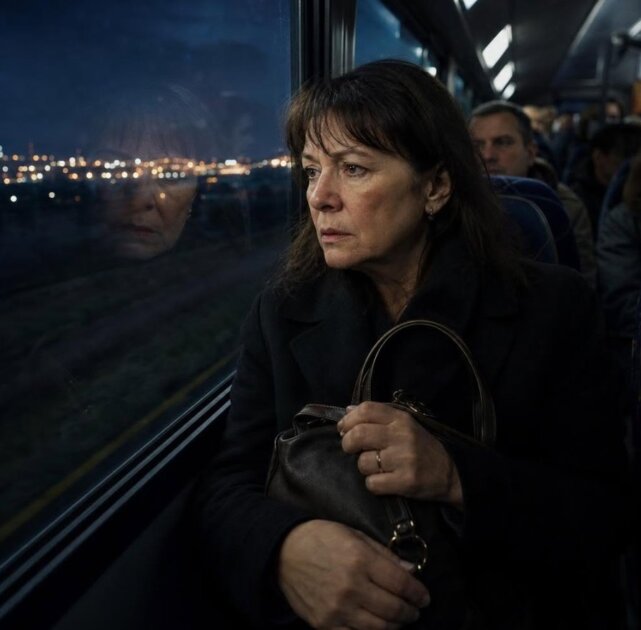
Alina had moved to the capital three years earlier after being accepted into an economics program at the university. Lida had been incredibly proud of her. She herself had spent her entire life working hard—first as a milkmaid, later as a cleaner at the village administration.
Her husband, Igor, had died when Alina was only six.
Lida had raised her daughter alone.
At first, Alina called every week. She talked about university, her dormitory, her friends. She laughed and sounded happy.
Then, little by little, things changed.
The calls became shorter.
The conversations became less frequent.
“I’m fine, Mom. I’m studying. I’m working a little too.”
“Where?”
“At a café.”
Lida had heard something strange in her daughter’s voice, but she never pushed.
The next morning, however, she packed a small bag and boarded the bus to the capital.
She arrived in the evening.
The address Natasha had given her was not a dormitory.
It was a huge modern apartment building.
Glass walls. Marble entrance. Security guards.
Lida stared at it in disbelief.
“This can’t be…”
She took out her phone and called Alina.
“Hello, Mom?”
“I’m here.”
“Where?”
“In the city. In front of your building.”
There was silence.
“What building?”
Lida gave her the address.
On the other end of the line, she heard her daughter’s breathing change.
“Stay there. I’m coming down.”
Ten minutes later, Alina walked through the entrance.
Lida almost didn’t recognize her.
It was still her daughter, but she looked completely different.
She wore an expensive coat and carried a designer handbag. Her hair was perfectly styled, and her makeup was flawless.
But her eyes told another story.
She was terrified.
“Mom… why did you come?”
“Why do you think?”
Alina said nothing.
“Let’s go somewhere,” she whispered. “I can’t talk here.”
They entered an elegant café across the street.
Alina ordered coffee as if she came to places like this every day.
Once the waiter walked away, she stared at the cup in front of her.
“What do you know?” she asked.
“Nothing. Natasha only told me to come.”
Alina lowered her head.
Then she began to cry.
“Mom… I didn’t know how to tell you.”
Lida said nothing.
She simply waited.
Finally, Alina told her everything.
During her second year at university, she ran out of money. Her scholarship barely covered anything, and she was ashamed to ask her mother for more.
A girl from the dormitory introduced her to some wealthy people.
At first, Alina was only expected to accompany men to dinners.
Then the expectations changed.
She tried to leave more than once.
But the money came easily.
Then came the expensive clothes, restaurants, gifts and, eventually, the luxurious apartment.
From the outside, it looked like she had entered a completely different world.
Inside, she was falling apart.
“I’m ashamed of myself,” she whispered. “Every morning I hate looking in the mirror. I was afraid that if you found out, you would never want to see me again.”
Lida remained silent for a long time.
Then she said only:
“Let’s go home.”
Alina looked up.
“What?”
“You’re coming home with me.”
They returned to the apartment.
It was beautiful.
Two rooms. Expensive furniture. A huge television. A coffee machine. A luxurious bathroom with a jacuzzi.
Lida walked through the rooms slowly.
She suddenly understood.
This wasn’t a home.
It was a prison made of gold.
“Pack your things.”
“Mom, what about university?”
“We’ll figure it out.”
“And the apartment?”
“Leave it.”
“My clothes?”
“Leave them.”
“But everything I have is here.”
Lida took her hand.
“No. Not everything.”
Alina looked at her.
“You still have me.”
That was when Alina broke down completely and buried her face in her mother’s shoulder.
They packed until midnight.
Alina took only what she truly needed: a few clothes, her documents, laptop and books.
She left the expensive coat hanging in the closet.
She handed over the apartment keys.
The next morning, mother and daughter boarded the bus back to the village.
Alina rested her head on her mother’s shoulder and fell asleep.
For the first time in months, she slept peacefully.
Back in the village, everyone had questions.
Why had Alina come home?
What had happened?
Why had she returned in the middle of the academic year?
Lida gave everyone the same answer.
“She was exhausted. The doctor prescribed fresh country air.”
And that was all she said.
The first few weeks were difficult.
Alina slept a lot, barely spoke and often sat silently by the window.
Lida never interrogated her.
She never asked why.
She never said, “I told you so.”
She simply stayed beside her.
She cooked for her. Made her tea. Heated the bath in the evenings.
Slowly, Alina began returning to life.
First, she started going outside into the yard.
Then she began looking for work.
Eventually, she found a job as an accounting assistant at the local administration.
The salary was small.
But when she brought home her first paycheck, she looked at her mother with pride.
“I earned this myself.”
Lida smiled.
“I know.”
Alina transferred to the university’s part-time program.
She worked during the day and studied at night.
Six months later, on a cold February evening, the two women sat together in the kitchen.
Alina was quiet for a long time.
“Mom… you never ask me what happened that night.”
Lida put down her cup.
“No.”
“Why?”
“Because if you ever want to tell me, you will.”
“And if I never want to?”
“Then you never will.”
Alina stared at her through tears.
“I don’t care what happened yesterday,” Lida said softly. “I care about what happens tomorrow.”
Alina stood up, walked over to her mother and hugged her tightly.
“Thank you, Mom.”
“For what?”
“For coming for me.”
Lida stroked her hair.
“How could I not? You’re my daughter.”
Outside, the winter storm raged against the windows.
Inside, two women cried in each other’s arms.
But these were no longer tears of shame.
They were tears of relief.
Alina has never told anyone what happened that night when her mother arrived in the city.
Not because all the pain disappeared.
But because some things belong to only two people.
There are words a mother and daughter can understand without ever saying them aloud.
And there are moments when it doesn’t matter how far someone has fallen.
If there is still someone willing to reach out a hand, there may still be a way back.
That night, Lida didn’t ask how it had happened.
She didn’t judge her daughter.
She didn’t turn away.
She simply said:
“Come on, sweetheart. Let’s go home.”
And sometimes, that is all a broken person needs.
A door that is still open.
An embrace.
And someone who says:
“Whatever happened, I’m still here.”

