— “Svet, I don’t understand,” Ruslan stood in the middle of the kitchen, holding a plate, as if he had suddenly forgotten where he was going with it. “Are you really going alone?”
Svetlana was fastening her watch by the window. Outside, the March greyness of Yaroslavl was slowly dissolving: a snowplow pushed slush toward the curb with dull anger, and on the bench in front of the building entrance a woman was feeding a stray cat with chicken bones. Everything was the same as always. Only she wasn’t.
— Yes. One ticket. Alone.
Ruslan set the plate down. On his face appeared that familiar expression: when the world refuses to behave the way he had planned.
— You said we were going together.
— I said: if you also pay your share. Not all of it. Your part. You had three months.
A faint smile crossed Svetlana’s face, but not from warmth.
— My share… — Ruslan laughed bitterly. — Even at home you talk like an accountant. You know everything’s a mess right now.
— It’s not “right now” for you — she said quietly. — For you, it’s the default state.
The air between them tightened.
Ruslan stepped closer, instinctively reaching for her shoulder — in the past, that gesture had ended every argument. Now Svetlana stepped back. Not dramatically. Just definitively.
— Sveta, what is this? I’m your husband.
— That’s exactly why it’s exhausting that I have to explain basic adult life to another adult.
Her phone vibrated: Lyubov Anatolyevna. Svetlana glanced at it, then declined the call.
And she left. Quietly. No door slam.
At the meat processing plant, Svetlana was the chief accountant. People there were afraid of her — and respected her too. She thought in numbers, not excuses. She knew when they were overbilling, and she also knew when a decision was being lied about under the phrase “family circumstances.”
At home, however, for a long time she didn’t want to see things the same way.
She met Ruslan at a colleague’s birthday party. She was thirty-two, he was thirty-one. Ruslan was easy-going, attentive, always appearing near her “by coincidence” — bringing a glass, telling a joke, making coffee.
Six months later, he was already calling Svetlana’s apartment “our place.” With such natural ease, as if it had always been that way.
At first, that naturalness even felt kind.
Then it slowly became routine.
Forgotten bills. Postponed work. “It’s just a hard period right now.” And meanwhile there was always a new idea, a new beginning, a new explanation.
And the family — almost unnoticed — moved in between them. First just “a little help.” Then “until things settle.” Eventually, an expectation.
Svetlana paid. At first out of politeness. Then habit. Then fear of seeming selfish if she stopped.
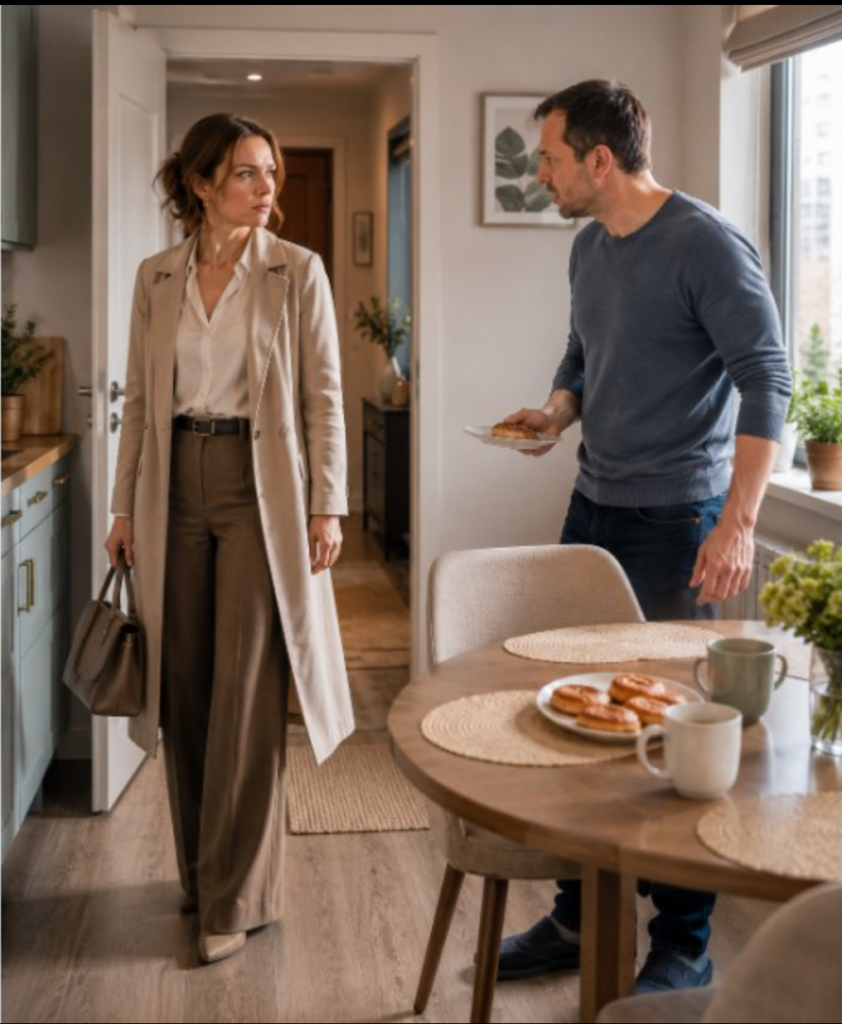
In the evening, the table was set.
Garlic, roasted meat, too much care.
Ruslan sat in a white shirt, as if they were playing at celebration.
— Let there be no war — he said quietly.
— Then let’s talk — Svetlana replied.
He poured her wine. A rare gesture. It arrived too late.
— You’re tired — Ruslan began. — Maybe I really did delay working too long, but… I don’t want to go just anywhere. Not to something humiliating.
Svetlana slowly put down her fork.
— And am I allowed to live in something humiliating?
Silence.
Then she spoke — quietly, but now irreversibly:
— When your sister sends her bank details without a second thought. When your mother talks about my apartment as if it’s already half hers. When your father says, “At least we don’t have to worry about you.” And you stay silent. Was all that fine?
Ruslan turned his plate away.
— You also gave money. No one forced you.
— That’s exactly why I’m stopping.
She stood up. Went to the window.
Outside, it was getting dark.
She placed papers on the table.
Bills. Transfers. Lists. Names.
Ruslan skimmed them.
— You kept this about me?
— I kept it about myself. So I could finally see what’s happening.
— Like with a supplier?
Svetlana smiled.
— Suppliers at least sign contracts.
Ruslan slammed his fist on the table. The glass trembled.
— Tomorrow you’re leaving — Svetlana said calmly. — So am I.
— This is my home!
— No. This is my apartment.
The sentence was simple. And final.
The phone rang again. Lyubov Anatolyevna.
Svetlana put it on speaker.
— Sveta, Tamara is waiting for the money…
— I’m not sending any more money. To her or anyone else.
— But we’re family!
— Strangers ask for less — Svetlana said, and hung up.
Ruslan eventually left.
There was no scene. Just movements, boxes, silence.
The door closed without a sound.
In Turkey, in the first days, Svetlana barely spoke.
Then she bought a dress she would never consider “useful.”
On the third day, she filed for divorce.
When she returned, the lock had already been changed.
Her father was waiting at the airport.
— Can you handle it? — he asked.
— Yes — Svetlana said.
And for the first time, it didn’t sound like an answer. But like a state of being.
A month later, she saw Ruslan outside a store.
He was working as a courier.
He waved. Smiled.
But the smile went nowhere.
— I’m working — he said. — Finally.
— Good.
— Maybe if all this hadn’t happened…
Svetlana looked at him.
— Don’t make me responsible for what you delayed doing.
Silence.
— You’ve changed — he said quietly.
— No — she replied. — I’ve just started living for myself for the first time.
A month later, she bought a ticket to Kazan.
Alone.
And for the first time, she didn’t need to explain it.