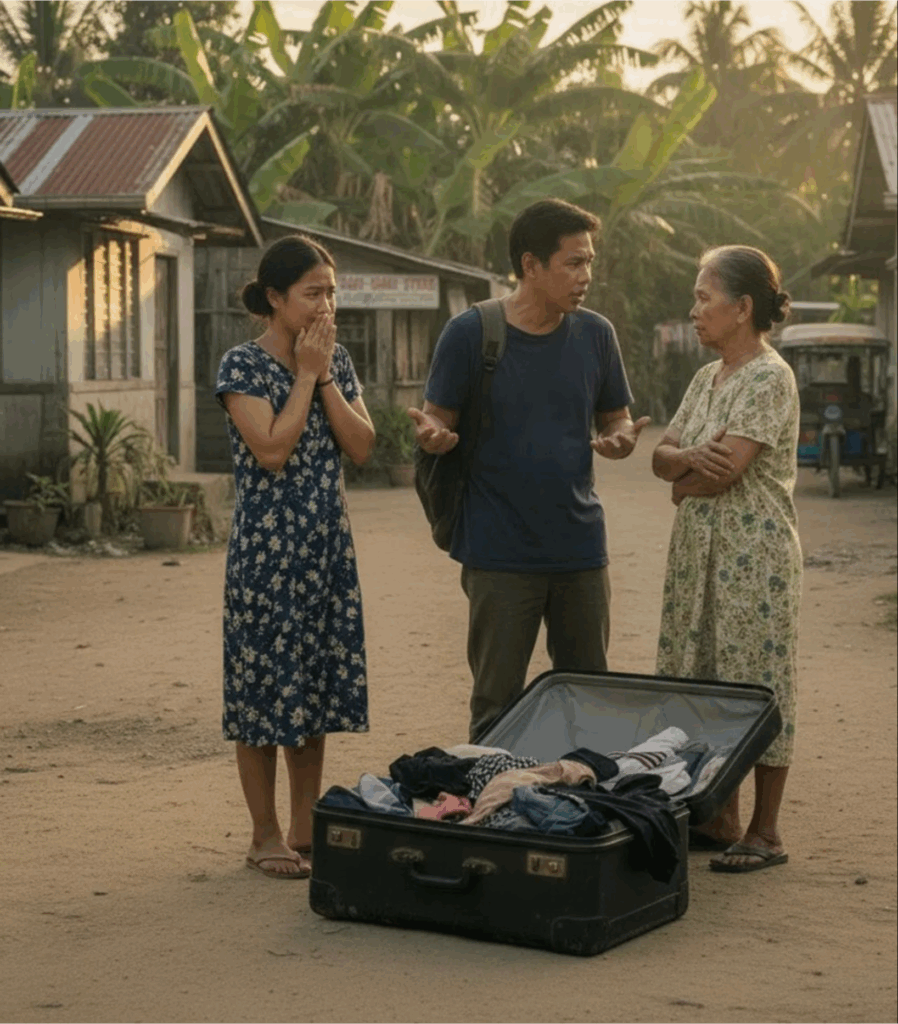
“Where is my white shirt? The one I wore yesterday!” Pavel’s voice cut through the apartment the moment he stepped into the bedroom, as if the space itself belonged to him.
Natasha stood by the wardrobe, holding a folded sweater. The last item. The final piece she needed to pack. On the bed, an open suitcase waited, half full. One more step and this would be done.
– “It’s probably in the laundry basket,” she said without turning around.
– “What laundry basket? I need it today! I have a meeting with investors!”
Pavel walked in, perfectly composed: tailored suit, confident posture, the expression of a man who expected the world to adjust itself around him.
– “Wash something for my mother too,” he added casually. “She’s tired. And take care of my shirt as well.”
Natasha paused.
Click.
The suitcase lock sounded louder than it should have.
Pavel noticed immediately.
– “What is this?”
– “What it looks like.”
He laughed, short and dismissive.
– “Don’t start drama now. Natasha, I have an hour.”
– “And I’ve wasted six years,” she replied quietly.
The air shifted.
– “Where are you going?” he asked, smirking. “To your sister? Your mother? Come on.”
Natasha finally turned to him.
– “It doesn’t matter where. Only that it’s away from you.”
His smile faded for a moment, then returned sharper.
– “And how exactly will you live? You haven’t worked in years.”
– “I will work.”
– “You always overreact. Take a vacation. I’ll even book you Turkey.”
That was the moment something inside her finally snapped—not loudly, but completely.
– “I don’t want a vacation.”
She lifted the suitcase.

– “Natasha!”
But she was already walking past him.
In the hallway, she didn’t look back. The elevator mirror showed a pale face she barely recognized. Not broken. Just finished.
Her sister opened the door immediately.
– “You left him?” she asked.
Natasha nodded.
And for the first time in years, she felt something unfamiliar: silence inside her own mind.
At first, Pavel called. Then texted. Then demanded.
“You’re overreacting.”
“Come home.”
“Without me you are nothing.”
She stopped reading. Then she stopped responding. Then she blocked him.
But the pressure didn’t end.
A realtor called one day.
– “Your husband wants to sell the apartment.”
Natasha froze.
– “Sell?”
– “Legally it’s his name on the documents. He’s offering you part of the value if you agree quickly.”
Her hands trembled.
So this was his strategy.
Not to argue. To erase her.
That night she made a decision.
She would not fight for what was already used to trap her.
She would leave instead.
– “I’m going to Sochi,” she told her sister.
– “That’s insane.”
– “Maybe. But it’s mine.”
The train felt like a boundary between two lives. Behind her was everything she had been reduced to. Ahead was nothing—but at least it was open.
Pavel’s final message appeared on her phone:
“Without me, you are nobody.”
She deleted it.
Sochi greeted her with warm rain and salt-heavy air. She stayed in a hostel first, surrounded by strangers who didn’t know her past. That anonymity felt like oxygen.
Then came a job at a small café. Long hours, tired legs, simple work. But every day felt lighter than the last year of her marriage.
– “Did you come alone?” an older landlady asked later when she rented a room.
– “Yes.”
– “Then you’re already brave.”
Natasha didn’t know how to answer that.
Pavel kept trying for months. Calls from unknown numbers. Messages. Then legal documents. Divorce papers. She signed everything without argument. She didn’t want property, money, or ties.
She wanted distance.
In spring, she got a job at a travel agency. Better pay, better rhythm. Morning runs by the sea became her habit. Slowly, she began rebuilding herself.
Then she met Roman, a local guide.
– “You’re different,” he said one evening. “Not from around here.”
Natasha smiled faintly.
– “I guess I’m not from anywhere anymore. Or maybe from somewhere I finally left.”
One night, sitting by the shore, she opened her phone and found old photos. Wedding pictures. Smiles that didn’t reach her eyes. Moments that looked like someone else’s life.
She deleted them one by one.
– “What are you doing?” Roman asked.
– “Taking myself back,” she said.
The waves kept rolling in, steady and endless.
Somewhere far away, Pavel still believed she could be pulled back.
But Natasha already knew the truth:
Some lives aren’t repaired.
They are abandoned.
And for the first time in her thirty-four years, she wasn’t someone’s wife, someone’s responsibility, someone’s shadow.
She was simply herself.