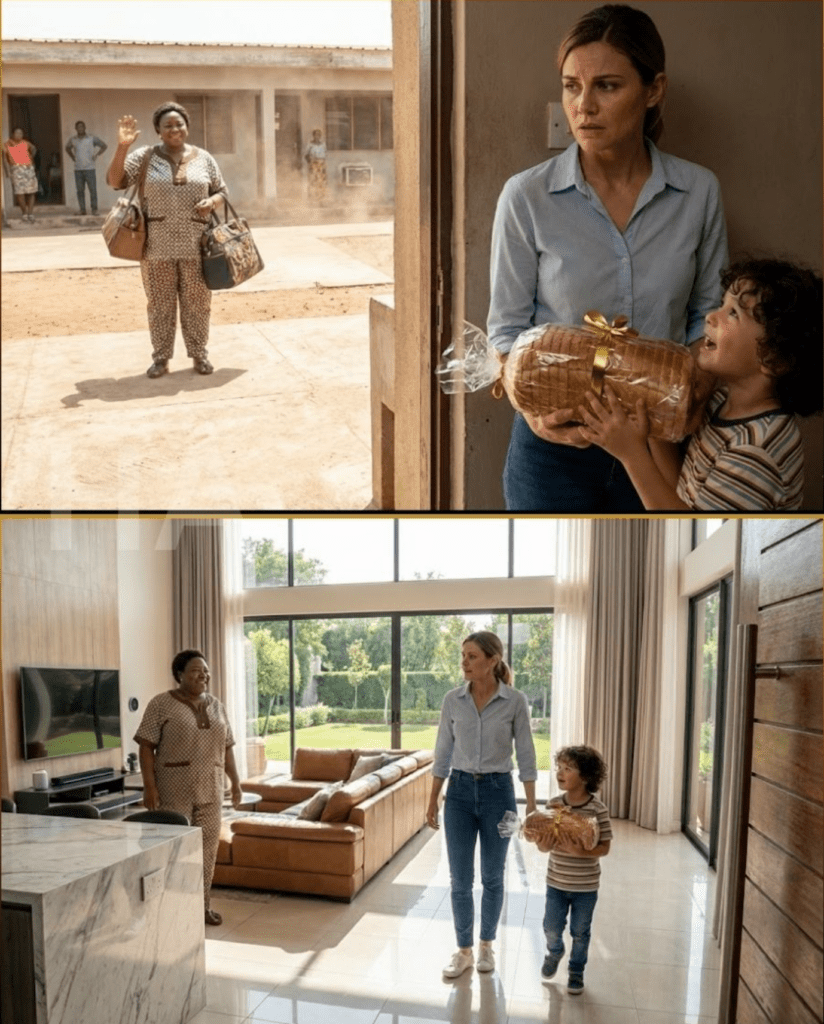
Back inside, I set the bread on the dining table. The golden ribbon caught the dim light, shimmering as if mocking me.“Can we eat it, Mummy?” Kene’s voice was eager, bright.“No,” I said sharply—too sharply.
His smile vanished. “Why?”I softened my tone quickly, though my heart wasn’t in it. “Not now. We just had lunch. Maybe later.”But deep down, I knew we would never eat it. Not today. Not tomorrow. Not ever.
Later that afternoon, Naza came knocking, her energy filling the room as usual. “Ah-ah! Who bought this one?” she exclaimed, spotting the bread.I explained everything—how Madam Christiana had given it, my uneasy instincts, the money she owed me, the timing, the strange feeling that something was wrong.
Naza laughed, carefree, teasing, “Nothing will happen, my friend! Don’t be dramatic.” Then, joking, “Me, I’ll cover it with the blood of Jesus. Give it here! It’s too fine to waste.”Against my better judgment, wanting to avoid waste, I handed it to her.
“If you’re sure…” I said.“Give it to me jare!” she laughed, tossing her head back. “I’m starving.”She left, bread tucked under her arm, still laughing. I watched her go, a gnawing unease curling inside me. Little did I know I would replay that image endlessly—each time wondering if I had made the worst mistake of my life.
By 7:30 p.m., while bathing the children, my phone rang. It was Naza—but her laughter was gone. Replaced by screaming, terror-stricken, raw.“Chinwe! Chinwe!! Ogbonna—he’s shouting ‘My tummy! My tummy!’ He’s rolling on the floor! Vomiting! Chinwe, what was in that bread?!”
My heart leapt into my throat.“It started small—just a stomach ache!” she cried. “Now he’s sweating, vomiting nonstop. He’s… he’s losing strength!”Her son’s screams pierced the line—a child’s desperate, agonizing cry. Something inside me froze, a cold dread creeping down my spine.
“We’re taking him to the hospital now!” she shouted before the call cut off.Tears blurred my vision as I sank to the bed, whispering prayers.My husband rushed in. “What happened?”I barely managed to explain between sobs. His face drained of color.
“We need to go—NOW,” he said.We raced to the clinic, hearts pounding, hands gripping the children tightly. When we arrived, the chaos hit me—nurses rushing, a stretcher rolling, tubes and saline. Naza was crumpled on the floor, her husband holding her, both trembling.
The doctor’s words struck like a hammer:“Food poisoning. Severe. You brought him early—thank God. Another thirty minutes, we might have lost him.”Naza’s sobs echoed in my ears. And I—guilt like a storm battering me—stood frozen.
Hours passed, the boy slowly stabilizing. His pale eyes flickered open. “Mummy…” he whispered.Tears blurred my face. Relief mingled with the lingering shock.When the compound caught wind, fingers pointed.
Madam Christiana deflected, stammered, tried to place the blame elsewhere. But I felt it—something had shifted irreversibly between us.I cut ties. Deleted, blocked, erased. Even the money she owed—gone. Some battles, I decided, were better left to God.
Years moved on. Our family grew. Our home changed. But memories of that day clung like shadows.Then, one afternoon, a message: Madam Christiana had a severe stroke. One side of her body paralyzed. No joy, no surprise—just a grim echo of nature’s way.
I whispered a prayer, as always: “May God have mercy on her.”Ogbonna turned eleven last week. Watching him run, laugh, blow out candles, I felt the full weight of life’s fragility. “You are a miracle,” I whispered, and he smiled, sensing something sacred even without understanding it.
But life, I realized, has a way of circling back.A few months later, at a neighborhood gathering, a new family moved in. They were cheerful, naive, blissfully unaware of the history of this compound. And then I noticed it—a familiar golden ribbon on a loaf of bread in their hands.
Time slowed. My heart hammered. I could almost hear that faint, insidious voice of instinct again.I stepped forward, forced a smile. “Oh, that looks lovely… but maybe… maybe you should be careful. You never know…”
The mother laughed, brushing off my concern. “It’s just bread! What could go wrong?”And in that moment, I realized that some lessons never truly leave you. That tiny voice—the one I had almost ignored—had saved a life once. And it would save it again, if needed.
Life was beautiful. Fragile. And dangerously unpredictable.Sometimes, I thought, caution isn’t paranoia. It’s survival.Sometimes, mercy arrives through the smallest choices.And sometimes… it whispers before disaster strikes.