The flight from Atlanta to San Francisco began in chaos, just as you might expect when traveling with a 14-month-old baby. From the moment we boarded, I could feel that this was going to be a difficult journey.
My child was restless, overtired, and deeply uncomfortable in the tight, unfamiliar space of the airplane cabin. The crying started almost immediately after takeoff and didn’t seem to stop. I tried everything—rocking, whispering, offering a bottle, a toy, anything that might calm them. Nothing worked for more than a few seconds.
Around me, I could feel the silent judgment of other passengers. No one said anything, but the sighs, glances, and subtle expressions made it clear enough. I already felt overwhelmed, but that quiet pressure made everything worse. I was exhausted, embarrassed, and running out of patience all at once.
About an hour into the flight, something unexpected happened.
A man sitting across the aisle, who had been quietly observing the situation, turned toward me with a gentle, reassuring smile. He spoke softly:
“Would you like some help? I have a daughter around the same age. I know how hard this can be. I might be able to calm him down if you’d like.”
His tone wasn’t pushy or strange—just calm and kind. Still, I hesitated. Every instinct as a parent warns you against handing your child to a stranger. But I was at my limit. The idea of even a few minutes of peace made me nod in reluctant agreement.
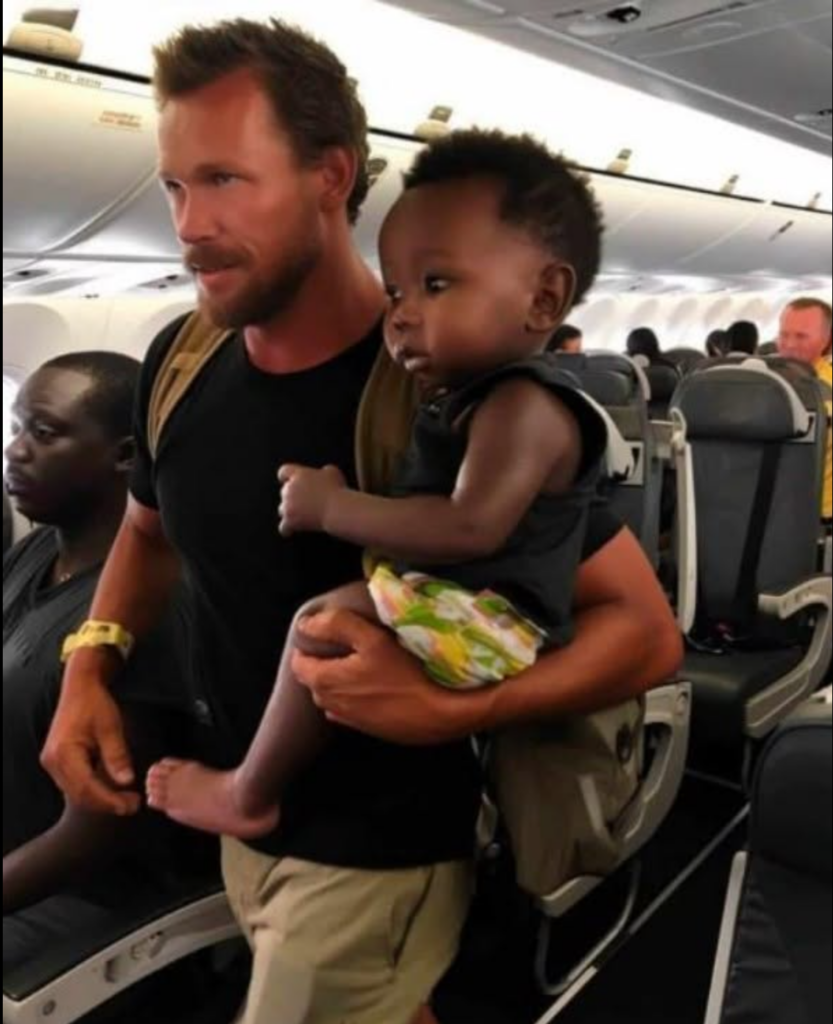
The moment he took my baby into his arms, something incredible happened—the crying stopped almost instantly. My child, who had been inconsolable just seconds before, suddenly became calm, even curious. A tiny smile appeared on his face. For the first time in hours, I felt like I could breathe again.
The man held him with surprising ease, gently rocking him as though he had done it countless times before. For a brief moment, I even thought he must be a very experienced father.
I turned away to grab something from my bag—water, snacks, anything to prepare for later. But when I looked back, my heart dropped.
The man had leaned closer to my baby and was whispering something into his ear. His expression had changed. What had seemed warm and friendly moments earlier now looked serious, almost unsettling. My instincts immediately went into overdrive.
What if I had made a mistake? What if my child was in danger?
I stood up quickly and approached him.
“Excuse me,” I said, trying to keep my voice steady, “I’m going to take him back now.”
He looked up at me, slightly surprised—but then calmly smiled and nodded.
“Of course,” he said.
Without any resistance, he handed my baby back.
The moment I held my child again, I felt his small body press into mine, his heartbeat slowly settling. Mine, however, was racing. I held him tightly, unwilling to let go.
The rest of the flight passed in uneasy silence. The man kept his distance, and I couldn’t stop replaying what I had seen. Even though my child was safe in my arms, I couldn’t shake the feeling of uncertainty.
When we finally landed, I reported the incident to airport security. They listened carefully and assured me they would investigate.
A few days later, I received a call.
After reviewing the footage and speaking with the man, they confirmed that he was not a threat at all. In fact, he was a well-known child psychologist who often helps calm children during flights when parents are overwhelmed. What I had interpreted as suspicious behavior was actually gentle, professional reassurance.
The relief I felt was overwhelming—but so was the embarrassment I couldn’t completely ignore.
Looking back, I realized how easily fear can distort perception, especially when you’re exhausted and protective. My instincts as a parent had taken over completely, but they had also misread a situation that was, in reality, harmless.
That flight became more than just a stressful travel story. It turned into a lasting lesson about trust, perception, and the thin line between fear and misunderstanding.
Since then, I’ve often thought about that day—not with fear, but with a quiet awareness. Not every stranger is dangerous, and not every unsettling moment hides bad intentions. Sometimes, it’s simply kindness seen through the lens of anxiety.