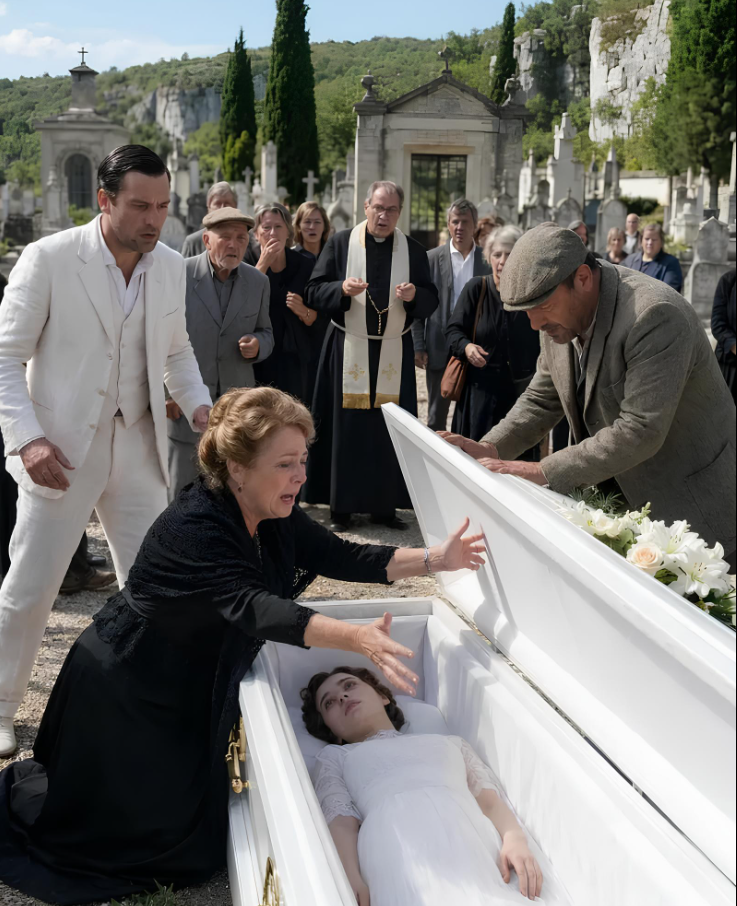
The bells of the Rocamadour cemetery rang slowly through the cold November air as I dropped to my knees beside the coffin.
“Open it!” I screamed.
Because I had heard something.
A knock.
Faint.
Desperate.
Alive.
The people around the grave stared at me in horror. The women crossed themselves, the men whispered prayers. My son Julien stood motionless beside the white coffin, his face pale as chalk.
But I knew.
God forgive me—I knew.
Claire was not dead.
Not my Claire.
Not the young woman who, just two nights earlier in the maternity ward, had gripped my wrist so tightly it felt like she was holding on to life itself.
“Don’t let him take my baby, Madeleine…” she had whispered before they took her away.
Not the words of a woman afraid of childbirth.
The words of a woman afraid of someone.
Afraid of my son.
My name is Madeleine Delorme. I am sixty-four years old. Pain has followed me most of my life. I have buried my husband. My sister. I have buried dreams, hopes, and silences no woman should carry.
But nothing prepared me for the day I almost buried my daughter-in-law alive.
At the hospital in Cahors, Julien walked into the waiting room with perfectly combed hair, a clean shirt, and dry eyes.
“Claire is gone,” he said flatly.
I stood so quickly the chair crashed behind me.
“And the baby?”
His gaze dropped—not in grief, but calculation.
“The baby too.”
My heart shattered so violently I thought I might collapse right there on the hospital floor.
My granddaughter.
Claire had secretly named her Jeanne.
The small cream-colored knitted cap was still unfinished beside her bed at home.
“I want to see her,” I demanded.
Julien’s jaw tightened.
“You can’t.”
Can’t.
As if saying goodbye were merely an inconvenience.
“I am her family,” I whispered.
“I am her husband,” he replied coldly.
Not with grief.
With ownership.
And for the first time in my life, I looked at my son and felt shame instead of love.
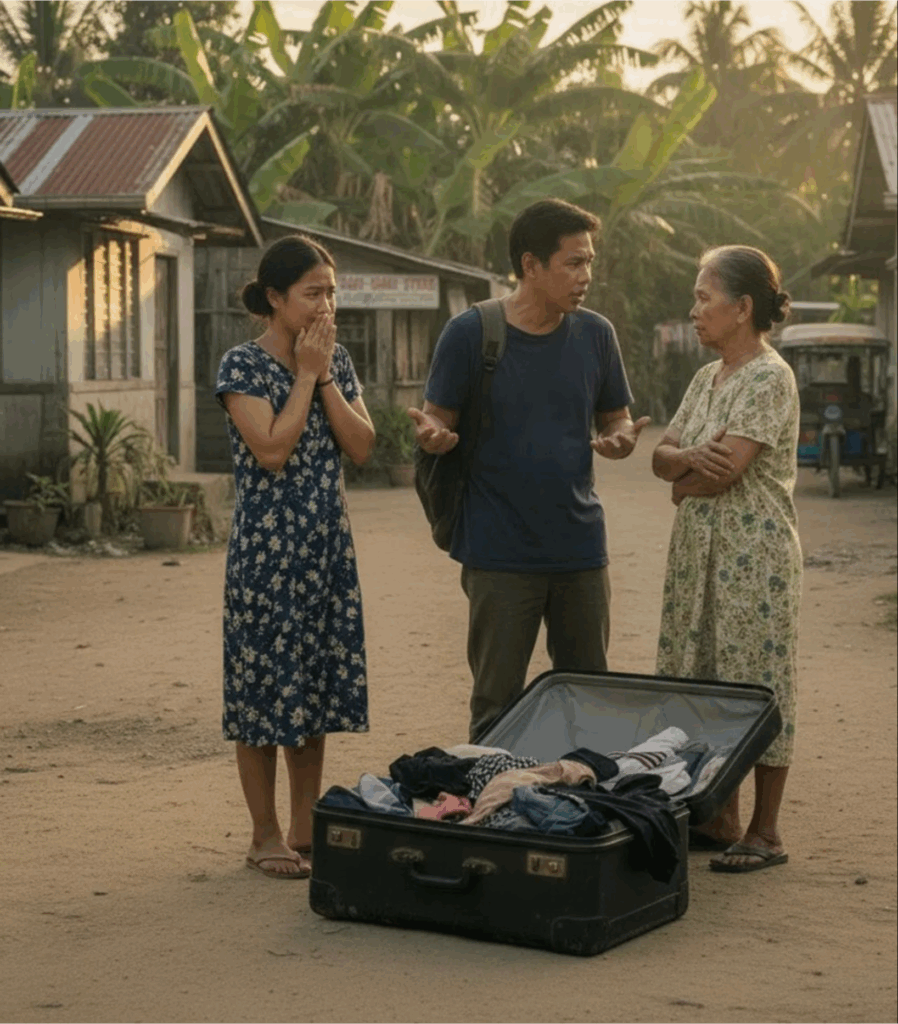
Claire had entered our lives four years earlier with a worn suitcase and a smile so timid it looked like she was apologizing for existing. Julien called her fragile.
But I saw things.
Bruises hidden under long sleeves in summer.
The way she flinched at sudden noises.
The silence that fell whenever Julien entered the room.
And yet, in my kitchen, she slowly came back to life. She laughed while learning my husband’s recipes. She called me “Maman Madeleine” when she was exhausted. And when she became pregnant, I saw hope bloom in her again.
Then Julien changed.
Or maybe he simply stopped hiding who he was.
Constantly checking her phone. Counting her money. Controlling her movements. Gentle in public, a jailer in private.
By the end, she was no longer living—just surviving.
The funeral was arranged with disturbing speed.
Too fast.
Closed coffin.
No farewell.
Nothing.
In Rocamadour, the white coffin stood beneath a grey sky, covered in lilies and roses.
“To my beloved wife.”
Those words felt like a lie carved into wood.
When the pallbearers tried to lift the coffin, it wouldn’t move.
Four men strained—nothing.
Eight men together—still nothing.
As if the earth itself refused to accept her.
Then came the sound.
Knock.
Silence.
Again.
Fainter—but undeniable.
Alive.
I threw myself forward.
“OPEN IT!”
Julien grabbed my arm.
“You’re hysterical!”
I looked straight at him.
“No. You’re afraid.”
One of the men stepped forward, hands shaking, and broke the seals.
The lid opened slowly.
Claire lay inside. Pale. Dressed in white.
But her lips trembled.
Her fingers moved.
A scream tore through the crowd.
I fell beside her, crying as her hand searched for mine. Between her fingers was a crumpled note.
Julien lunged forward.
“Give it to me!”
I opened it.
Claire’s handwriting was weak, barely legible.
But I understood every word.
“My daughter is alive. Julien took her. Don’t let him win.”
The world went still.
I lifted my gaze.
For the first time, my son looked afraid.
Not angry.
Not cold.
Afraid.
Because the silence he had built everything on was collapsing.
Later, in the hospital, everything unraveled.
Claire had been heavily sedated after childbirth. Her pulse had been so weak she was declared dead too quickly.
Too quickly.
The baby’s records were gone. No photos. No documentation. No body.
As if Jeanne had never existed.
But Claire remembered hearing her cry.
And she remembered Julien leaning over the cradle.
“Move her,” he had whispered. “Before my mother starts asking questions.”
The police later found the baby in an abandoned convent at Sainte-Marthe.
When they told me, I could barely breathe.
“We found a baby.”
“Alive?”
A pause.
“Yes.”
I slid down the hospital wall and cried harder than I ever had in my life.
Not from grief.
But from relief.
That evening, Jeanne was brought back to her mother.
Small. Warm. Alive.
When they placed her on Claire’s chest, Claire opened her eyes.
And then she screamed.
Not human.
But the sound of a mother being returned her child from death itself.
She kissed Jeanne over and over, as if each kiss could rebuild what had been stolen.
And standing beside them, I understood something I would never forget:
Blood makes a family.
But love is the choice to protect someone—even when the truth is trying to bury them alive.