The village of Sosnovka, hidden among endless fields and silver birch groves, buzzed like a disturbed beehive. The Festival of the First Furrow was approaching, and this year it promised to become the talk of the region for decades to come: three weddings were to be celebrated in the village club on the very same weekend.
Matvey Silantyevich, chairman of the “Bright Path” collective farm, personally ordered three barrels of last year’s wine to be opened and two fattened bulls to be slaughtered for the celebration. The whole village smelled of fresh bread, smoke, and anticipation.
One of the brides was twenty-one-year-old Zoya Platonova, the head of the dairy farm. She was the kind of woman people remembered long after seeing her — tall and graceful, with a thick ash-blonde braid falling to her waist and gray-green eyes the color of wild steppe grass.
Her stubborn strength came from her grandfather.
Makary Yegorovich was a legend in Sosnovka. At seventy-eight, he still chopped wood himself, repaired everything from cuckoo clocks to tractor engines, and spent evenings telling stories to village children.
But unlike other old men, he never bragged about heroics. Instead, he spoke of strange little memories — how a horse once stole his last cracker during the war, or how hungry soldiers managed to cook soup out of nothing but water and hope.
People respected him not for his words, but because life had never managed to break him.
And life had taken almost everything from him.
His wife died of typhus. Both of his sons never returned from the war. Zoya’s mother, crushed by hunger and widowhood, abandoned her daughter with the old man and ran away with a trader from Omsk.
So Zoya grew up surrounded by silence, hard work, and dignity.
That morning, she woke before sunrise. She put on her best headscarf embroidered with red poppies and tried to hide the nervous excitement in her chest.
Gleb was coming home that day.
Gleb Odintsov.
Her fiancé.
He had been working in the Virgin Lands as a mechanic. They had met two years earlier at a Komsomol gathering, and since then their letters had been filled with longing and promises too passionate to fully put into words.
Makary was already sitting at the table with steaming raspberry tea, black bread sprinkled with coarse salt, and a boiled egg before him.
He watched his granddaughter carefully.
Too carefully.
“You’re dressed up awfully early,” he muttered at last. “Even the cows are still asleep.”
“The bus from Yaroslavka arrives today,” Zoya answered softly. “Gleb’s coming back.”
The old man nodded slowly, but his eyes remained troubled.
“Tell me something, Zoyka…” He set down the egg. “Last year I heard that the postwoman’s daughter had a child. And people said your Gleb might’ve had something to do with it.”
Zoya flushed with anger.
“That’s a lie! Maria chased after him herself! The child belongs to some agronomist!”
Makary gave a dry snort.
“Oaths are cheap,” he said quietly. “The boy works hard, I’ll give him that. But his soul… his soul is like tumbleweed. Today he’s here. Tomorrow the wind carries him elsewhere.”
“He loves me,” Zoya whispered stubbornly.
The old man said nothing more.
But unease settled heavily inside him.
When the old bus finally rolled into the village in a cloud of dust, Gleb jumped out first.
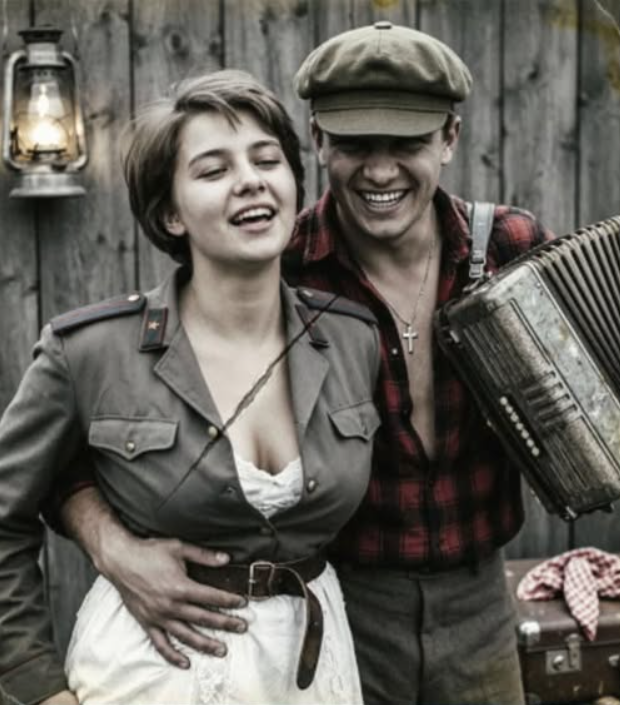
Tall, handsome, grinning broadly in a new plaid shirt and polished boots.
“Zoyka!”
Laughing, he swept her into his arms and spun her around. Her scarf flew off, her braid loosened over her shoulders, and the entire village stared.
But Zoya saw only him.
The smell of engine oil, road dust, and wind.
The feeling of home.
The very next day, they registered for marriage.
The wedding was loud, wild, and joyful.
Long wooden tables stood beneath the open sky, covered with woven cloths. There was rich noodle soup, fried potatoes, mushrooms, aspic, and mountains of homemade pies.
Gleb played the accordion, danced until dawn, and made even the oldest villagers laugh.
Only Tonya, Zoya’s cousin, noticed something troubling late that night:
Gleb disappearing behind the barn with a flirtatious girl from a neighboring village.
But she kept silent.
It was the wedding night.
The first months of marriage felt like happiness itself.
Gleb repaired the roof, built shelves, and even managed to bring home a radio. At the machine station, he became famous for fixing engines everyone else considered dead.
Zoya believed she had finally found peace.
Even Makary stopped warning her.
Perhaps he had been wrong after all.
But a year and a half later, everything changed.
After returning from a health resort, Gleb came back restless and distant. Soon he volunteered for traveling repair brigades working in remote settlements.
He spent less and less time at home.
One day, while unpacking his suitcase, Zoya found a photograph hidden in the lining.
A dark-haired woman in a railway uniform.
On the back were the words:
“To my Gleb. Don’t forget Chertkovo. I’m waiting.”
The world around Zoya fell silent.
Not long afterward, she overheard the truth.
A cheerful performer from a traveling troupe laughed loudly:
“That mechanic Odintsov! Our Lida’s gone crazy over him. He promised he’d leave that pathetic village wife of his.”
The ladle slipped from Zoya’s hands.
Pathetic village wife.
That was what he called her.
Something inside her shattered.
And at the same time, something stronger was born.
Coldness.
Clarity.
The iron strength she had inherited from her grandfather.
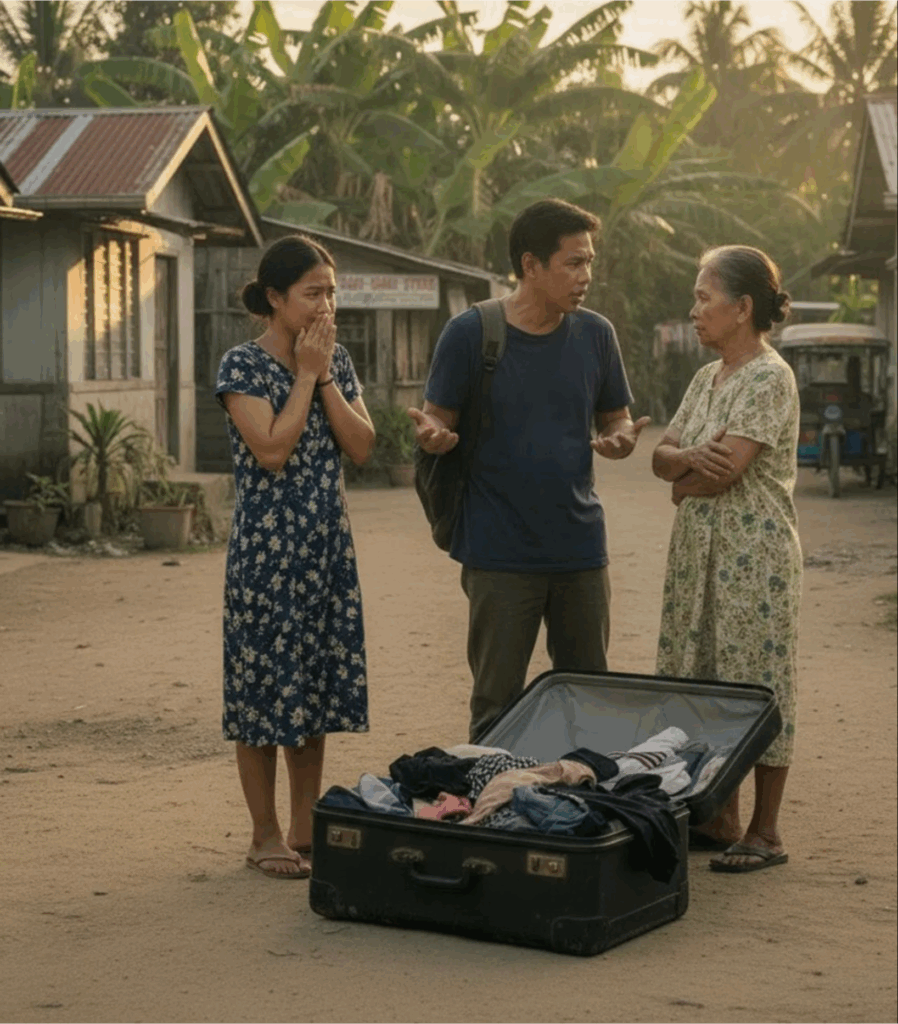
When Gleb came home that evening, his packed suitcase was already standing by the door.
Zoya waited for him.
Silent.
Straight-backed.
Unrecognizable.
“What’s all this?” he asked nervously.
“I know everything,” she replied calmly. “About Lida. About Chertkovo. About the future you planned without me.”
At first he tried to laugh it off, then began making excuses.
“Oh, come on, Zoya! It was nothing serious! Just a man’s mistake! I always came back home to you!”
“Home?” Her voice turned icy. “This place was never home to you. Just a stop along the road.”
For the first time, Gleb realized something terrifying:
The gentle Zoya he once knew was gone.
“Leave,” she said quietly. “Before my grandfather wakes up.”
Gleb grabbed his suitcase.
And disappeared into the night.
After the divorce, the whole village talked about nothing else.
But Zoya withdrew into herself. She worked from dawn to exhaustion and convinced herself she would never love again.
One evening, Makary sat beside her on the porch.
“A forest fire destroys everything,” he said slowly. “But afterward, the strongest forest grows.”
Zoya remained silent.
“There’s a kind of love like dry straw,” the old man continued. “It burns bright and fast, then leaves nothing but ashes. And there’s another kind — like glowing coal in a stove. Not beautiful to look at, maybe, but it keeps you warm through the whole night.”
A year later, Zoya met Roman Kuznetsov.
A quiet construction engineer with a deep scar above his eyebrow.
He spoke little, but every word carried weight.
He never showered her with compliments.
Never made grand promises.
He simply looked at her as if he understood every wound she carried.
And for the first time in years, Zoya felt calm.
When Roman finally proposed, rain was falling outside.
Instead of flowers, he arrived carrying rolled-up blueprints.
“I don’t know how to speak beautifully,” he admitted honestly. “I survived war and captivity. I’m not an easy man. But when you’re not near me, the world feels gray. If you’re willing… let’s build something real together.”
Zoya began to cry.
Not from pain.
From relief.
“Yes,” she whispered. “Yes, Roman.”
Later they moved to Krasnoyarsk, where Roman worked on a massive hydroelectric dam.
There, Zoya transformed completely.
She was no longer the girl waiting at a bus stop for fairy tales.
She became a mother of three. A strong woman. The heart of a home.
Life was difficult.
There were hungry years, illness, and endless winters.
But Roman stayed.
Always.
Many years later, Zoya received a letter with no return address.
Inside, written in shaky handwriting, were the words:
“Zoya, forgive me. A man only understands what he lost when it’s too late. A home isn’t made of walls. Home is the person waiting for you.”
Zoya read the letter quietly.
Then she tossed it into the fire.
She watched the flames consume the final shadows of her past.
Outside her window, a Siberian apple tree — planted years earlier by Roman’s own hands — bloomed against the cold northern sky.
And for the first time in her life, her heart felt completely at peace.
Because a real home is not built with beautiful promises.
It is built every single day with loyalty, patience, and love that never leaves.