“Mom, come live with us! Why should you always be alone? It’ll be better, more comfortable, and you’ll always have someone by your side,” my daughter Anna would say almost every evening over the phone, checking in to see if I was okay.
For a long time, I resisted. After all, I’m seventy-five, and I have my routines, my own pace, my own home where every little detail is familiar.I love waking up early, brewing my coffee in my slightly chipped, beloved mug, and sitting quietly by the window, watching the trees outside.
It may seem insignificant to others, but to me, it’s my little world—my sanctuary.Yet, more and more, I felt lonely. Especially since Daisy, my dog, passed away two years ago. The apartment became too quiet. The TV no longer cheered me up, books lost their charm after a few pages,
and the neighbors visited less, preferring their children. Gradually, I found myself thinking that perhaps Anna was right.One evening, she called again:“Mom, look, we’ll make a room just for you. It’ll be so much easier if you live with us…”And, to my own surprise, I answered:
“All right. If you truly want me to, I’ll move in.”I had no idea that this decision would change my life—first in wonderful ways, then in ways I hadn’t imagined.Anna was overjoyed.“Mom, you have no idea how happy I am!” she repeated, as if afraid I might change my mind.
“Martin will pick you up on Saturday. We’ve bought new bedding, curtains, a bedside lamp. Your room will feel so cozy!”I wanted to believe a peaceful, calm chapter was beginning. That I would no longer have to fall asleep in complete silence. That I would finally be closer to my family.
That night, I packed only the essentials: a few clothes, some photographs, my favorite books. I left the rest for later, as if testing the waters.Saturday came, and Martin arrived on time. Polite, smiling, a little loud for my taste, but a good man.
When I closed the door of my old apartment behind me, after so many years, it felt like I was saying goodbye to a part of myself.Life at Anna’s home was bright, spacious, and full of activity. Toys scattered across the living room, paint stains on the table, a basket of unfolded laundry in the corner.
My room, however, had been prepared with care: new bedding, a warm lamp, a potted plant on the windowsill. I nearly cried from the sweetness of it.The first few days were truly wonderful. Anna made fragrant coffee, little Daniel eagerly talked about kindergarten, Martin joked during dinner.
We walked together, I cooked soup, and my pancakes were devoured with such delight by my grandson that my heart felt warm again. I felt useful, needed.But by the fourth day, everything began to change.First, the noise. Too much noise.
Martin walked around in shoes, Anna worked from home and was constantly on the phone, Daniel played loudly with his siren-blaring toy cars. To them, it was normal—but for me, almost unbearable.“I’m finding it hard to get used to all this noise,” I said gently to Anna.
“Mom, that’s life with kids. You’ll get used to it,” she said with a smile, as if nothing could be changed.At night, when everyone had gone to bed, my heart raced as if expecting something to crash or buzz at any moment.Then came Martin’s drinking.
At dinner, one glass of wine, then two… by the third, he was noticeably louder. All my life, I had been sensitive to raised voices—too many old memories haunted me.I would sit quietly, listening to Anna trying to put Daniel to bed, Martin sighing impatiently… and I realized:
where was the warmth I had imagined?Small, but increasingly frequent moments followed. If Anna had a hard day:“Mom, please don’t bother me, I have so much work.”Martin left dirty dishes around, joking:“Mom, you always made everything spotless, right?”
Daniel barely came to me, and I started leaving my room less and less. If I offered to cook:“No, Mom, you need to rest.”If I suggested a walk:“Maybe later. Tomorrow.” But tomorrow never came.One night, I woke to loud shouting. Anna and Martin were arguing.
I stepped out to try and calm them, but Anna looked at me coldly:“Mom, this is our business. Please go back to bed.”I closed my door and felt something inside me break. My blood pressure spiked overnight; the doctor told me to take better care of myself, avoid stress, and rest more.
And suddenly, I could clearly see my own apartment: the table with the floral cloth, my armchair, the quiet—quiet that didn’t oppress, but comforted.Every day, I felt more strongly: I had to go home.Watching Daniel absorbed in his tablet, not even noticing me, I realized:
I was a stranger here. I didn’t truly belong. I was just a guest, tolerated.That evening, I told Anna:“Sweetheart, I’m going home.”She was surprised, maybe even a little hurt:“But Mom, you have everything here! Why go back to being alone?”
“Anna,” I said softly, “loneliness and unease are two different things. One day, you’ll understand.”The next day, I packed my things. Martin drove me home.When I opened the door to my small apartment, I felt like I could finally breathe again. I wiped the table, made tea in my own mug, and sat by the window.
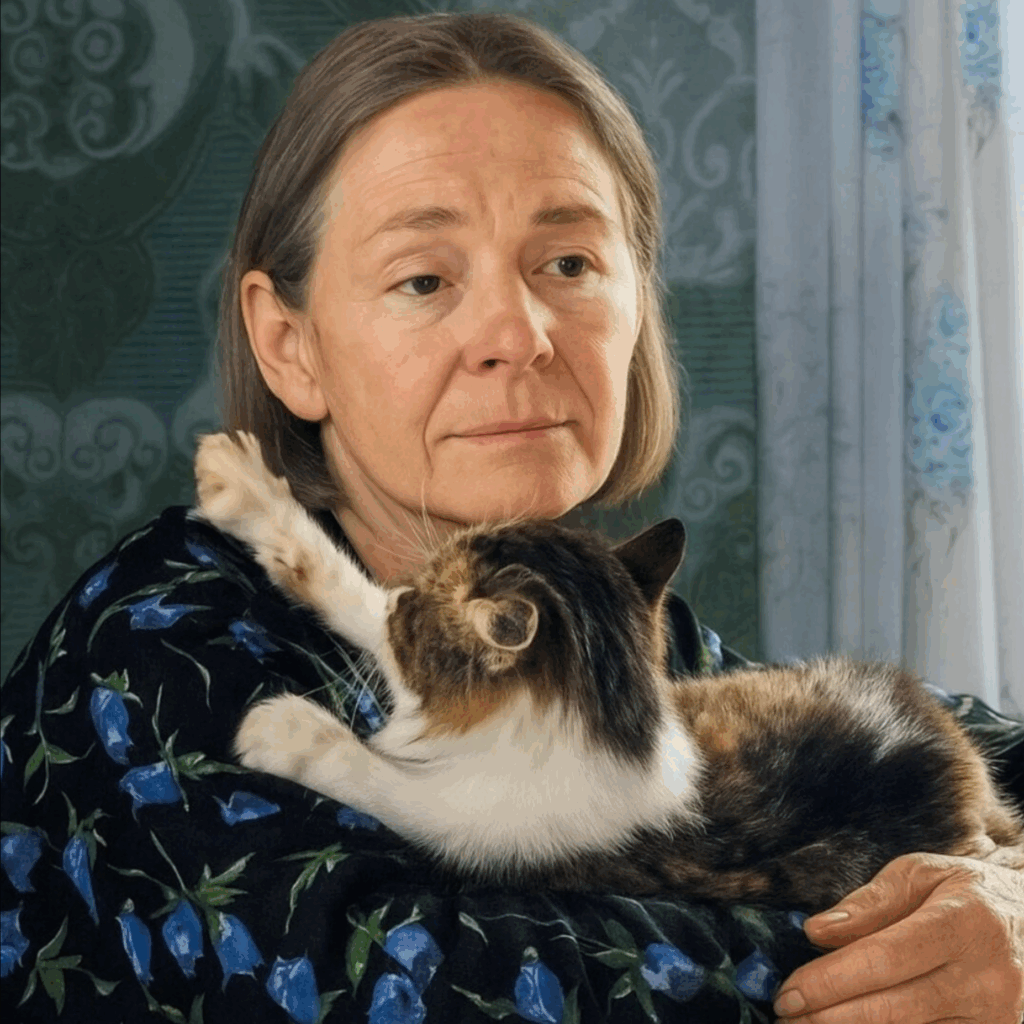
The quiet no longer scared me—it warmed me.For the first time in a long while, I smiled sincerely. I thought about how I had always wanted a little cat—red, green-eyed, a tiny friend who would come to me in the morning and purr softly.
Yes. Tomorrow, I’ll go to the shelter.Because it’s never too late to start a new life—if you return to the place where you truly feel at home.