Dima and I had been dreaming about this vacation for four months.
We didn’t want the sea.
We didn’t want hotels, sightseeing tours, crowded restaurants, or other people.
We wanted two quiet weeks at home, just the two of us. No alarm clocks. No schedules. Breakfast whenever we woke up—even if that happened at noon.
I had even made a list.
Not a list of things I needed to do.
Quite the opposite.
It was a list of things I absolutely would NOT do.
I would not cook according to a schedule.
I would not iron shirts.
I would not answer work calls.
This was supposed to be my first real vacation in three years, and I was determined to squeeze every last drop of peace and quiet out of it.
Then Tamara Petrovna called.
Dima’s aunt.
Sixty-two years old, with the voice of a school principal and the absolute conviction that the entire world owed her something.
I could hear her from the next room because Tamara Petrovna didn’t have conversations.
She delivered announcements.
“Dimочка, I’ve decided to come stay with you. For four days. Maybe a week. We’ll see how things go.”
She didn’t ask.
She didn’t suggest.
She decided.
Dima looked at me with the expression of a man who had just stepped barefoot on a Lego brick.
I shook my head.
He spread his hands helplessly.
And I understood immediately.
He wasn’t going to say no.
Because Tamara Petrovna had raised him after his mother died.
For two years.
From the time Dima was twelve until he was fourteen, when his father remarried.
Two years that Tamara Petrovna had somehow transformed into a lifetime debt.
Every time Dima tried to say no to her, she reminded him:
“I fed you when nobody else cared what happened to you.”
And Dima gave in.
Every single time.
“Fine,” I said. “Let her come. But I’m not going to wait on her hand and foot.”
Dima nodded quickly.
With relief.
As if that settled everything.
She arrived the very next morning.
Ten o’clock.
Without bothering to tell us the exact time.
I opened the door in my pajamas, holding a mug of coffee, with a pillow mark still visible on my cheek.
Tamara Petrovna looked me up and down.
Slowly.
Critically.
The way a building inspector examines a renovation.
“Lena, did you just get up? It’s already ten o’clock.”
Not hello.
Not thank you for having me.
Straight into the inspection.
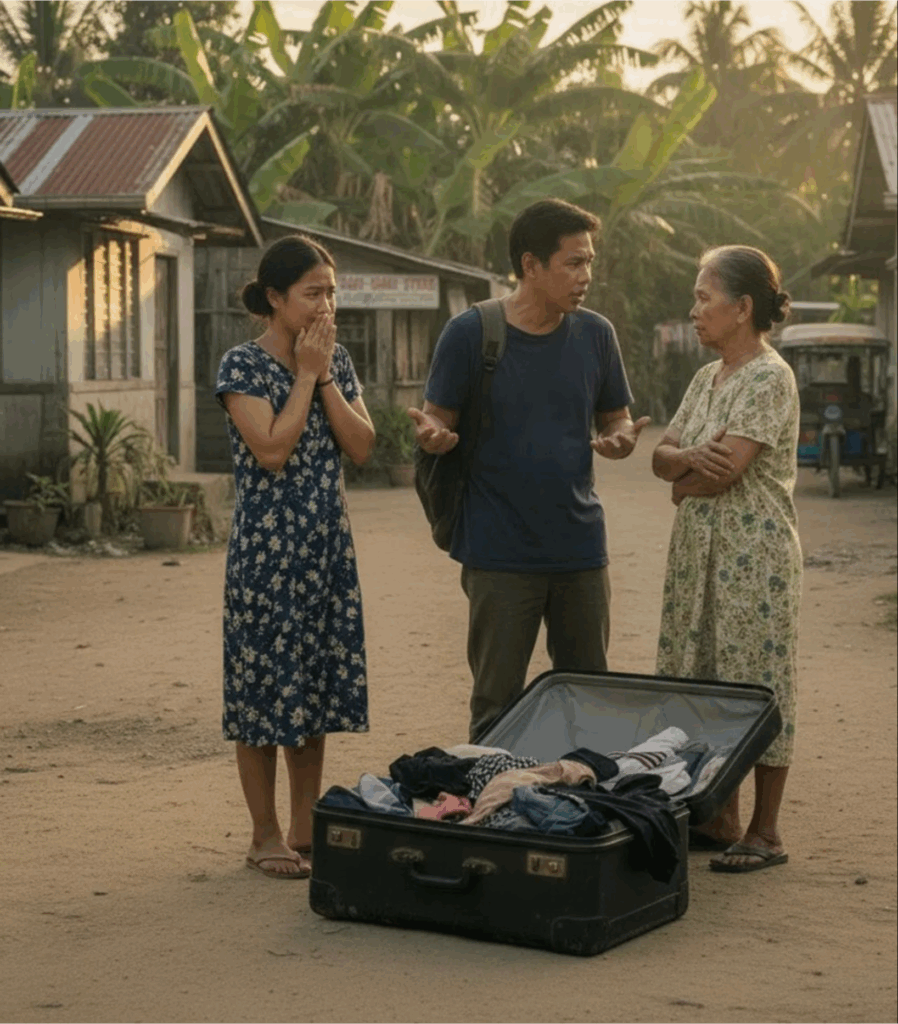
She walked in carrying two enormous suitcases.
Two!
For four days.
I wanted to ask what on earth she had packed, but I bit my tongue.
Dima emerged from the bedroom and helped carry everything inside.
Tamara Petrovna immediately began touring the apartment.
She ran a finger over the furniture.
Checked for dust.
Then looked at the curtains.
“Your curtains are faded. I told you that you should have installed Roman shades.”
That was the first thing she said about our home.
I took another sip of coffee.
And said nothing.
By lunchtime, I discovered that Tamara Petrovna had brought more than just two suitcases.
She had also brought a schedule.
My schedule.
One she had apparently created somewhere between her house and ours.
“Lenочка, I usually have lunch at one. I’d like some soup, something light, and a salad. But no cucumbers. They give me heartburn.”
She said this while sitting comfortably on the sofa, flipping through a magazine she had brought with her.
Her feet were resting on the ottoman.
She was already wearing her own fluffy slippers.
She had been in our home for barely two hours.
I stood in the kitchen and felt something hot rising inside me.
It wasn’t anger yet.
More like disbelief.
She had arrived in my home, during my vacation, and within two hours she was already ordering lunch.
As if she were sitting in a restaurant.
“Tamara Petrovna, we’re on vacation,” I said calmly. “We cook when we feel like it. The kitchen is right there, and the food is in the refrigerator.”
She looked up from her magazine.
The expression on her face was the same one a waitress might receive after bringing the wrong check.
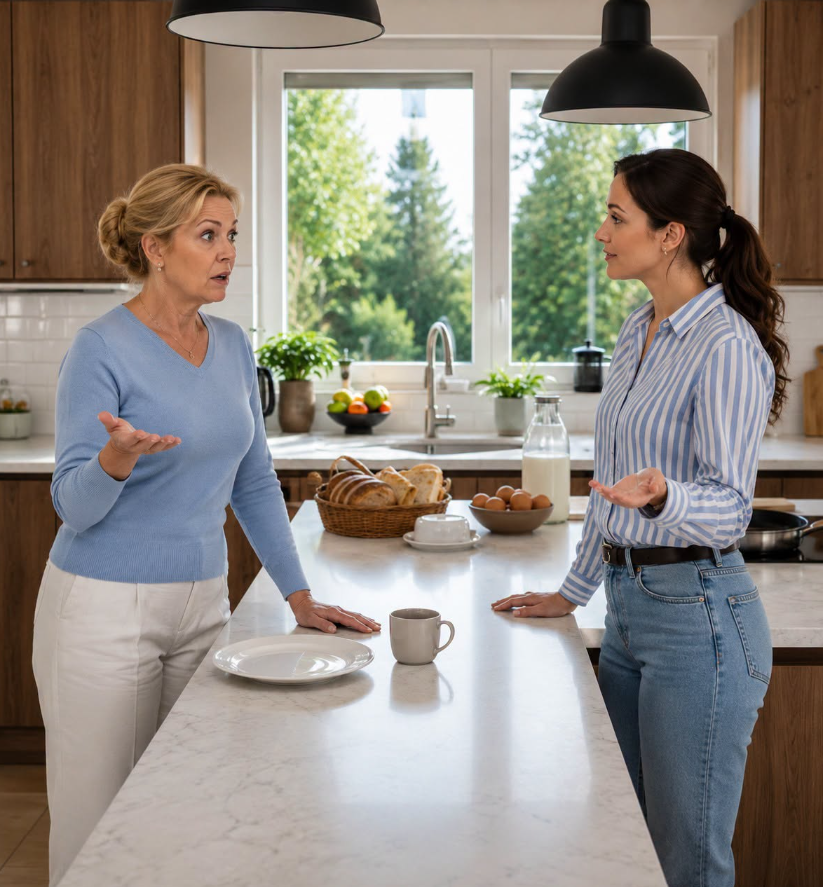
“Lena, you’re the hostess.”
Three words.
But those three words contained her entire philosophy.
You’re the hostess, therefore you serve.
I’m the guest, therefore I’m entitled to be served.
Simple.
Logical.
Non-negotiable.
Dima was in the shower at that moment.
I cooked myself some pasta, put the plate on the table, and sat down to eat.
Tamara Petrovna watched me for about three minutes.
Then she stood up, walked over to the refrigerator, and began loudly rearranging the shelves.
She pulled out containers.
Read labels.
Sighed.
“You don’t even have any broth? What do you people eat?”
“Pasta,” I replied, twirling spaghetti around my fork.
She made herself a sandwich.
Two slices of bread, butter, and cheese.
She ate it with the expression of a woman who had been forced to survive in a war zone.
Her face practically screamed:
I’ll remember this.
And I’ll tell the whole family how they starved me here.
After lunch, Dima came out of the bathroom, fresh and cheerful.
Tamara Petrovna immediately turned her attention to him.
“Dimochka, the mattress on the guest bed is terrible. My back can’t handle it. Why don’t you give me your bedroom? You’re young. You can sleep on the sofa.”
I nearly choked on my water.
Dima opened his mouth.
Closed it.
Looked at me.
I slowly shook my head.
So slowly and emphatically that even the walls understood.
“Aunt Tamara, we have a mattress topper. Let’s try that first,” Dima said, desperately looking for an escape route.
She pursed her lips.
But said nothing.
Round one ended in a draw.
That evening, lying in our bed, I started counting.
Not sheep.
Complaints.
Eleven.
Tamara Petrovna had made eleven critical remarks in one day.
About the curtains.
The mattress.
The lack of soup.
My pajamas.
The fact that we didn’t have a tablecloth.
The dust on the bookshelf.
The music being too loud.
Our cat, whom she considered unhygienic.
My coffee without milk.
Dima’s shorts.
And the fact that we didn’t go to church.
Eleven.
In one day.
“Dima,” I whispered. “If tomorrow is like today, I’m going to tell her exactly what I think.”
“Lena, she’s an older woman. Just put up with her for a little while.”
Put up with her.
I had heard that phrase every time his relatives were involved.
Put up with your cousin.
Put up with the family gathering.
Put up with Aunt Tamara.
But who was going to put up with me?
The second morning started at seven.
Seven!
We were on vacation, and she was banging pots and kettles around the kitchen so loudly that the cat crawled under the bed.
When I finally came out at nine, Tamara Petrovna was sitting at the perfectly clean table looking like an offended general.
“I’ve been waiting two hours for breakfast, Lena.”
She had been waiting.
For breakfast.
The breakfast I was apparently supposed to prepare for her.
I poured myself some coffee.
Took a yogurt from the refrigerator.
Sat across from her.
“Tamara Petrovna, you’re an adult. There are eggs, bread, butter, cheese, and sausage in the refrigerator. The frying pan is in the lower cabinet. I’m on vacation, and I’m not planning to cook to order.”
Her eyebrows rose.
Slowly.
Almost comically.
“Are you refusing to feed me?”
“I’m suggesting that you take care of yourself. Just like everyone else in this house does.”
She immediately turned toward the hallway.
“Dima! Dima!”
He appeared in the doorway, sleepy and alarmed.
“What happened?”
“Your wife refuses to cook! I came here as an elderly guest, and she tells me to fry my own eggs!”
Dima looked at her.
Then at me.
I continued eating my yogurt.
Calmly.
Spoon.
Mouth.
Spoon.
Mouth.
“Aunt Tamara, Lena really is on vacation. I’ll make you an omelet.”
And he did.
Tamara Petrovna ate it as though every bite represented another chapter in her tragic life.
But she ate it.
After breakfast, she called someone.
I wasn’t eavesdropping.
I didn’t need to.
The walls were thin.
“Margaret, you wouldn’t believe it! My daughter-in-law has completely lost her mind. She sits there drinking coffee while I’m starving. Poor Dima has to cook for himself. She’s turned him into a slave!”
Poor Dima.
Forty years old.
Six feet one.
An engineer.
Poor boy.
I closed the bedroom door, climbed back into bed, and opened my book.
A detective novel.
I had bought it specifically for this vacation.
One hundred and twenty pages.
And not a single one was about my husband’s aunt.
By lunchtime, Tamara Petrovna tried a new strategy.
She went into the kitchen and started cooking herself.
But quietly?
Of course not.
She slammed pots around as though she were assembling a percussion section.
Every plate hit the table with a bang.
Every drawer opened with a dramatic sigh, as though there weren’t spoons inside but her shattered dreams.
Passive aggression.
Chapter one.
I kept reading.
Dima peeked into the bedroom.
“Lena, maybe you could help her?”
“Dima, she’s an adult woman. She’s been cooking for herself for fifty years. She’ll manage.”
“But she’s offended.”
“She isn’t offended. She’s manipulating you.”
He sat down on the edge of the bed.
For a minute, he said nothing.
Then he quietly admitted:
“I know. It’s just hard for me to say no to her.”
I put my book down.
Because that was more important than the detective story.
For the first time, my husband said out loud what we had both known for years.
“Dima, it’s hard for her to accept that you’ve grown up. And it’s hard for you to accept that you don’t owe her your entire life.”
He rubbed the bridge of his nose.
He had done that since childhood whenever he was nervous.
“She raised me for two years.”
“That’s true,” I said. “And you should be grateful for that. But gratitude isn’t a lifetime subscription to obedience.”
He nodded.
“She’s alone,” he said quietly.
“She’s alone because people find her impossible to live with. Her children live far away. That isn’t our fault.”
Maybe it was harsh.
Maybe.
But I was tired of wrapping the truth in a napkin so nobody would get offended.
Dima nodded again.
Not enthusiastically.
But with understanding.
The rest of the second day only got worse.
Tamara Petrovna found my hair mask in the bathroom and gave me a twenty-minute lecture about how “chemicals” were destroying my scalp.
Then she tried to wash our laundry together with hers because “it was more economical.”
Every action came with commentary.
Every comment was a criticism.
Every criticism was another little pinprick.
But I didn’t react.
And that seemed to irritate her more than anything.
That evening, she played her final card.
Tears.
“I came here because I miss Dima. And the two of you are hiding from me. As if I’m a stranger. I raised you, Dimochka…”
Were the tears real?
Maybe.
Was the pain real?
Probably.
But I knew exactly what those tears were supposed to accomplish.
They were supposed to restore control.
Dima hugged her.
Made her tea.
Said comforting things.
But he didn’t apologize.
And he didn’t promise that everything would go back to the way she wanted it.
Not this time.
That night, Dima lay beside me in silence.
Then he said:
“She’s leaving tomorrow.”
“What makes you think that?”
“Because she isn’t getting what she came here for.”
“What did she come for?”
“Control. But nobody here is obeying her.”
Third day.
Morning.
Tamara Petrovna appeared at breakfast fully dressed.
Not in house clothes.
She was wearing the same blouse she had arrived in.
Her hair was styled.
Her earrings were on.
I knew what was coming before she even opened her mouth.
“I’ve decided to leave today. Margaret’s grandchildren are sick. She needs my help.”
Margaret.
The same Margaret she had complained to on the phone.
I was almost certain nobody was sick.
But it was a beautiful excuse.
She wasn’t leaving because we had refused to serve her.
She was leaving because she was “needed somewhere else.”
Her dignity remained intact.
Her retreat was carefully disguised.
Dima called her a taxi.
Helped carry her suitcases downstairs.
Both of them.
The same enormous suitcases she had brought for four days.
Or maybe a week.
“We’ll see how things go,” she had said.
Well.
We saw.
At the door, Tamara Petrovna stopped.
Turned back to me.
“Lena, you’ve changed.”
Not thank you.
Not come visit us.
Just:
“You’ve changed.”
And in her voice, I heard something unexpected.
Not anger.
Surprise.
She was used to a different Lena.
The Lena who ran to the kitchen.
Set the table.
Served everyone.
Smiled.
And swallowed every criticism.
“Yes,” I said.
“I have.”
And I said nothing else.
The taxi drove away.
Dima closed the door.
We stood in the hallway in silence for several seconds.
Then he looked at me.
“Pasta?”
“Pasta.”
We made lunch together.
He chopped the vegetables.
I cooked the spaghetti.
The cat finally crawled out from under the bed and stretched lazily across the sunny windowsill.
Some ridiculous nineties song was playing on the radio.
We sang along.
Neither of us knew the right words.
And neither of us cared.
Nobody commented on the curtains.
Nobody inspected the bookshelves for dust.
Nobody expected me to serve them.
That evening, Dima poured us each a glass of wine.
Then he said:
“You know what? I’m going to call her next week. I’ll tell her that we love her, but visits are by invitation only. And no more than two days.”
I nearly dropped my glass.
Not because of what he said.
Because of how calmly he said it.
“You’re sure?”
“She isn’t a bad person, Lena. She’s just used to living by her own rules and assuming everyone else should follow them. But we don’t have to.”
I didn’t argue.
And I didn’t celebrate.
This wasn’t a victory over Tamara Petrovna.
It was something else.
It was a boundary.
A quiet reclaiming of our own lives.
Because saying “no” is easy when you’re furious.
The difficult part is saying it calmly.
Without shouting.
Without resentment.
Without writing a three-page explanation.
Just:
“No. I’m not going to do that.”
And that’s it.
Five days later, Tamara Petrovna called herself.
Her voice was cheerful, as if nothing had happened.
“Dimochka, everything is fine with Margaret. The grandchildren are healthy. I was thinking… maybe I could come stay with you for New Year’s?”
Dima looked at me.
I held up two fingers.
“Come, Aunt Tamara. For two days. Just let us know ahead of time.”
There was a long silence on the other end of the line.
Long as a winter night.
“Well… all right. Two days, then.”
She agreed.
I finished my pasta and smiled to myself.
We had dreamed about this vacation for four months.
We survived three days of a family invasion.
And somehow, we still managed to rest.
Because I finally understood something.
A vacation isn’t a place.
It isn’t a date on the calendar.
It isn’t a plane ticket.
A vacation is a state of mind.
It’s the moment when you finally give yourself permission to live the way you want.
At least in your own home.