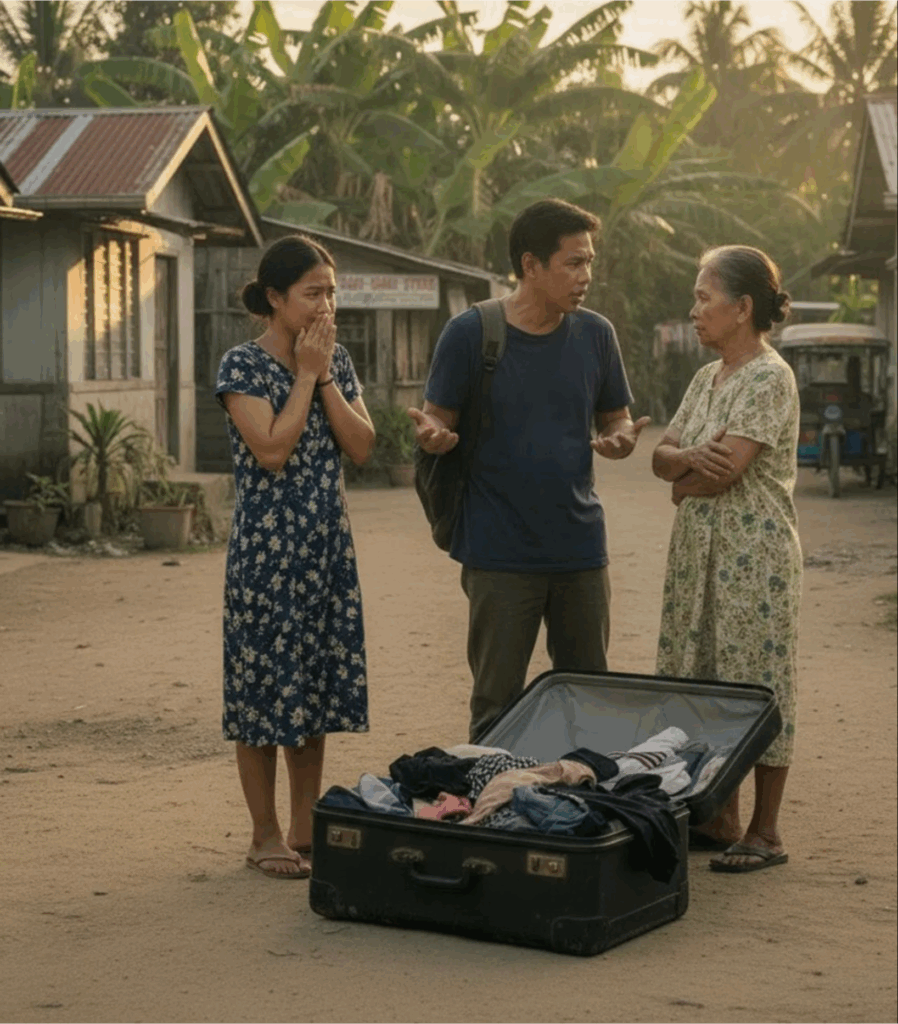
“I didn’t sign up to babysit your son,” Lyudmila Viktorovna said coldly.
Marina held the phone to her ear and said nothing.
Denis was standing beside her. The call was on speaker, so he had heard every word.
“My shift was moved for one week,” Marina explained again. “Just one week. I only need someone to pick Artyom up from school.”
“I’m not a free babysitter,” her mother-in-law replied.
Marina slowly lowered the phone.
She looked at her husband.
Denis shrugged and turned toward the window.
Two years ago, everything had been different.
For two whole years, Marina had gone to the school almost every weekday to pick up the children of Oksana, Denis’s sister.
She picked up Tyoma and Vika from the same school her own son attended. She walked them home, fed them, helped them with their homework, and waited until Oksana finished work.
And Lyudmila Viktorovna?
She lived just twelve minutes away from the school.
She had been retired for three years.
Yet in all that time, she had never once offered to take over—even for an hour.
“Lyudmila Viktorovna, this is the first time I’ve ever asked you for a favor,” Marina said quietly.
“I have my own life,” the older woman snapped. “You’ll have to figure it out yourselves.”
The call ended.
Marina’s hands weren’t shaking.
She simply tightened her grip on the phone.
Denis walked over and put an arm around her shoulders.
“She didn’t mean it badly,” he said. “Maybe she’s just tired after dealing with grandchildren all these years.”
“Which grandchildren, Denis?” Marina stepped away from him. “She has never once looked after your son.”
Her husband said nothing.
He turned toward the window again, as if there were something fascinating outside.
That evening, Marina managed everything herself.
She left work two hours early, picked up Artyom, and took him home.
On the way, he happily told her about his nature studies lesson.
Marina nodded and smiled at the right moments.
But her mind was somewhere else.
After putting her son to bed, she sat alone in the kitchen with a cup of tea that slowly went cold.
And she started counting.
Not money.
Not hours.
Days.
Days she had spent standing outside the school waiting for someone else’s children while their own grandmother sat at home twelve minutes away.
The number kept growing in her head.
There were too many of them to simply forget what had happened that evening.
The next morning, Marina was standing at the school gates again.
Same place.
Same parents.
Same routine.
Tyoma ran out first.
Vika followed, her backpack hanging crookedly from one shoulder.
Marina straightened the strap and took the girl’s hand.
“Auntie Marina, is Grandma picking us up today?” Vika asked.
“Grandma is busy,” Marina replied.
She paused.
“Like always.”
The words came out more bitterly than she intended.
Vika didn’t notice.
She ran ahead toward the swings.
Tyoma walked quietly beside Marina, staring at the pavement.
Marina watched them go.
And for the first time, she admitted to herself that she had been right to get angry.
Something had to change.
Ten days passed.
Marina continued picking up Oksana’s children as usual, as though nothing had happened between her and her mother-in-law.
But inside, something had changed.
Before, she had helped because she cared about Oksana and felt sorry for the children after their parents’ divorce.
Now every afternoon at the school gates had become a calculation.
One day, Marina took out her phone and opened her notes.
She typed:
Two years.
Underneath it, she wrote:
Approximately four hundred school days.
Four hundred times she had stood there.
Four hundred times she had collected someone else’s children.
And Lyudmila Viktorovna had done it exactly zero times.
Not even after Marina had asked her directly.
That Saturday, Oksana came to pick up the children herself.
She brought ice cream as a thank-you.
The women sat in Marina’s kitchen drinking tea from two identical mugs, one of which had a chipped handle.
Denis went out onto the balcony, leaving them alone.
“Marin…” Oksana suddenly asked. “Aren’t you tired?”
“A little,” Marina admitted.
“I can see that things have been difficult for you lately.”

“My shift changed this week,” Marina explained. “I asked your mother to help me with Artyom for one day. She refused.”
Oksana put her cup down a little harder than necessary.
“You know what Mom is like. She doesn’t really like taking care of children.”
“Artyom is her grandson,” Marina said.
Oksana looked away.
“She’s just like that,” she muttered. “You know her personality.”
“I’ve asked her three times in two years,” Marina replied. “Just once. For an hour or two. Three times, Oksana.”
She held up three fingers.
“And every time, she said no.”
Oksana had no answer.
That evening, after Oksana left with the children, Marina told Denis everything.
“She’s partly right,” he said. “Mom really doesn’t like dealing with grandchildren. You know what she’s like.”
“Denis, I’ve spent two years taking care of your sister’s children,” Marina replied. “And somehow your own son is the one she considers someone else’s responsibility.”
Her husband looked down.
He said nothing.
That night, Marina went to bed knowing that a decision was taking shape inside her.
She didn’t need a dramatic confrontation.
She simply needed to reach the point where the number of refusals outweighed her desire to keep helping for free.
She was getting close.
Three weeks later, everything changed.
A colleague suddenly became ill, and Marina was asked to stay at work.
She immediately messaged Oksana.
“I’ll be about fifteen minutes late. Twenty at most.”
Oksana was in a meeting with a client.
Her phone was in her bag with the sound turned off.
Marina ended up being delayed for an hour and a half.
When she finally left the clinic, she grabbed her coat and ran outside.
She took a taxi straight to the school.
But when she arrived, the courtyard was empty.
Her heart dropped.
She ran around the building and pressed her face against the glass doors.
The school security guard was sitting at the desk.
“Where are Tyoma and Vika?” Marina asked breathlessly.
“Their grandmother took them,” the guard replied. “The teacher called her. She’s listed as an emergency contact.”
Marina froze.
She immediately called Lyudmila Viktorovna.
“Thank you for picking them up,” Marina said. “I’m sorry. I really didn’t expect to be delayed like this.”
“They stood outside the school for an hour and twenty minutes!” her mother-in-law snapped. “An hour and twenty minutes, Marina. They were freezing. Vika was crying so hard that the teacher had to bring her water.”
“I messaged Oksana, but she didn’t answer…”
“Oksana called me from the school, completely panicked,” Lyudmila interrupted. “Do you even understand what could have happened to two children left outside for that long?”
Marina felt a chill run down her back.
“I understand,” she whispered. “It was my mistake. I’m sorry.”
“Your mistake,” Lyudmila confirmed coldly. “Yours and no one else’s.”
The call ended.
Marina stood there holding the phone, staring at the empty schoolyard.
Half an hour earlier, two frightened children had been standing there in the cold.
She felt ashamed.
She felt guilty.
But beneath those feelings, something else was growing.
Something cold.
Something final.
Denis already knew everything by the time he came home.
His mother had called him first.
“Mom is furious,” he said without even taking off his coat. “She says you put the children in danger.”
“And if Artyom had been the one waiting outside the school?” Marina asked. “Would she have rushed to get him too?”
Denis didn’t answer immediately.
He sat down and rubbed his face.
“Marin, that’s not the point.”
“I know,” Marina said. “I know what happened was serious. I’m ashamed that the children had to wait so long.”
She paused.
“But I’m not ashamed that I spent two years picking them up for free while your mother lived twelve minutes away.”
She went into the kitchen and poured herself a glass of water.
Her hands were still trembling when she drank it.
The thought of the two frightened children still made her stomach twist.
But now she knew one thing for certain.
This could not continue.
The family video call was Oksana’s idea.
“We need to talk about what happened,” she wrote in the family chat.
On Sunday evening, all four of them appeared on the screen:
Marina.
Denis.
Oksana.
Lyudmila Viktorovna.
Everyone looked tense.
“I want to understand how this happened,” Oksana began. “The children were genuinely frightened.”
“I’m very sorry about what happened,” Marina said calmly. “I take responsibility for being late.”
She paused.
“But since we’re all here, I want to say something too.”
Oksana frowned.
“For two years, I have picked up your children from school,” Marina continued. “Almost every weekday. Around four hundred times.”
“Marina, this really isn’t the time…”
“Actually, it is.”
Marina’s voice remained calm.
“Because the one time I was late, I became the only person responsible. But no one seems to remember the two years when I was the one doing this every day.”
Lyudmila Viktorovna pressed her lips together.
“You’re using the children to punish me,” she said. “Because of that phone call about Artyom.”
“No,” Marina replied firmly. “I’m simply stopping something that has been taken for granted for two years.”
She looked directly into the camera.
“You told me, ‘I didn’t sign up to babysit your son.’ I remember those words exactly.”
She took a breath.
“Well, I didn’t sign up to babysit someone else’s children for free either.”
Silence filled the call.
Even Denis said nothing.
“I’m not picking up Tyoma and Vika anymore,” Marina said. “Starting today.”
Oksana stared at her.
“You’re serious?”
“Completely.”
Marina opened her banking app while everyone watched.
She transferred Oksana nine hundred rubles.
“This is for a taxi,” she explained. “Until you find another solution.”
“You’re actually sending me money?”
“It’s my last favor.”
“You’re just abandoning my children after everything you’ve done?”
“I’m not abandoning them,” Marina replied. “I’m simply stopping doing for free what you should have arranged yourselves.”
Lyudmila Viktorovna turned off her camera.
A moment later, Oksana left the call too.
Only Denis remained.
“You went too far,” he said quietly.
Marina looked at him.
“You can’t do this through the children, even if you’re right.”
“And it was okay to do it through my son?” she asked.
Denis fell silent.
“Three times I asked your mother for help with Artyom,” Marina continued. “Three times she refused.”
Her husband looked away.
Marina closed the laptop.
The room suddenly became completely quiet.
For the first time in two years, she didn’t have to think about getting to the school gates the next afternoon.
Her shoulders dropped.
She let out a long breath.
And strangely, she felt lighter.
Six months passed.
Oksana hired a neighbor to pick up the children from school. She paid her every month from her own salary.
Lyudmila Viktorovna no longer spoke directly to Marina.
Anything she needed to say was passed through Denis in short, emotionless messages.
Denis visited his mother alone on weekends.
He rarely talked about those visits.
Meanwhile, the relatives had already formed their own opinions.
Some said Marina had “used the children as a weapon.”
Others said she should have warned Oksana in advance.
Someone even said she had no right to end two years of help so suddenly.
Marina heard all of it.
But she stopped defending herself.
Because for the first time in two years, she could spend her evenings at home.
She no longer had to rush to the school gates.
She no longer had to set reminders on her phone for someone else’s children.
She no longer had to organize her entire life around a responsibility that had never truly been hers.
And sometimes, when she lay in bed at night, she remembered the words that had started it all:
“I didn’t sign up to babysit your son.”
At first, those words had hurt.
Now they meant something completely different.
They reminded her that people have the right to say no.
But so does she.
Marina had helped for two years.
She had given her time, her energy, and her patience.
And eventually, she had simply said:
“Enough.”
So perhaps the real question was not whether Marina was wrong to announce her decision during the family video call.
Perhaps the real question was this:
How long was she supposed to keep doing something everyone had come to expect from her, simply because nobody else wanted to take responsibility?