After my wife died, my daughter Emily became my entire world.
Not in a poetic sense. In a survival sense.
I wasn’t a perfect father—far from it. I burned dinners that should’ve been simple, forgot school events I had circled in ink, worked too late and came home too tired. There were days I spoke more to silence than to her. And yet, despite all my flaws, I loved her fiercely. The kind of love that doesn’t always know how to express itself properly but never stops existing. For a while, that was enough.
Emily filled the house in ways I didn’t realize I needed. Her laughter in the hallway. Music too loud through thin walls. Notes on the fridge reminding me of things I already forgot. She kept me anchored.
And then there was Nora.
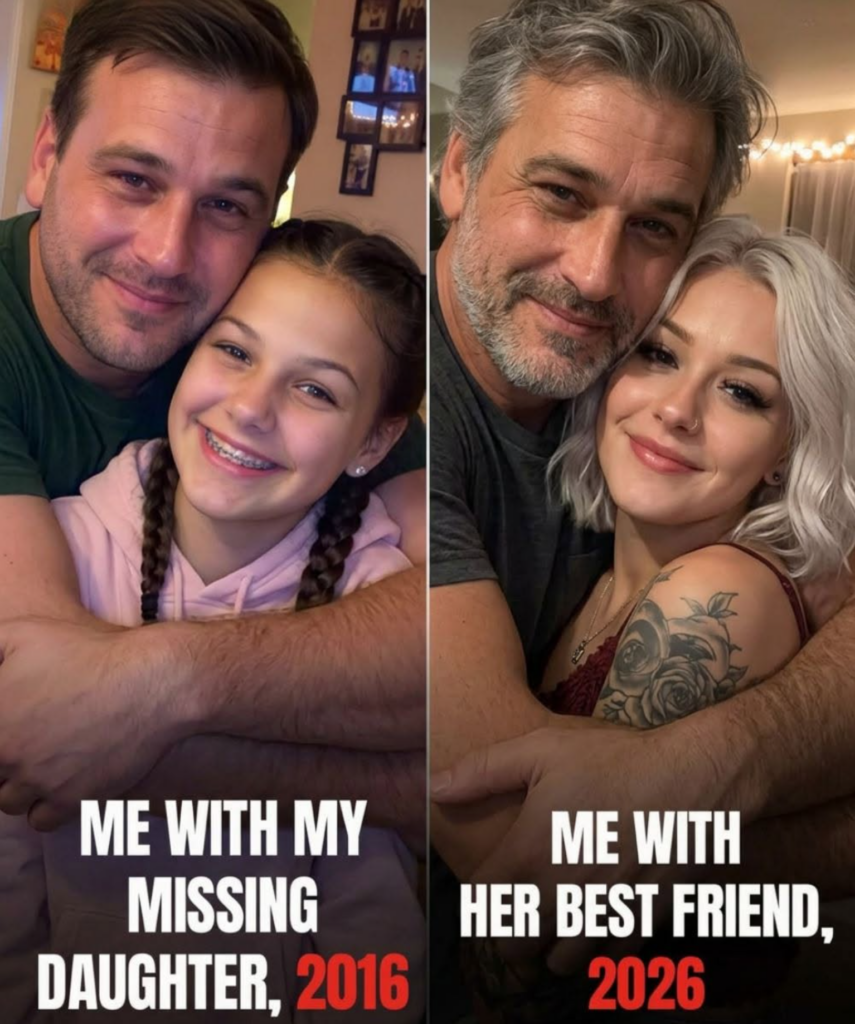
Emily’s best friend.
Quiet, observant, always careful with her words like she was afraid of taking up too much space in the world. She had lost her parents young and lived with a grandmother who was slowly drifting away from reality. Emily never questioned it. She just decided, one day, that Nora wouldn’t be alone anymore.
“Dad, she’s basically my sister,” Emily said once, like it was the simplest truth in the world.
And I didn’t argue.
Soon, Nora became part of our rhythm. Dinner at our table. Homework at our counter. A spare toothbrush in our bathroom. A second pair of shoes by the door. She never asked for anything. That was what made it easy to say yes.
At first.
Then things changed in ways I didn’t notice until it was too late to stop them.
It was a rainy Friday when everything broke.
Emily had a school dance that night. She was excited for days—talking about dresses, music, who was going with who, the kind of teenage joy that feels fragile even as it shines. But the weather turned ugly. Thunder shook the windows. The streets filled with water.
I said no.
Not harshly at first. Just practical. Safe. I told her it wasn’t worth it.
But she was sixteen, and sixteen doesn’t hear safety the way adults mean it.
“Everyone else is going,” she snapped.
And something in me snapped back harder than it should have.
“No,” I said again. Final this time. “And that’s the end of it.”
Her eyes flashed.
“Why do you always decide everything for me?”
The words hit deeper than I expected.
“Because I’m your father,” I replied. “And you’re not thinking.”
That was when it escalated.
“Then go ask your grandparents if they know better than me!”
Silence.
It wasn’t loud. But it was heavy enough to bend the air between us.
Emily stared at me like she didn’t recognize my face anymore. Then she grabbed her jacket.
“Nora’s coming with me,” she said coldly.
And she walked out.
The door closed behind her with a finality I didn’t understand yet.
Nora hesitated only a second before following.
“I’ll bring her home,” she said softly. Not defiant. Just responsible. Like she always was.
It was the last time I saw my daughter.
Only Nora came back.
Soaked through. Shaking. Hair clinging to her face. No jacket. No Emily.
“I don’t know where she is,” she whispered.
I remember staring at her mouth as she said it, as if repeating the words would change them.
By morning, the town had already decided what it wanted to believe.
Small towns don’t wait for truth. They choose convenience.
And Nora was convenient.
A quiet girl. A troubled home. A history no one bothered to understand. It didn’t matter that she was crying. It didn’t matter that her hands wouldn’t stop shaking. People needed a story, and she fit the one they wrote.
Flyers went up. Whispers spread faster than search teams. Then came the graffiti on our mailbox: LIAR.
No one asked what I believed.
But I didn’t see a villain when I looked at Nora.
I saw a child who had lost her only anchor in the world and was now being blamed for the storm.
So I kept her.
Not out of charity. Not out of obligation. Out of something quieter and heavier than both.
Survival.
When her grandmother could no longer care for her, I became her guardian. The paperwork felt surreal, like signing away and rewriting grief at the same time. And later, when there was no other option, I adopted her.
The town called it betrayal. Replacement. Insult.
They said I was trying to erase Emily.
They were wrong.
I wasn’t erasing her.
I was just trying to keep breathing.
Years passed in a strange, muted silence. The house still had Emily’s absence in every corner. Nora grew up under a shadow she never chose. Every year on the anniversary, she would place a single white daisy on Emily’s untouched bed. She never said anything. She didn’t need to. The guilt spoke for her.
And I never stopped waiting.
Not loudly. Not publicly. But in small, stubborn ways. Keeping old phone numbers. Not changing the lock on Emily’s room. Listening for a sound the house had forgotten how to make.
Ten years later, everything shattered again.
It started with a phone notification.
Nora was sitting at the kitchen table when her screen lit up.
Unknown number.
“Did your dad stop looking for me after he adopted you?”
She froze.
Then another message arrived.
“I need to know if I was replaced.”
A pause.
Then a photo.
Emily.
Alive.
Older. Thinner. Changed in ways that only time can explain, but unmistakably her.
Nora’s breath broke.
She typed with shaking hands: “He never stopped.”
What followed wasn’t immediate reunion. It was chaos compressed into truth.
Emily had been taken.
Not lost. Not abandoned. Taken—by her own grandparents.
They had rewritten her life in pieces. Changed her location. Altered her identity. Fed her a story where she was forgotten. Where her father moved on. Where Nora replaced her.
A life built on manufactured absence.
None of it was real.
When Nora finally brought her home, I didn’t walk—I collapsed into her.
Because grief has a strange reaction to resurrection. It doesn’t know what to do with it.
“My dad…?” Emily whispered, like she was afraid the word itself might be wrong.
“I never stopped,” I said.
And this time, she believed me.
The truth spilled out in fragments after that. Investigations. Confessions. Documents that proved how easily a life can be redirected when the wrong people decide they know better.
By morning, the town had changed its target.
Not Nora.
The people who had stolen ten years of our lives.
That night, Emily stood in her old bedroom. Everything was exactly as she had left it, as if time had been politely holding its breath.
She ran her fingers across the furniture like she was checking if it was real.
“You kept it,” she said quietly.
“I was waiting for you,” I answered.
She turned, eyes wet but steady now.
Then she reached for Nora’s hand.
“Come in.”
And for the first time in a decade, the house stopped being a place of absence.
It became a place of return.