Yesterday, Carla Morales spent her last €8 to help a stranger gasping for life on the asphalt. Today, at seven in the morning, a hundred motorcycles thundered outside her window, their engines asking for her name.
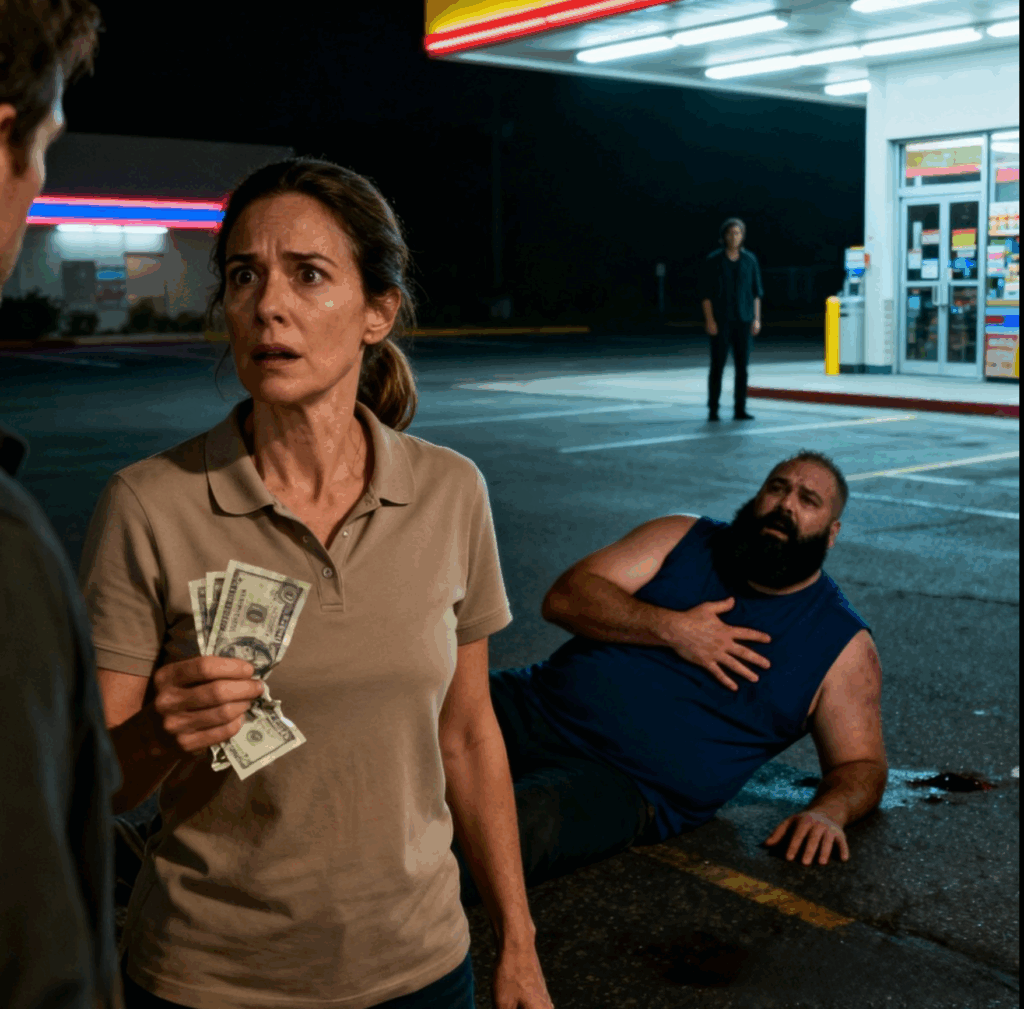
She stood under the flickering fluorescent lights of a nearly empty gas station parking lot, staring at the crumpled eight euros in her hand—her last money, meant for her daughter’s breakfast. And then she heard it: a sound that made her blood run cold—a man choking, gasping for air.
A massive biker collapsed beside his motorcycle, clutching his chest, face turning gray. He was dying, alone, and no one else was coming.“Stay out of it!” shouted the gas station attendant from the doorway. “Those people only bring trouble!”
Carla looked at the man, then at her €8. Her thoughts flew to Alma, her six-year-old daughter, waking up hungry tomorrow. But she couldn’t leave. She rushed inside, bought aspirin and a bottle of water with her last euros, and dropped to her knees beside him.
She didn’t know it yet, but this choice—this small act of courage—would change everything. Because tomorrow, a hundred motorcycles would roar down the streets in gratitude.Let’s rewind to that morning, before the gas station, before the life-changing moment.
Her alarm buzzed at 5:00 a.m., pulling her from a thin mattress in her tiny apartment on the city’s outskirts. She lived with Alma in a peeling, damp-smelling building—but it was home.In the kitchen, Carla found half a box of cereal and a half-carton of milk. She poured it into a bowl for Alma, stretching every drop. Alma shuffled in, rubbing her eyes.
“Good morning, Mom,” she mumbled.“Good morning, my girl,” Carla said, kissing her forehead and placing the bowl on the table. Nothing for herself; there wasn’t enough.This was her life: counting every euro, stretching every meal, praying nothing unexpected would happen.
Carla worked two jobs—mornings folding laundry for minimum wage, afternoons serving coffee and sandwiches at a roadside bar. Her old car had broken down weeks ago, so she walked everywhere, sneakers worn through.
Bills piled up. Rent due in three days, €150 short. Alma’s asthma inhaler—€60 she didn’t have. Electricity bill clinging to the fridge with a disconnection notice. Still, Carla never complained. Her grandmother’s words echoed in her heart: “Kindness costs nothing, daughter, and sometimes it’s the only thing we have to give.”
So she smiled at customers, even as her body ached. At night, she wrote three things she was grateful for. Every day, the same struggle—but she endured.Tuesday passed like any other. After taking Alma to a neighbor for school care, Carla spent eight hours folding laundry, and then another shift at the bar.
Her co-worker Lucía, who had worked there for twenty years, noticed her fatigue.“You’re killing yourself for that little girl,” Lucía said.“She deserves it,” Carla replied with a tired smile.By the end of her shift, Carla counted her tips: €23, plus €8.47 left over.
She set aside €23 for rent, leaving €8 for Alma’s breakfast and a tiny dinner snack. Every euro mattered.She walked home, tired, down dark sidewalks. To save time, she cut through a gas station parking lot—and that’s when everything changed.
A massive man, tattooed and bearded, leaned against a gleaming motorcycle under a streetlight. He wore a black leather vest adorned with patches from a notorious motorcycle club. Carla instinctively looked away—these were dangerous people.
Then he stumbled, clutching his chest. He fell to his knees, gasping for air. Lips blue, chest still.Every instinct screamed at Carla to walk away. But something deeper—her grandmother’s lesson, her own conscience—pushed her forward.
She shouted for help. The clerk and a passerby warned her against it: “People like that are dangerous. Go home.”Carla ignored them. She remembered her grandmother’s story: a woman left to die in the street, years ago. Carla had never forgotten that feeling of helplessness. She couldn’t let it happen again.
Her phone barely had signal, battery at 10%. The emergency call dropped. She ran inside the store, grabbed aspirin and water, and handed over her last €8. She didn’t even glance at the change.
Outside, she knelt beside the man. “Sir… look at me. Chew these pills. Drink a little water. Help is coming.”He weakly took the pills, sipped the water, and grasped her hand. “What’s your name?” he whispered.
“Carla… Carla Morales.”“You saved my life…”“Not yet… but I’m trying.”Sirens wailed in the distance. Then another motorcycle roared in, and a young man leapt off, eyes wide. “Toro! You… she helped him?”Carla simply nodded.
Sometimes, heroism isn’t born from strength—it’s born from a choice. And Carla Morales had chosen to save a life, even when it cost her everything.