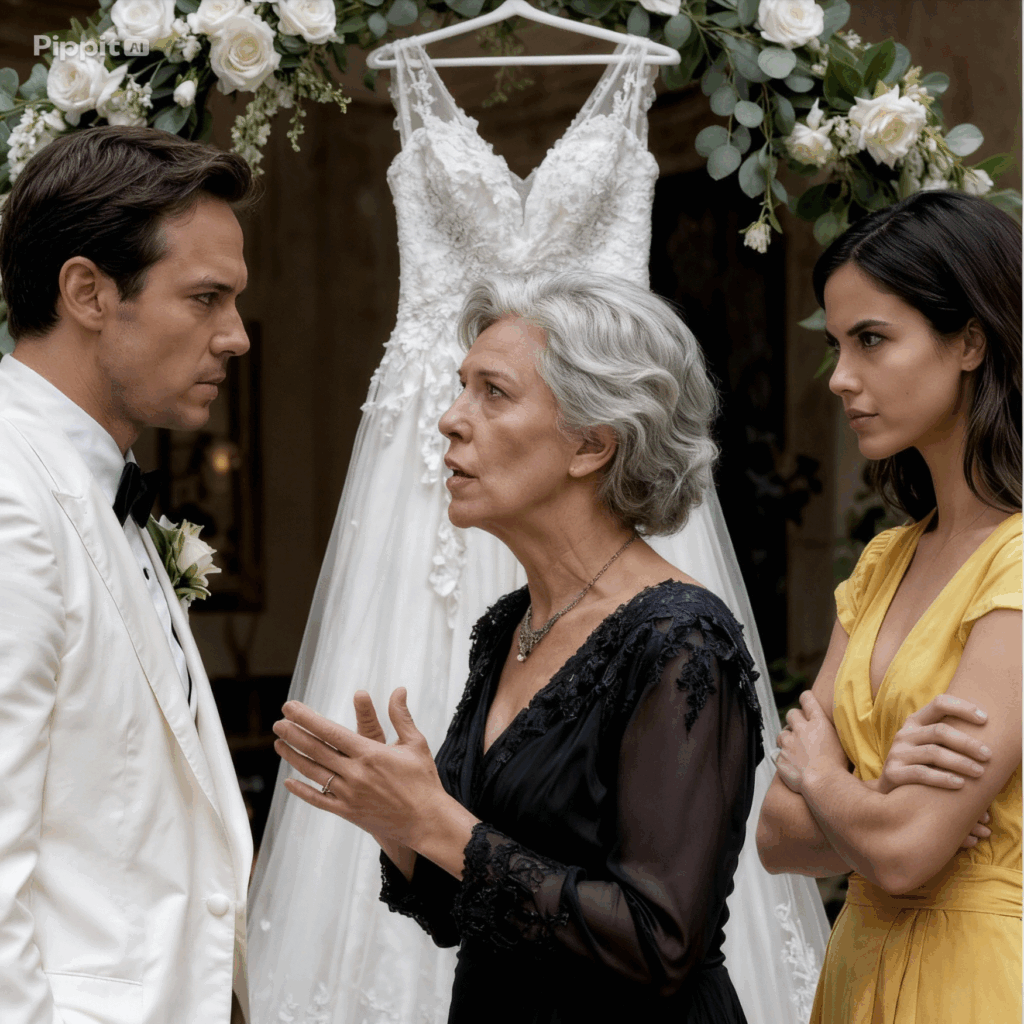
Mrs. Lóri lives in the apartment next door. Only a thin wall separates us, but often I feel that this wall is more than just a physical barrier — it carries an entire life within it: memories, lost people, joys and sorrows lived through. Lóri has long since passed seventy.
Her hair is white, but not dull or tired — almost luminous, as if each strand tells its own story. She is always neat, always carefully dressed, even when she is simply moving down the hallway in her wheelchair. There is a dignity in her that cannot be taught — it comes from survival.
She has devoted her entire life to teaching English. Her voice is gentle, whisper-like, yet each word carries weight. When she speaks, I instinctively lean forward, afraid to miss something important. Her memory is astonishing: half a sentence is enough for her to know where the mistake is.
Often, I haven’t even reached the end of my text when she quietly lifts her finger and points out the error.When she marks my writing with her red pen, it’s never harsh — it’s as if she’s saying, “You can do better. I believe in you.” And I am truly grateful for it, from the heart, not just out of politeness.
For Niki, she quickly became “Grandma L.” At first, he said it softly, cautiously, as if afraid of taking up too much space in his heart.Lóri never changes her rules. Before important exams, she bakes treats for Niki; her kitchen is always filled with sweet aromas — smells that give calm and a sense of safety.
Once Niki had to rewrite an entire essay because he had confused “their” and “they’re.” He nearly cried, but Lóri just smiled and said, “It’s okay. Let’s start again. You’ll do better this time.” When I return late from work, Niki often reads aloud to her, just so she isn’t alone.
In our home, she is more than just an elderly neighbor. She is stability, continuity, a quiet anchor in a world that changes too fast.That Tuesday evening began like any other. Spaghetti was boiling on the stove — Niki’s favorite meal, because, as he says, “You can’t ruin it.
” He sat at the table, twirling his spoon, making serious commentary as if he were on a cooking show.“More Parmesan, sir?” he asked ceremoniously, though the top was already covered in cheese.“That’s enough, chef,” I laughed. “This is already a disaster.”
He laughed, then excitedly began recounting a math problem he had struggled with for days but finally solved. His eyes sparkled. At that moment, everything felt right.Then the fire alarm went off.At first, I didn’t pay attention — false alarms are common in an old building.
But the sound didn’t stop. It grew sharper, more demanding, as if the walls themselves were shouting. Then I smelled smoke: thick, acrid, filling the lungs instantly and stirring fear.“Coat. Shoes. Now,” I told Niki. “You go first. Hold the railing. Don’t stop.”
Niki froze for a moment, then moved. I opened the door — smoke already reached the ceiling, everywhere coughing, shouting, fast footsteps.“Elevator?” he asked.“Stairs,” I replied.The stairwell was crowded: barefoot children, adults in pajamas, fear on every face.
Nine floors are nothing until you have to descend through smoke, sirens, with your child behind you.“Did we lose everything?” he asked quietly.On the seventh floor my throat burned, on the fifth my legs shook, on the third my heart felt like it might burst.
“You okay?” I looked back.“Yes,” I lied. “Keep going.”Outside, cold air greeted us. I knelt by Niki.“All right?”He nodded.“I have to find Mrs. Lóri,” I said.He understood immediately.
“She can’t come down,” he said, voice trembling.“I know. But I can’t leave her.”
He looked at me for a long moment, then nodded.“I’ll wait.”Going back up was much harder: heat, smoke, chaos. On the sixth floor I saw Lóri. She sat calmly in her chair, her bag on her lap, but everything was visible in her eyes.“The elevators don’t work,” she said softly.
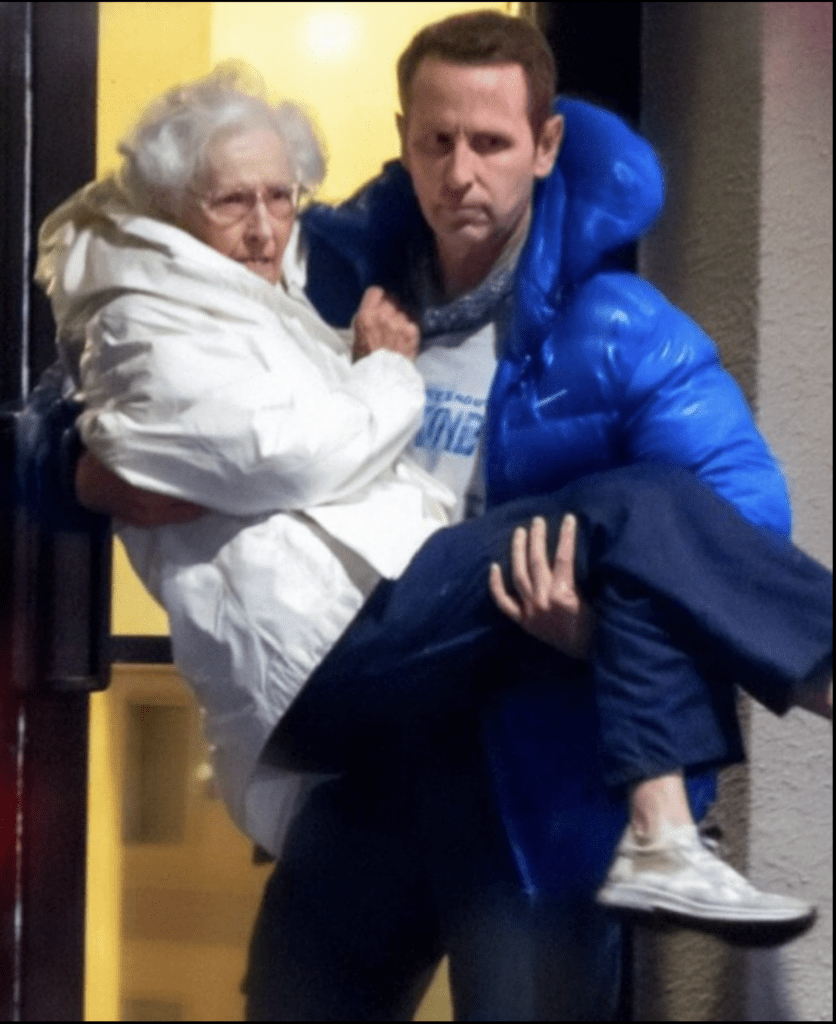
“I’ll take you down,” I replied.She tried to protest, but I already had her in my arms. She was incredibly light, almost fragile. Floor by floor, we descended.“Is Niki downstairs?” she kept asking.
“He’s waiting for us.”That was enough. Outside, Niki ran toward us.
“Grandma L!” he shouted. “Breathe slowly!”The fire was put out. The apartments were saved, but the elevators didn’t work for several days. During that time, I helped with everything. Niki continued studying with her.A few days later her daughter came — shouting, blaming.
When the situation escalated, I called for help. She left angrily.That evening, Lóri told me the truth: the apartment had been transferred to my name.“Because you take care of it,” she said. “Not as a burden, but as family.”That evening, we ate together. Simple food, warm laughter. Niki asked,
“So, we’re family now?”Lóri smiled:“If you promise to endure my grammar corrections for the rest of your life.”Sometimes those we are bound to by blood aren’t there when we need them most. And sometimes neighbors return from the fire.
When you bring someone down nine floors by the stairs, you don’t just save their life — you place them into your family.