In 1966, in the quiet, tiny village of Harmony Creek, Tennessee, lived Matilda Hayes, a twenty-year-old girl whose life was bounded by rules she dared not break. She had never crossed the strict, unyielding limits set by her father.
Walter Hayes was a stern and proud farmer, a man who believed, almost obsessively, that a girl’s worth was measured by her quiet obedience, her distance from the outside world, and her absolute devotion to her family. While other girls of her age laughed with boys,
attended dances, and dreamed of a larger life beyond the village, Matilda’s days were confined: sewing, cooking, and keeping her eyes cast down defined her existence.She had never held a boy’s hand, nor shared a private conversation with anyone. Her world was not about living freely; it was about survival within control.
That same year, a terrible drought struck Tennessee. The fields cracked under the relentless sun, animals perished from hunger, and Walter lost his livelihood. Soon, the pantry was almost empty. For days, the family survived on thin gruel made from cornmeal.

The younger siblings cried themselves to sleep, hunger gnawing at their bellies, while her mother wept quietly every morning, her sobs muffled and unseen.One night, Matilda overheard a quiet conversation in the living room. A name repeated itself over and over:
Arthur Shaw. Everyone in the village knew him: a wealthy, reclusive man who lived alone on a sprawling farm at the edge of town. He was forty-five, respected, and entirely isolated.After the visitor left, Walter summoned Matilda. She did not dare look him in the eye.
“Matilda,” he said finally, his voice hard but edged with an unspoken anxiety, “Arthur Shaw asks for your hand.”Matilda’s heart tightened.“But… I don’t even know him,” she whispered.“He is an honest man,” Walter replied firmly. “He will take care of you. And of us too.”
Her mother’s tear-filled eyes said more than words ever could.“Father,” Matilda whispered in a trembling voice, “how much?”“Two thousand dollars,” Walter answered plainly.It was enough to save them all.“You’re… selling me?” Matilda asked, her words barely more than a breath.
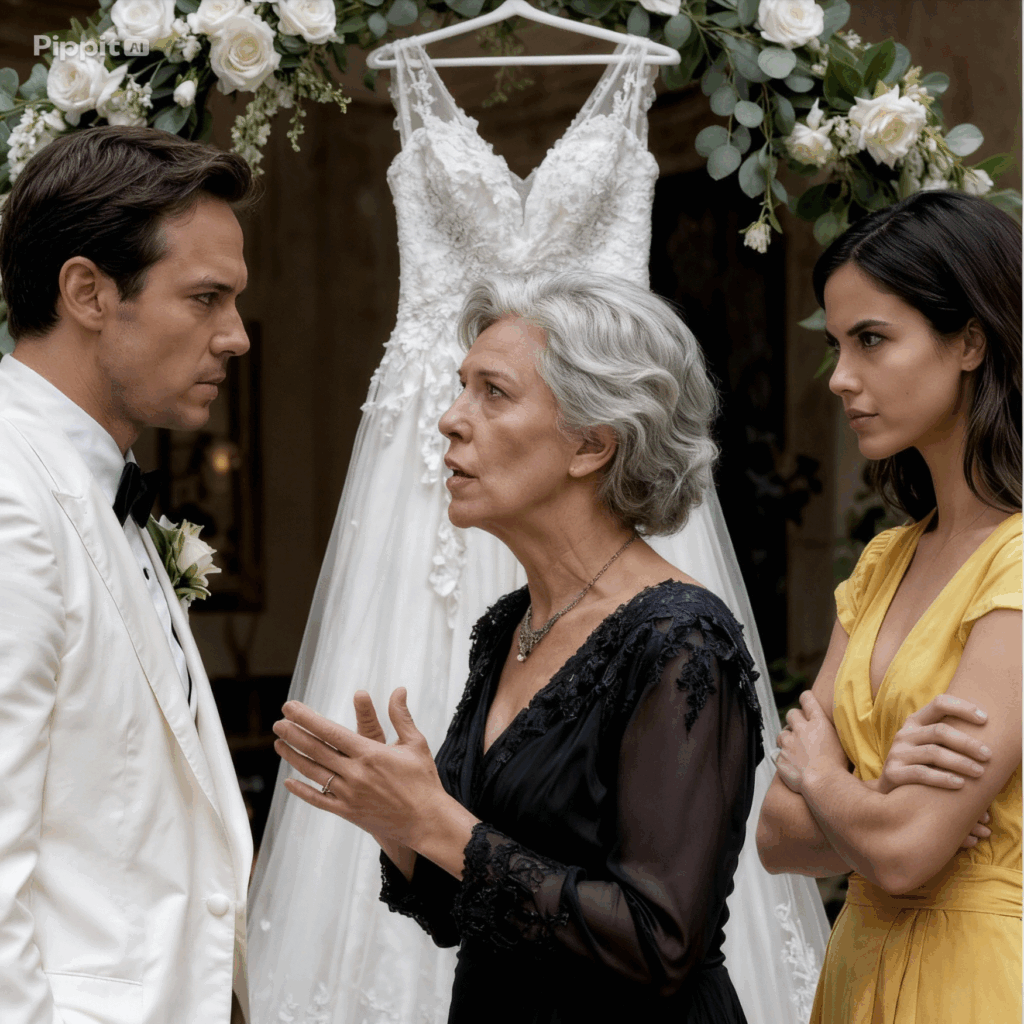
Walter’s silence answered her.Nine days later, dressed in the wedding gown paid for by Arthur, Matilda walked down the church aisle as if it were her own funeral. Her first kiss came before strangers, at the altar. That evening, trembling, she stepped into Arthur’s house.
Behind the closed bedroom door, Arthur spoke first.“Matilda,” he said in a quiet, measured tone, “before anything happens, you should know something.”She lay stiffly on the bed, feeling as if the room itself held its breath.
“I know this marriage was not your choice,” Arthur continued. “But I want you to know… I did not bring you here to hurt you.”She swallowed hard.“I… was born differently,” he confessed, voice faltering, eyes shadowed with fear and shame.
He explained, hesitantly, that his body could not perform the traditional duties of a husband. He could not share intimacy, and children were not possible.Matilda expected revulsion, anger, or rejection.But instead, she felt something entirely unexpected.
In him, she saw what she knew of herself: the captivity of silence, the invisibility, the loneliness within.“You are free, Matilda. I will never touch you unless you wish it. You may have your own room. All I ask is your company—someone to have dinner with, someone to walk beside.
I cannot bear the loneliness anymore,” he said, voice barely above a whisper.For the first time, he looked into her eyes, and she did not see a stranger but a wounded heart, much like her own.That night, they slept in separate rooms.
In the following days, Matilda discovered the library: walls lined with books, worlds opening with every page.When Arthur found her reading, he simply said,“Everything in this house is yours. Nothing is forbidden.”For the first time in her life, someone allowed her simply to exist.
Weeks passed. She learned to manage the farm, handle accounts, make decisions. She absorbed knowledge she had never been given the chance to acquire.One evening on the veranda, Arthur asked softly,“Matilda… are you unhappy here?”
She answered slowly, honestly:“No. For the first time… I can breathe.”Not long after, Arthur fell gravely ill. Matilda never left his side, tending him day and night.When he awoke and saw her sleeping beside his bed, he whispered,“You stayed.”
“I am your wife,” she replied simply.From that moment, something changed. Not passion, but trust. Careful, quiet devotion.Years went by. The house was warm, but the laughter of children was missing.One day, Matilda asked,“Arthur… what if we adopted a child?”
Hope sparkled in her eyes.“If you want it.”“Yes,” Matilda said. “Family can be chosen too.”They adopted a small, timid girl, Ella, and later two more children: Liam and Mia.The once-silent house filled with footsteps, laughter, shared meals, and love that needed no rules.
The villagers whispered, gossiped, judged. But their words never crossed the threshold of the Shaw house.They lived a life Matilda chose—and that they protected.“Love comes in many forms,” she often told the children.
“Ours was just another form. And that’s what made it ours.”