They Thought They Would Take Everything From Me. They Didn’t Know It Was Already Too Late.
The sound of the key turning in the lock of my new car sounded like a symphony to me.
It wasn’t just the clinking of metal.
It was the final chord of a decade of hard work, sleepless nights, deadlines, endless reports, and sacrifices.
I was standing in the parking lot of a shopping center, tightly gripping the key to my silver crossover. The unmistakable scent of new leather still lingered inside the car. But to me, it meant much more than that.
It smelled like freedom.
And in my coat pocket were the papers for another dream.
A small, cozy house standing on the edge of a pine forest.
My country house.
A dream I had cherished since the days when Andrei and I were newlyweds.
Back then, I thought he was reliable.
Calm, thoughtful, down-to-earth.
My mother used to tell me:
— Andrei is too quiet, Lena. You know what they say… Still waters run deep.
I would just laugh.
Andrei didn’t drink, he never hurt me, he went to work in the morning and came home in the evening. He earned his living as an engineer, while I worked for a large consulting company and covered a significant portion of our family expenses.
I liked having everything around us in order.
I bought good household appliances. I renovated things whenever necessary. I organized trips. I saved money.
I thought everything we were building belonged to both of us.
I thought we were heading in the same direction.
How naive I was.
When I came home that evening, the sun was already setting. The sky was glowing crimson.
Andrei was sitting at the kitchen table.
A cold dinner sat in front of him.
When I walked in, he didn’t even look up.
I was carrying shopping bags for the new house.
— Did you buy it? — he asked.
— I did! — I smiled. — And guess what? We signed the papers for the land too. We finally have our own place! This weekend we could go there. We could check the stove, walk around the garden…
That was when he finally looked at me.
And at that moment, something changed.
There was no joy in his eyes.
Not even exhaustion.
There was something cold and unfamiliar there.
As if he wasn’t looking at his wife.
As if he were examining an object whose value had suddenly changed.
— Mom called — he said.
The smile disappeared from my face.
— Irina Petrovna? What happened?
— She said you’ve gotten carried away.
— With what?
— With all of this. The car. The house. The way you’re constantly spending money.
For several seconds, I simply stared at him.
— Andrei, I need the car for work. And we talked about the country house together. Don’t you remember? You chose the floor plan with me.
— I wanted peace — he interrupted.
— And isn’t this peaceful?
— No. You’ve turned everything into a competition. Who drives what kind of car. Who has what kind of house. How much someone earns. How much they can afford.
He gave a bitter smile.
— Mom is right. You’ve become selfish, Lena.
It felt as though he had slapped me.
— Me?
— Yes.
That evening, we didn’t argue.
Andrei got up, went into the bedroom, and slammed the door behind him.
I remained there in the kitchen.
The car key lay on the table.
Beside it was the half-eaten soup.
For a long time, I simply stared at them.
Anxiety slowly crawled through me.
But even then, I didn’t understand.
I still thought he was simply tired.
I thought the end of the quarter, work stress, and his mother’s influence were speaking through him.
That was my first major mistake.
The second was that I realized far too late how strong the alliance between Andrei and his mother really was.
Irina Petrovna had never liked me.
In her eyes, I was a “nobody who was going places,” a woman who had seduced her son away from his simple working-class family and then constantly humiliated him with her own success.
My achievements weren’t successes to her.
They were insults.
And now, when there was finally something worth taking, she believed the time had come.
The next morning, silence woke me.
It was such an empty silence that I immediately knew something was wrong.
I turned over.
Andrei’s side of the bed was empty.
The sheets had been carefully smoothed.
There was a single sheet of paper on the bedside table.
With trembling hands, I picked it up.
It wasn’t an apology.
Not an explanation.
Not a message saying, “Let’s talk about this.”
It was a divorce petition.
“I am filing for divorce. Property acquired during the marriage is subject to division under the law.”
My hands began shaking so badly that the rustling of the paper filled the room.
I immediately called Andrei.
He was unavailable.
Then I called Irina Petrovna.
She answered on the first ring.
As if she had been waiting for my call.
— Hello, Elena.
Her voice was sweet.
Far too sweet.
— Where is Andrei?
— Safe.
— What have you done?
There was a brief silence.
Then she gave a quiet laugh.
— So you finally realized what is happening.
— I don’t understand.
— Of course you do.
Her voice hardened.
— We calculated everything. The car. The country house. The apartment. The savings. Everything.
My stomach tightened.
— What do you mean, everything?
— I mean you’re going to divide it all in half.
— But I paid for the car!
— You bought it during the marriage.
— I financed the country house too!
— You acquired it during the marriage.
Then she added:
— Do you really think the court cares who earned how much?
She paused for a moment.
— We’ve already found a lawyer. A very good one. And a very expensive one.
I hung up.
At that moment, I understood.
This wasn’t a sudden decision.
It was a plan.
And I was the only person who hadn’t been told about it.
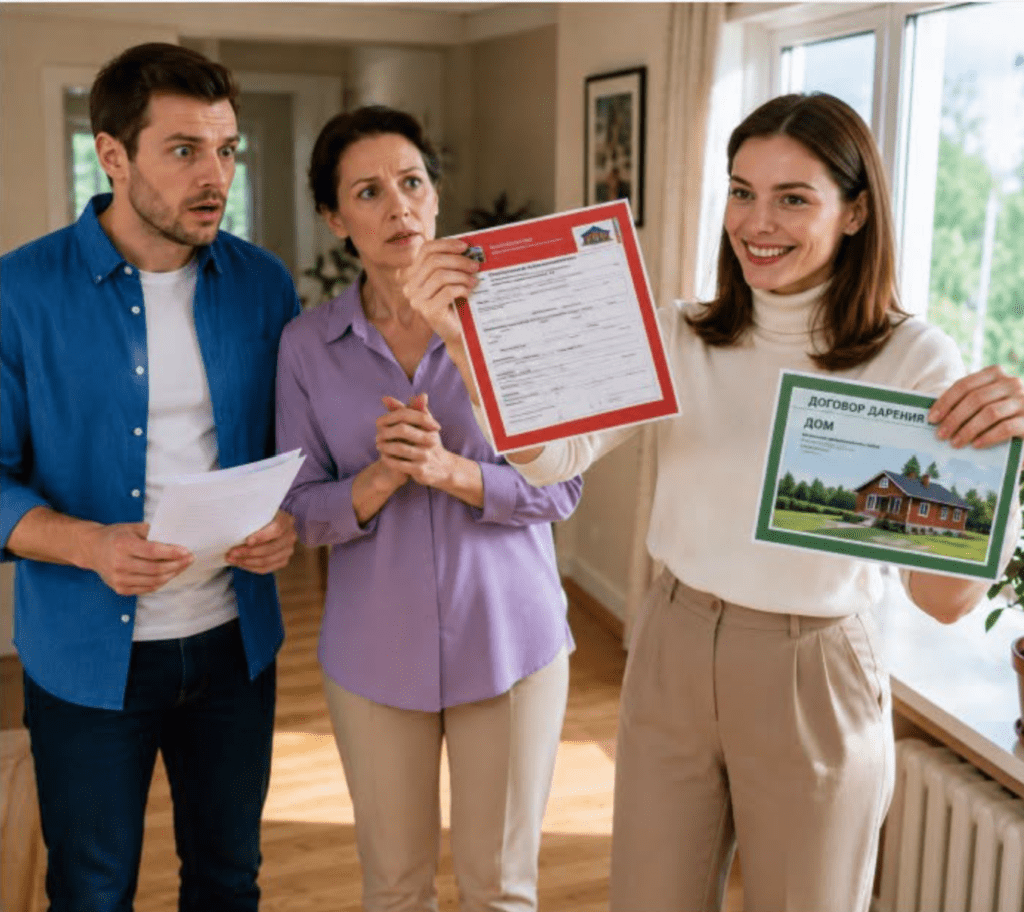
The following weeks turned into hell.
Andrei disappeared from the apartment and moved in with his mother.
Their lawyer began sending request after request.
Bank accounts.
Assets.
Car.
Real estate.
Savings.
They wanted to map out everything.
Everything I had built over ten years.
They claimed that I had purchased the car and the country house using joint family savings.
But they had one problem.
I had kept the documents.
Bank statements.
Transfers.
Receipts.
Bonuses.
Loan payments.
Everything was there.
And there was something else.
The messages.
Over the previous two years, Andrei had written to me countless times.
“Len, thank you for paying the car loan. I can’t afford it right now.”
Another time:
“Set some money aside for the country house. My bonus went toward renovating Mom’s apartment.”
Back then, none of those messages had seemed important.
Now, however, every single sentence was worth its weight in gold.
Olga Viktorovna, one of the best divorce lawyers, quietly read through all the documents.
Then she looked at me.
— Is there more like this?
— Plenty.
— Then don’t delete anything.
— Why?
— Because he may have written the evidence of his own defeat.
From that day on, we organized everything.
Every bank account.
Every receipt.
Every transfer.
Every message.
Every major purchase, arranged chronologically.
And as we did, more and more things came to light.
Andrei wasn’t only claiming my money.
He himself had been spending significant sums on his mother.
Apartment renovations.
New furniture.
Expensive appliances.
Renovation costs.
He had even taken out a loan.
His mother still hadn’t repaid it.
But the debt remained in Andrei’s name.
Olga Viktorovna leaned back in her chair.
— Interesting.
— What is?
— In court, they want to prove that you were selfish and spent the family’s money on yourself.
— Yes.
— Yet your husband’s own financial transactions show that he transferred significant amounts of money out of the family finances for his mother’s benefit.
She smiled.
— This is no longer the same story.
The proceedings lasted for months.
Irina Petrovna appeared at almost every hearing.
She didn’t cry.
That would have been too simple.
Instead, she sighed dramatically.
She clutched her heart.
She spoke in a trembling voice.
She behaved as though she were the victim.
Andrei sat quietly beside her.
His eyes lowered.
He wouldn’t look at me.
Their lawyer, however, was much louder.
— My client maintains that the car and the country house are marital property!
— Prove it — Olga Viktorovna said.
— The property was purchased during the marriage!
— Source of financing?
The other lawyer fell silent.
Olga Viktorovna took out the documents.
— The down payment for the car was made by the wife. The monthly installments were also paid by her. The entire purchase price of the country house can be traced to funds from her account.
The opposing lawyer nervously flipped through the papers.
— But they acquired it during the marriage!
— And?
— It is marital property!
Olga Viktorovna didn’t raise her voice.
— You are repeating legal arguments while we are presenting evidence.
The courtroom fell silent.
The real turning point came in the spring.
The judge requested a further financial analysis.
And we submitted it.
The numbers spoke for themselves.
I had spent money on our shared home.
On our shared plans.
On our shared life.
Andrei, on the other hand, had transferred significant sums to his own mother.
And while they accused me of being selfish, the evidence was increasingly making it clear who had actually been using the family’s resources for personal purposes.
On the day of the final hearing, Irina Petrovna was still confident.
Until the judge read the decision.
The courtroom fell completely silent.
The car remained mine.
The country house remained mine.
The apartment I had purchased before the marriage also remained mine.
In addition, Andrei was ordered to reimburse part of the joint savings that had been spent on renovating his mother’s apartment.
Irina Petrovna went pale.
For the first time, I saw genuine fear in her eyes.
Then she looked at Andrei.
Not at me.
At him.
And from that look, I understood:
now she blamed him.
Their plan had collapsed.
Andrei was the first to leave the courtroom.
He didn’t look at me.
He stopped for a moment in the doorway.
As though he wanted to say something.
But he didn’t.
He simply stood there.
He looked much older than he had the last time we had dinner together.
Then he left.
And I stepped outside the building.
The sun was shining.
Just as brightly as it had on the day I bought the car.
I took a deep breath.
The air smelled like spring.
I got into my silver crossover.
The leather seat was warm.
I touched the steering wheel and smiled.
I didn’t feel triumphant.
I didn’t want revenge.
I didn’t want to celebrate someone else’s failure.
I simply felt relieved.
And something else.
Freedom.
They thought I would fall apart.
They thought my fear would make me give everything to them.
They thought that with a lawyer’s letter, a few tears, and my mother-in-law’s carefully rehearsed story, they could bring me to my knees.
But they forgot one thing.
Me.
The woman who had built her career from nothing over ten years.
The woman who never gave up even when no one believed in her.
The woman who had learned that every problem has a solution if you are willing to face it.
I took out my phone and called the real estate agent.
— Hello, this is Elena.
— Yes?
— I’m calling about the country house.
— Do you want to sell it?
I smiled.
— No.
— Then?
I looked out the window at the road.
— I want to find a landscape designer. I want a complete garden.
— What kind?
I closed my eyes for a moment.
— Roses. Lilacs. Pine trees. A small terrace. And a bench in front of the window.
— All right.
— I’m going to live there.
There was a pause.
— Alone?
I smiled.
— For now.
Then I hung up.
I started the engine.
The deep, steady sound of the motor filled the cabin.
I turned on the music.
Loudly.
Loud enough for the melody to run through my entire body.
In the rearview mirror, I could still see Andrei and Irina Petrovna.
They were standing side by side.
They looked small.
Insignificant.
Not because they were.
But because, finally, they no longer filled my entire world.
And I drove away.
The city slowly disappeared behind me.
The road wound through young, green trees, leading straight toward the pine forest.
Toward my house.
Toward my home.
And for the first time in a long time, I wasn’t afraid of what awaited me.
Because I finally understood something.
They can take money from you.
They can take an object.
They can take a signed piece of paper.
They can take years you thought would last forever.
But there is something they cannot take away.
The ability that allowed you to build it all in the first place.
The strength that remains inside you even when everything else has collapsed.
And I carried that strength with me along that road.
Forward.
Not backward.
Because now I knew:
Home is not the place you are allowed to call your own by someone else’s permission.
Home is the place where you are finally free to be yourself.
And my true home was already waiting for me among the pine trees.