When an exhausted, hungry boy stepped into Lily’s quiet bakery on a freezing winter evening, the woman had no idea that she was about to offer him far more than a warm meal. What began as a tiny act of kindness slowly grew into something that would change both of their lives.
This is a tender, moving story about trust, second chances, and the unexpected ways in which we sometimes find family.It was almost closing time. I was wiping down the counter and counting the register when the soft, familiar chime above the bakery door rang.
That sound had quietly become one of my favorite moments of the day— a gentle reminder that somewhere out there, someone still believed in the comfort of freshly baked bread.I lifted my head… and saw him.
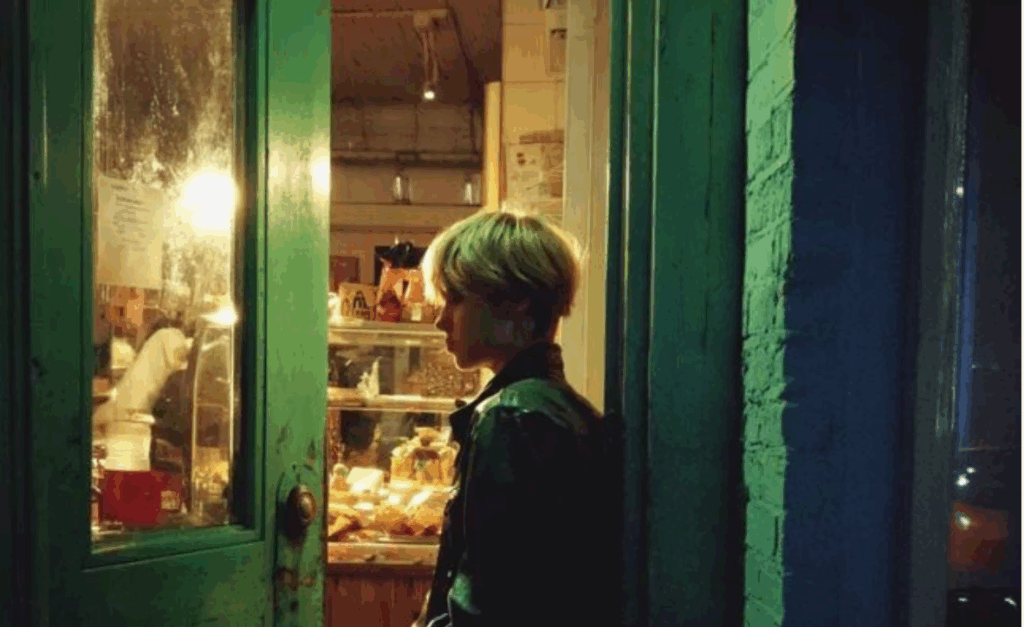
A boy stood in the doorway, maybe eleven or twelve. His coat hung off his shoulders, worn at the edges, two sizes too big. His shoes were soaked through, leaving faint dark marks on the mat. He hadn’t stepped inside completely— one foot rested on the welcome mat, the other still outside, as though he wasn’t sure he was allowed to enter at all.
He said nothing for a long moment. His eyes stayed on the floor, scanning the linoleum pattern as if searching for the courage to speak.Then, barely audible, he whispered:“Ma’am… if you have any old bread… or maybe a dry roll… could I have one? I haven’t really eaten today. My stomach… it’s getting loud.”
He said it with the tone of someone who had practiced those words countless times — someone who had been turned away before, too many times to admit. Someone who was used to apologizing simply for existing.
I should have asked where he came from. Why he was alone. Why his clothes didn’t fit and why he spoke like a child who had been forced to grow up too fast.But all I could think was:God… this child is starving.
For a moment, I couldn’t speak. Something about the way he held his hands inside his sleeves, the way he didn’t lift his gaze from the floor, squeezed my heart painfully tight.I walked around the counter, wiping my hands on my apron, and tried to keep my voice soft.
“Sweetheart,” I said gently. “Come in. It’s much warmer inside.”He blinked, uncertain. His expression was blank, guarded, as if he feared I was tricking him. But slowly, carefully, he stepped inside and sat down at the little table near the heater, moving as though any sudden gesture might get him chased out again.
I made him a big mug of real hot chocolate — the thick kind, with whipped cream and a sprinkle of cinnamon — and set it in front of him.“My name is Lily,” I said with a friendly smile. “What’s yours?”
He hesitated, weighing whether he could trust me at all.“Marco,” he finally answered.“Well, Marco,” I said softly, “tonight you’re going to eat something fresh. Not dry, not cold, not old — fresh and warm.”
His eyes widened, full of disbelief.“Really? You mean it?”“Yes, I do,” I assured him. “Choose anything you want from the counter.”His gaze drifted over the pastries as if memorizing every detail before letting himself choose.
Finally he pointed to the apple turnovers, the cherry pie slice, and a chocolate twist.“Excellent choices,” I said as I placed them neatly on a plate. He watched my every move with a quiet intensity, as though afraid I might change my mind.
“Thank you,” he whispered. “You’re very kind.”While he ate, slowly and carefully, savoring every bite, I packed a small paper bag with a few rolls and the last sandwich I had planned to take home for myself.
When I handed him the bag, his face lit up with such sincere gratitude that I felt my chest tighten.“Are you sure this is for me?” he breathed. “Thank you… this helps so much.”“Where is your mother, sweetheart? Do you have somewhere warm to go tonight? I can take you if you want.”
The moment the words left my mouth, Marco froze. His grip tightened around the paper bag, fear flashing across his eyes.Then — without a sound — he bolted out the door.The bakery fell silent.
I stood there for a long time, wondering if I should call someone — the police, social services — but something inside me said that doing so would only drive him further away. And that was the last thing I wanted.
The next evening, just before closing, the bell chimed again.I looked up from arranging napkins — and he was there.Marco.Clutching the same wrinkled paper bag as the night before. His hair damp, shoulders drooped, jacket thin as paper.
Before I could speak, he blurted out:“Please… please don’t call the police. Can I trust you?”His words tumbled out, shaky and fragile. The desperation behind them hit me like a wave.“Yes,” I said softly. “You can trust me. I promise.”
But he still looked unsure.“Why don’t you want me to call anyone?” I asked gently. “Did something happen?”He shook his head hurriedly.“No, ma’am. I didn’t do anything. It’s just… if people find out the truth, they’ll take me away. They’ll put me in some home. And I can’t leave my mom.”
Only then did I notice how tightly he was gripping the bag — his fingers pale with tension.He wasn’t afraid of me.He was afraid of losing her.“Alright, sweetheart,” I said softly. “Come sit. Drink some hot chocolate and then… if you want… tell me everything.”
He hesitated, then nodded. And for the second night in a row, I made him hot chocolate.As he slowly ate a croissant, the story unfolded.
His mother’s name was Miranda. She was very sick — so sick that she couldn’t get out of bed most days. The way Marco spoke about her — careful, protective — told me everything: she was his whole world. And he feared losing her more than anything.
“I do what I can,” he murmured, eyes lowered. “I clean, I try to get food. The neighbors help sometimes… but not much anymore.”I wanted to ask about his father, or other family, but he didn’t mention a single name.
Maybe there weren’t any.“If they find out,” he said quietly, “they’ll take me away. Put me in a home. And no matter what they say… I won’t leave her alone.”Then he looked up — with a tiny flicker of hope.
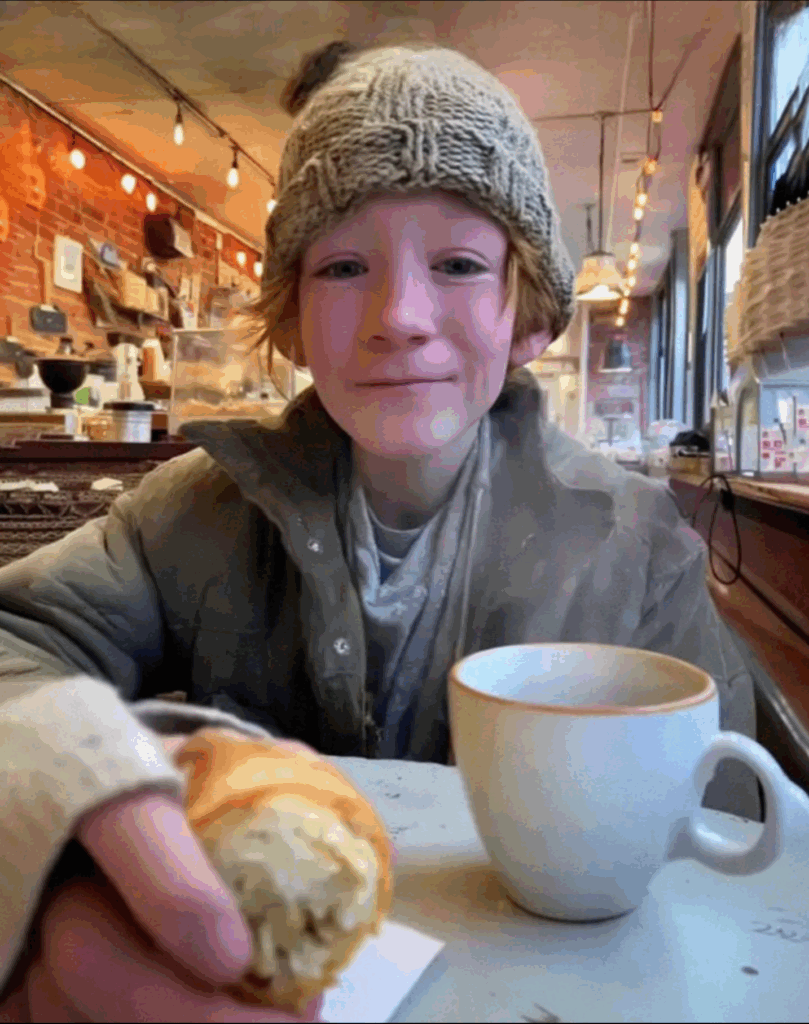
“Maybe I could work here? I’ll mop the floors, wash dishes, clean the windows. I don’t need money. Just a little bread… for me and for Mom.”His words hit me like a blade to the heart. He was just a child — carrying a burden no child should ever carry.
“Marco,” I said softly, voice trembling, “I can’t hire you. Not because I don’t want to… but you’re too young. But maybe… I could send some food home for your mother. Would that be okay?”His whole body tensed.
“No. She wouldn’t want anyone to see her like this.”I nodded. I understood. I didn’t push further.That night I packed him another bag: fresh rolls, a thermos of soup, croissants, and soft cookies. I handed it to him with a warm smile.
“Come back anytime, Marco. Alright?”And he did.Every few days, always right before closing. Sometimes he talked. Sometimes he sat quietly. I never pushed for answers he didn’t want to give.I only made sure he never left empty-handed.
Then, one evening — three weeks after our first meeting — Marco stepped inside again.But this time… he was smiling.A small, shy, hopeful smile — one I had never seen on his face before.And in that smile, I saw something that made my heart ache in the sweetest way:
He felt safe here.He felt welcomed.He felt… home.