Why Toads Keep Appearing Around Your House: The Surprising Scientific Explanation
Have you ever stepped outside at night and spotted a toad quietly sitting by your front door, patio, garage, or garden?
For many people, it feels almost mysterious. In folklore around the world, a visiting toad has been linked to good luck, transformation, prosperity, or even messages from nature. But what does science say?
The truth is both simpler—and just as fascinating.
A toad doesn’t visit your home because it’s predicting the future or delivering a supernatural warning. It usually comes for one reason: your property is providing exactly what it needs to survive.
Whether it’s food, moisture, shelter, or a safe path after rainfall, your yard may have become the perfect stopover for one of nature’s most effective nighttime hunters.
Let’s explore the real reasons.
1. Rain Makes It Safe for Toads to Travel
If you’ve noticed toads appearing after a heavy rainstorm, that’s no coincidence.
Unlike reptiles, toads have highly permeable skin that loses water easily. Dry conditions can quickly dehydrate them, so they prefer moving when the air is cool and humid.
Rain creates the perfect opportunity.
Wet ground protects them from drying out while also bringing their favorite foods to the surface. Earthworms emerge, slugs become active, and countless insects begin moving around.
So when a toad suddenly appears after rain, it probably wasn’t far away—it had simply been hiding beneath leaves, logs, rocks, loose soil, or underground shelters until conditions became ideal.
2. Your Porch Light Has Become a Free Buffet
Your outdoor lights may be inviting more than just neighbors.
Porch lights, garage lights, garden lamps, and bright windows attract flying insects every evening, including moths, beetles, crickets, flies, and mosquitoes.
To a hungry toad, that’s an all-you-can-eat buffet.
Instead of searching for food, the toad simply waits beneath the light while insects come directly to it.
Toads are patient ambush predators, feeding on:
Beetles
Slugs
Snails
Earthworms
Ants
Crickets
Termites
Flies
Many other small invertebrates
If you regularly see the same toad near your porch, it has probably learned that dinner is served there every night.
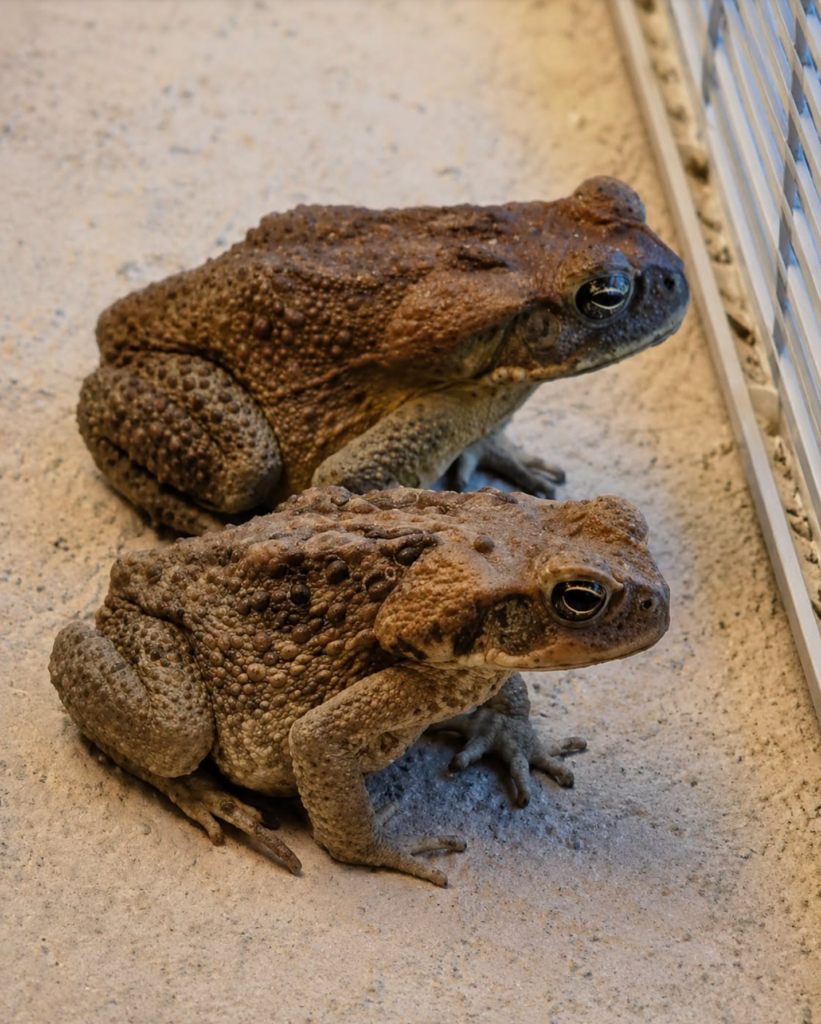
During the day, toads avoid heat and direct sunlight.
Instead, they search for cool, damp hiding places where they can stay safe until nightfall.
Common hiding spots include:
Leaf litter
Mulch
Flower beds
Dense shrubs
Wood piles
Under steps
Beneath rocks
Drains
Spaces under outdoor structures
Loose soil
Some species even dig shallow burrows or borrow tunnels made by other animals.
If your yard stays cooler and damper than nearby areas, it may be one of the safest places in the neighborhood for a toad to rest.
4. Water Is Closer Than You Think
Although adult toads spend most of their lives on land, they still depend on water to reproduce.
Each breeding season, many species travel to ponds, marshes, ditches, temporary pools, or other calm bodies of water to lay eggs.
Even if you don’t have a pond, your property may provide attractive moisture sources, including:
Rain gardens
Damp soil
Low-lying areas
Leaking outdoor faucets
Air-conditioner drainage
Pet water bowls
Small decorative ponds
Sometimes a toad is simply crossing your yard on its way to a nearby breeding site.
5. Your Garden Is Full of Food
A healthy population of insects often attracts healthy populations of toads.
These amphibians naturally feed on many creatures gardeners consider pests, including slugs, beetles, grubs, snails, and numerous insects.
While one toad won’t eliminate every garden pest overnight, it plays an important role in maintaining ecological balance.
Its presence may suggest your yard has plenty of small invertebrates and a functioning food web.
6. It May Have Wandered Inside by Accident
Finding a toad inside your garage, basement, bathroom, or even your living room can be surprising.
Fortunately, it usually isn’t trying to move in.
Most indoor visitors entered accidentally through an open door, garage entrance, foundation gap, or while following insects indoors.
Once inside, smooth floors, stairs, window wells, or deep containers can prevent them from escaping.
If you find one:
Keep children and pets away.
Place a container over the toad.
Slide a piece of stiff cardboard underneath.
Carry it outside.
Release it in a shaded area close to where it was found.
Avoid handling it directly whenever possible because amphibian skin is delicate and easily absorbs chemicals from human hands.
Does Seeing a Toad Mean Your Environment Is Healthy?
Possibly—but not always.
Scientists often consider amphibians useful indicators of environmental conditions because their sensitive skin reacts quickly to changes in water quality, pollution, and habitat.
A yard that supports toads usually provides moisture, shelter, insects, and nearby breeding habitat.
However, one visiting toad doesn’t automatically mean your ecosystem is pristine.
Artificial lights, drainage problems, or habitat disturbance can also attract them.
Think of a toad as an ecological clue—not definitive proof.
Are Toads Dangerous?
Not usually.
Most toads are shy, gentle animals that would rather hop away than confront people.
Despite a long-standing myth, touching a toad will not give you warts.
However, many species possess defensive glands behind their eyes that release irritating chemicals when threatened.
For humans, these secretions are usually only mildly irritating.
For pets—especially dogs—they can be much more serious.
Large species such as cane toads and Sonoran Desert toads produce toxins capable of causing severe illness if a pet bites or licks them.
If your dog mouths a toad:
Rinse its mouth with clean water.
Prevent further contact.
Contact a veterinarian immediately if symptoms develop.
Always wash your hands after handling a toad.
Should You Welcome Toads?
In most cases, yes.
Toads are valuable members of the ecosystem, helping naturally control insects while also providing food for birds, snakes, and other wildlife.
To make your yard safer for both people and toads:
Limit pesticide and herbicide use.
Check the lawn before mowing.
Supervise pets outdoors at night.
Cover deep window wells.
Fix leaking pipes.
Eliminate stagnant water that breeds mosquitoes.
Use outdoor lighting only when necessary.
Preserve shaded vegetation away from entrances.
If you prefer fewer toads near your house, avoid harming them. Instead, reduce insect-attracting lights, seal openings beneath doors, remove excessive clutter near the foundation, and improve drainage.
The Real Reason Toads Visit Your Home
So why do toads keep showing up around your house?
Because your property has become a place where they can survive.
Moist air lets them travel safely. Rain reveals food. Porch lights attract insects. Gardens provide shelter. Nearby water supports breeding.
Sometimes they’re simply passing through.
Sometimes they’ve discovered that your yard is one of the best restaurants in the neighborhood.
Far from being a supernatural omen, a visiting toad is a reminder that even an ordinary backyard is part of a much larger natural world.
The next time you spot one quietly waiting outside your door, take a closer look.
Is the ground still wet from rain? Are insects buzzing around the porch light? Is there thick vegetation or a nearby water source?
The answer is almost always found there—not in superstition, but in the remarkable biology of one of nature’s most successful little survivors.
Disclaimer: This article is for educational and informational purposes only and should not replace advice from local wildlife authorities or veterinary professionals.