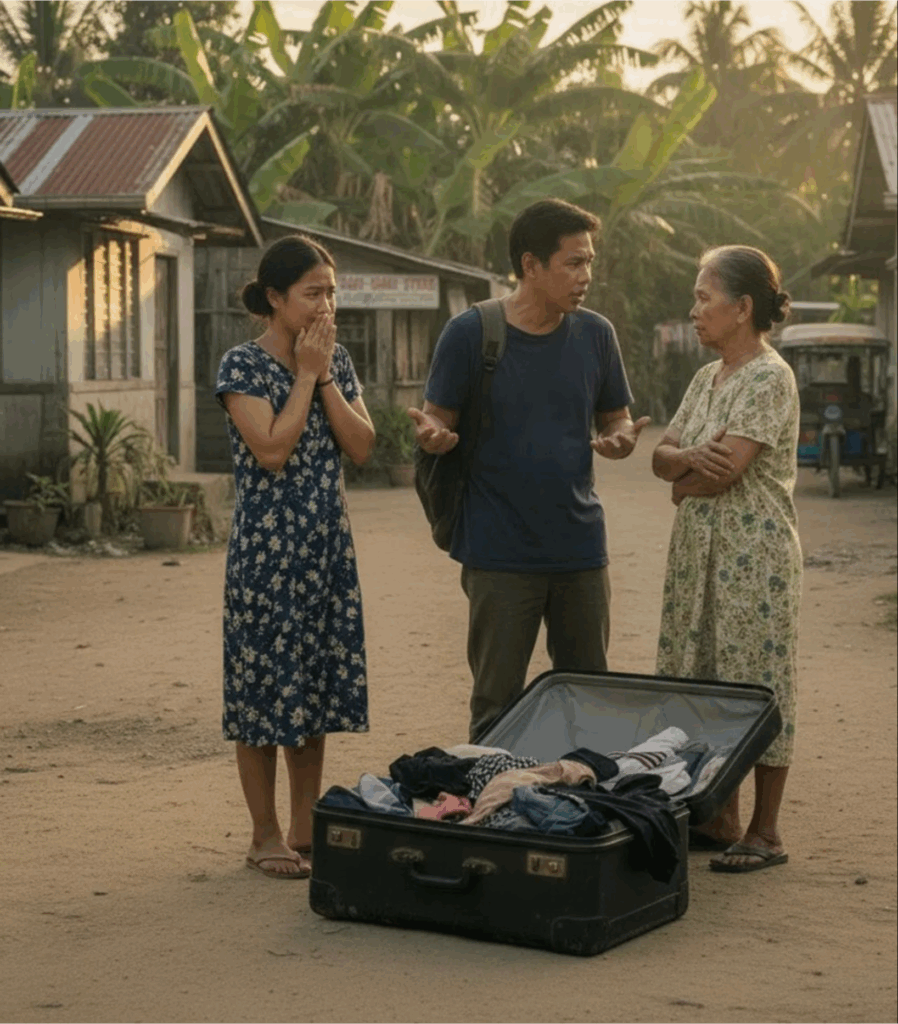
— Enough with pretending to be a princess! — Viktor snapped without even turning away from the refrigerator. — There are three of us in this family, and everyone needs to eat.
Marina stood by the stove, holding the wooden spoon, and said nothing.
Many people mistook silence for weakness. Marina knew better. Sometimes silence was the only way to protect yourself. Over the years, she had learned when arguments were pointless, when explanations fell on deaf ears, and when words only wasted the little energy she had left.
Three years of marriage had taught her many things.
How not to argue in the morning.
How not to explain the obvious.
How not to ask for understanding from people who had already decided not to listen.
She used to try.
She used to tell Viktor that she was tired. That it wasn’t fair for everything to fall on her shoulders. That she no longer felt like a wife, but like someone hired to serve everyone around her.
But every conversation ended the same way.
Viktor always had an excuse.
And his mother always had someone to blame.
Today, Ludmilla Stepanovna sat at the kitchen table like a queen inspecting her kingdom.
The woman was in her sixties, large and imposing, with carefully styled ash-colored hair and rings glittering on every finger. She had a special talent for taking over any room she entered.
Not only physically.
Emotionally too.
When Ludmilla arrived, everyone noticed.
She never came quietly.
That afternoon she had shown up without warning.
With empty hands.
But with plenty of complaints.
— I haven’t eaten anything since this morning, — she announced dramatically. — Viktor, you know I have blood pressure problems.
Viktor immediately nodded.
At thirty-four years old, he still knew exactly when his mother expected him to take her side.
Marina slowly opened the cupboard and took out the pot.
Something inside her tightened.
It wasn’t anger anymore.
The anger had disappeared long ago.
This was something deeper.
The kind of exhaustion that doesn’t come from one bad day, but from hundreds of small disappointments. From constantly adjusting, constantly giving in, constantly saying “it’s fine” when deep down you know it isn’t.
— You’re going to cook for the whole family. Stop acting spoiled, — Viktor said firmly.
His voice sounded less like a request and more like a verdict.
Marina looked at him.
Then at his mother, who was already scrolling through her phone as if the matter had been settled.
Then she looked back at the stove.
— Fine.
And she cooked.
But this time, she didn’t cook the way she always had.
Not for three people.
Not for everyone else.
Not while forgetting herself.
She made exactly one portion.
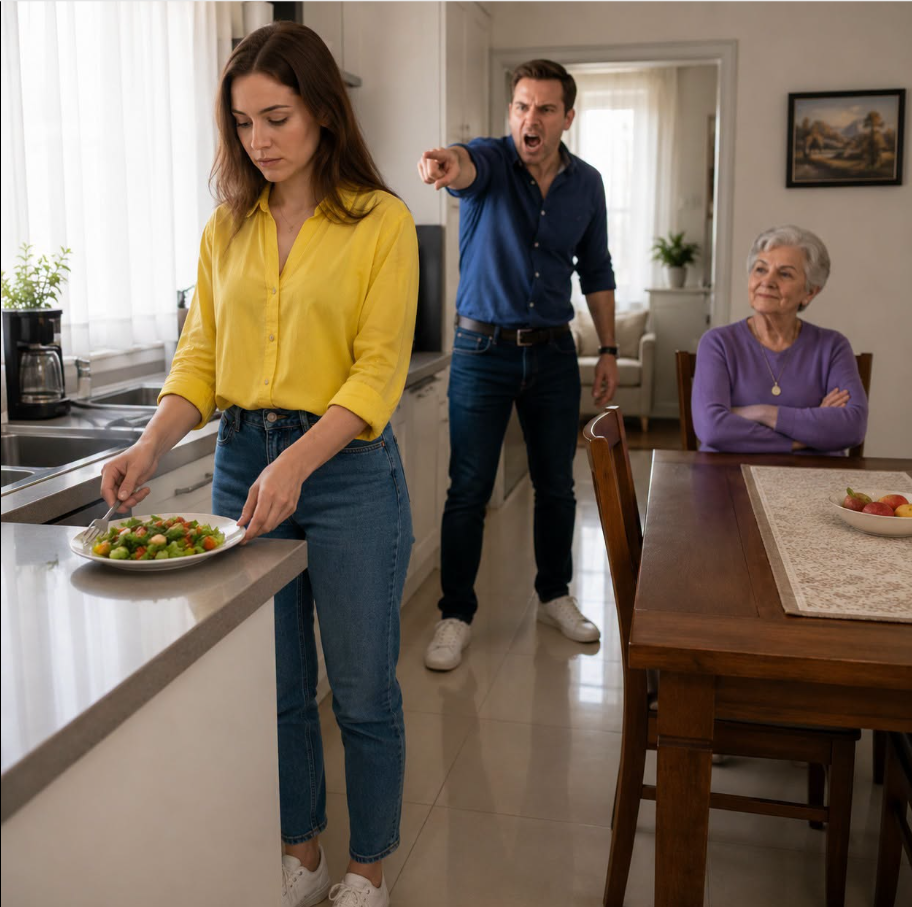
For herself.
It was chicken noodle soup — simple, warm, homemade. The kind of meal she had loved since childhood. It wasn’t about proving a point. It wasn’t revenge.
It was the first time in years that she had chosen herself.
When the soup was ready, she poured it into a deep bowl, cut some bread, placed everything on a tray, and carried it to her room.
She didn’t slam the door.
She didn’t make a scene.
She didn’t shout.
She simply closed it.
For a few moments, the kitchen was completely silent.
Then Ludmilla spoke.
— What was that supposed to mean?
A second later, Viktor’s voice followed.
— Marina!
But she was already sitting by the window, eating her soup.
Outside, a man was teaching a little girl how to ride a bicycle. The child kept losing balance, falling, then laughing as she got back up. The man never yelled.
He never blamed her.
He simply helped.
Marina watched them for a long time.
And something inside her shifted.
When she finished eating, she carried the bowl back to the kitchen.
Viktor and his mother looked at her as if she had committed some unbelievable offense.
— Are you serious right now? — Viktor asked quietly.
— Completely.
She placed the bowl in the sink and turned on the water.
— You said to cook for the family. I did. I’m part of the family too.
— Don’t twist my words.
— I’m not twisting anything. I’m just tired.
Viktor stared at her.
— Tired of what?
Marina looked directly at him.
— Tired of cooking for someone who arrives without warning, brings nothing, never says thank you, and still finds a way to criticize how I hold a spoon.
For once, Viktor had no answer.
He opened his mouth.
Then closed it.
Marina didn’t feel victorious.
She wasn’t enjoying his silence.
She was simply looking at the man in front of her and wondering when exactly he had become a stranger.
Not an enemy.
Not a bad person.
Just a stranger.
Like a passenger on a long train journey who had shared the same compartment with her for three years.
The next day, Marina left the apartment.
Not to run away.
She just needed air.
She went to a small café downtown, ordered a latte, and took out her old notebook.
She had carried that notebook habit since university. Back then, she had dreamed of becoming a journalist.
She never did.
Instead, she became an editor at a small publishing house. She loved the job because there she could finally be herself. Her opinions mattered there. Her voice mattered.
At home, somehow, it had disappeared.
She opened the notebook and wrote one word:
Enough.
She stared at it for a long time.
It wasn’t a scream.
It wasn’t anger.
It was a simple statement.
A decision.
Then she called her old friend Vera.
— Are you free to talk?
— For you? Always.
They met in the city square, where the noise of people somehow made everything calmer.
Vera understood immediately when she saw Marina.
— Tell me.
And Marina did.
Not all at once.
Slowly.
Like pulling out a painful splinter.
She talked about the soup.
About her mother-in-law.
About Viktor.
About how her marriage had slowly turned into nothing more than sharing an apartment and paying bills together.
Vera listened without interrupting.
Then she asked one question:
— Whose apartment is it?
— Mine. I inherited it from my grandmother.
Vera nodded slowly.
— Then you have more options than you think.
That evening, Marina looked around her home differently.
Not as a place where she was trapped.
But as a place where she had a choice.
The next morning, everything changed.
An unfamiliar number called her.
— Am I speaking with Marina Sergeevna Volkova?
— Yes.
— I’m calling from a notary office. It concerns an inheritance matter. Could you come in today?
Marina sat on the edge of the bed.
— Whose inheritance?
The answer left her silent.
Her aunt Zinaida Pavlovna had passed away.
Aunt Zina.
The quiet woman she hadn’t seen in years.
The woman who lived surrounded by books and plants, who never complained, who always spoke softly and kindly.
At the notary’s office, Marina learned everything.
Her aunt had left her an apartment, a small bank account, and a countryside house.
— She renovated the house specifically for you, — the notary explained. — She said: “My niece will use it when she finally decides to live her own life.”
Marina looked down at the papers.
For the first time in a long while, she felt something she had almost forgotten.
Choice.
When she returned home, Ludmilla Stepanovna was waiting.
Again.
— Where have you been? — her mother-in-law demanded.
Marina calmly put down her bag.
— Handling my inheritance.
— What inheritance?
— I was left an apartment and a house.
The silence that followed was immediate.
Something changed in Ludmilla’s expression.
Not happiness.
Not pride.
Calculation.
— An apartment? Is it a good one?
And in that moment, Marina finally understood.
Not everyone celebrates when something good happens to you.
Some people only wonder how they can benefit from it.
That was the moment Marina made her decision.
She would no longer be a background character in someone else’s story.
She would become the main character of her own.