After forty-eight years of marriage, I never imagined that one day I would find myself alone. I believed Robert and I would grow old together. We had spent so many years side by side, sharing dreams, struggles, happiness, and countless sacrifices.
Then, one day, everything changed.
Robert left me for another woman.
There was no dramatic argument, no heartbreaking goodbye. He simply packed some of his things, walked over to the kitchen table, and placed a bank card on it before leaving.
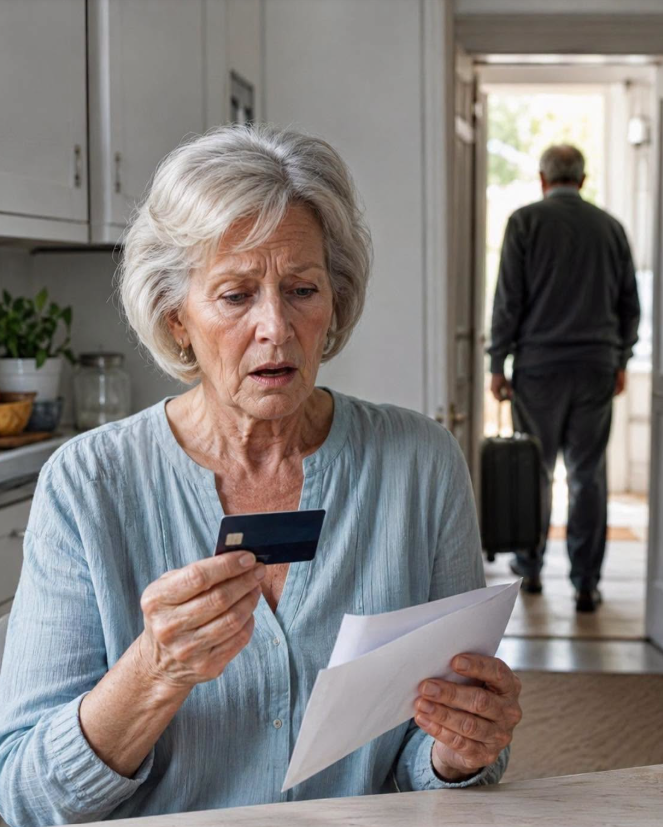
“There’s $1,500 on it. In case of emergencies,” he said quietly.
I just stared at him.
After all those years together, was this all he was leaving me? A card with a small amount of money?
I said nothing. I didn’t want to beg, and I didn’t want to accept what felt like pity.
I put the card away in an old metal box hidden deep inside my closet, and for five years, I never touched it.
I convinced myself that the money wasn’t an act of love. It was simply Robert’s way of easing his guilt. A small gesture to make himself feel better about the pain he had caused.
Life moved on.
I learned how to live alone. I got used to the silence in the house. I learned not to wait for someone to ask if I was okay.
I had always been the person who took care of everyone else. I raised our children, supported Robert throughout his career, kept our home running, and carried the responsibilities of our family.
For most of my life, I believed my role was to be strong.
Then, one morning, my doctor gave me news that changed everything.
“Eleonora, there is a serious problem with your heart. You need surgery, and we cannot wait too long.”
On my way home, I could think about only one thing: how would I pay for it?
I didn’t have enough savings. I didn’t want to ask anyone for help. I didn’t want my children to worry about me.
Then I remembered the old bank card.
Maybe it was finally time to use it.
The next day, I went to the bank.
“I would like to withdraw the entire balance from this account,” I told the employee.
She entered the information into the computer. At first, she smiled politely. Then her expression changed.
She looked at the screen again, as if she wanted to make sure she was seeing correctly.
“Please wait a moment,” she said.
A few minutes later, she returned with a man. He was the bank manager. In his hands was an envelope.
The moment I saw the handwriting on it, I recognized it.
It was Robert’s handwriting.
“This was left for you,” the manager said.
My hands trembled as I took the envelope.
I thought it would contain some explanation for why he left me. Maybe another apology.
But what I discovered left me speechless.
The account did not contain $1,500.
It contained more than $52,000.
For five years, Robert had been secretly depositing part of his pension into that account every month.
Every single payment had the same note attached:
“What belongs to Eleonora.”
I opened the letter.
Robert wrote that he had intentionally told me about only $1,500 because he knew me. He knew that if he told me the real amount, I would never accept it.
He knew I would refuse.
He wrote:
“You raised our children. You stood beside me while I built my career. You held our family together. You took care of our home, and you were there for my mother when she needed you.”
Then I reached the final lines of the letter.
And I started crying.
“This is not a gift. It is only a small part of what I owe you.”
I sat there silently for a long time.
The letter did not erase what he had done. It did not change the fact that he left me, and it did not remove the years of pain I carried.
But that money helped me when I needed it most.
Before my surgery, I finally told my children the truth about my condition.
When they found out I had been facing everything alone, they were heartbroken.
“Mom, why didn’t you tell us?” they asked with tears in their eyes.
I looked down.
“I didn’t want to be a burden to you.”
My daughter held my hand tightly and whispered:
“Mom, taking care of you is not a burden. It’s love.”
The surgery was successful.
When I opened my eyes in the hospital, all three of my children were standing beside me.
At that moment, I finally understood something.
The greatest gift I received was not the money.
It was the love I finally allowed myself to accept.
For so many years, I believed I was only valuable when I was giving, working, sacrificing, and holding everything together for everyone else.
But I learned something important.
Love does not have to be earned.
We are not loved because we are perfect, because we endure everything, or because we make ourselves impossible to replace.
We are loved simply because we are who we are.