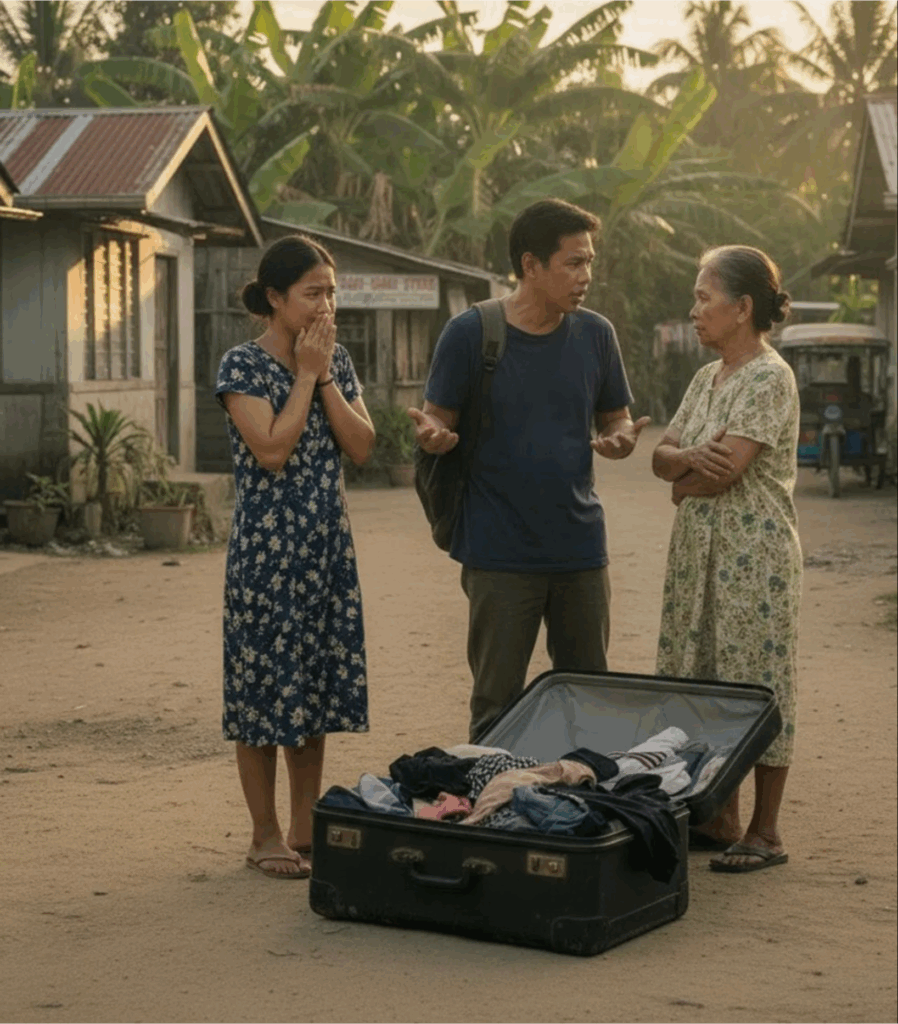
One day my phone rang. My son’s name flashed on the screen, but from his very first sigh I already felt it: this would not be an ordinary conversation.
— Mom… please don’t be angry with me — he began uncertainly. — I know you gave us the house… but my mother-in-law said she doesn’t want you to be at the wedding.
For a moment, it felt as if time itself had stopped. It wasn’t the words that truly hurt, but everything behind them: years I had lived quietly, out of love. Early mornings when I was already in the kitchen making sure everything was ready. Evenings when, despite exhaustion, I listened, supported, and carried burdens no one ever saw.
The house… it wasn’t just a house. It was my gift. My hope. A vision of a future I had imagined for him. I built every detail from the heart: the kitchen where they would cook and laugh, the living room where family evenings would take place, the garden where they would drink coffee in the morning sunlight.
And now it turned out that I was not part of that picture.
My heart tightened, but my voice remained calm:
— Alright. I won’t come.
There was silence on the other end of the line. Perhaps he was still waiting for something. For shouting, tears, an explanation. But none came.

Because something inside me had already decided.
The next morning I sat at the kitchen table for a long time. The house, which I had believed would be our shared future, suddenly carried an unfamiliar silence. There was no warmth in it, only echoes. The documents lay in the drawer, carefully arranged, as if they already knew they would one day be needed.
I took out the property deed. My name was there, clear and undeniable. At that moment I didn’t feel anger, but rather a slow, cold clarity. As if a fog that had surrounded me for years was beginning to lift.
I called the notary. My voice was surprisingly calm when I asked for an appointment. Then I called the real estate agent as well. It wasn’t a long conversation. I didn’t need to explain myself. The decision had already been made inside me before I spoke it out loud.
The following days passed faster than I expected. Signatures, arrangements, short sentences. Each document removed another layer of the life I had taken for granted until then. There was no dramatic turning point, just a quiet withdrawal.
When I was done, I stood for a long time in the empty living room. I didn’t take anything with me. I just looked at the walls where I had placed so much hope. Strangely, I didn’t feel triumph. Only exhaustion. But it was no longer the kind of exhaustion that breaks you—it was the kind that closes something.
The money I had set aside for the wedding remained in the account. I stared at the numbers on the screen for a long time, as if they were asking me a question too. Then I closed the laptop and started packing a small suitcase. Not much. A few clothes, a book, and something I still couldn’t quite name: an irreversible decision.
I set off toward the sea.
During the journey, for the first time in years, I wasn’t in a constant state of readiness. I didn’t try to anticipate what others expected from me. I didn’t rehearse conversations in my head, didn’t prepare for arguments, didn’t try to forgive or understand in advance. I just sat by the window and let the landscape slowly replace my thoughts.
At the seaside, the air was different. A mixture of salt, wind, and something like endless calm. On the first day I just sat in the sand and watched the waves. Nothing special happened, yet something was happening inside me with every moment.
The phone rang occasionally. I didn’t always answer. When I did, my son’s voice was increasingly uncertain. The ease he once had when making requests was gone. Instead, there was confusion, questions, and something he didn’t know how to place.
— Mom… are you sure this was necessary? — he asked once.
After a long silence, I replied:
— I didn’t do what was necessary. I did what I could no longer not do.
He didn’t argue. Perhaps for the first time he heard that the decision wasn’t about him, but about me.
Days passed like this. In the mornings I walked along the shore, in the afternoons I read, and in the evenings I simply sat listening to the sound of the water. My thoughts slowly reorganized themselves. What had once been pain didn’t disappear, but it lost its edge. It no longer cut—it was just there, like an old scar that no longer bleeds.
One evening, as the sun slowly disappeared beyond the horizon, I felt a strange lightness for the first time. Not happiness, not joy. Something like a pure emptiness. And in that emptiness, space began to appear.
Not long after, my phone rang again.
— Mom… — his voice was soft now. — That house… do other people live there already?
There was no accusation, only confusion.
I looked at the sea. The waves were coming the same way as the day before. Nothing asked for permission.
— Yes — I said finally. — Because it is no longer yours.
There was a long silence on the other end. A silence that could not be filled with anything.
The wedding eventually took place, but not as they had imagined. There was no ease in it, the kind others carry for you. No prepared safety, no prewritten comfort. Only what remained: relying on their own strength.
I was not there. And that fact did not change.
But the days by the sea slowly rewrote something inside me. I no longer measured what I had lost, but what I had stopped doing. The constant need to please. The quiet adaptation. The invisibility.
One morning I woke up and the first thought was no longer about who I owed something to. Instead, it was about what I wanted to eat, where I wanted to go, how long I wanted to simply sit and watch the water.
The pain hadn’t completely disappeared. But it no longer controlled me.
And one day, while walking along the shore, I realized something—not loudly, but with a quiet understanding: I hadn’t lost everything. Only what had long stopped walking with me.
And the rest—the silence, the sea, my own breath—was finally mine again.