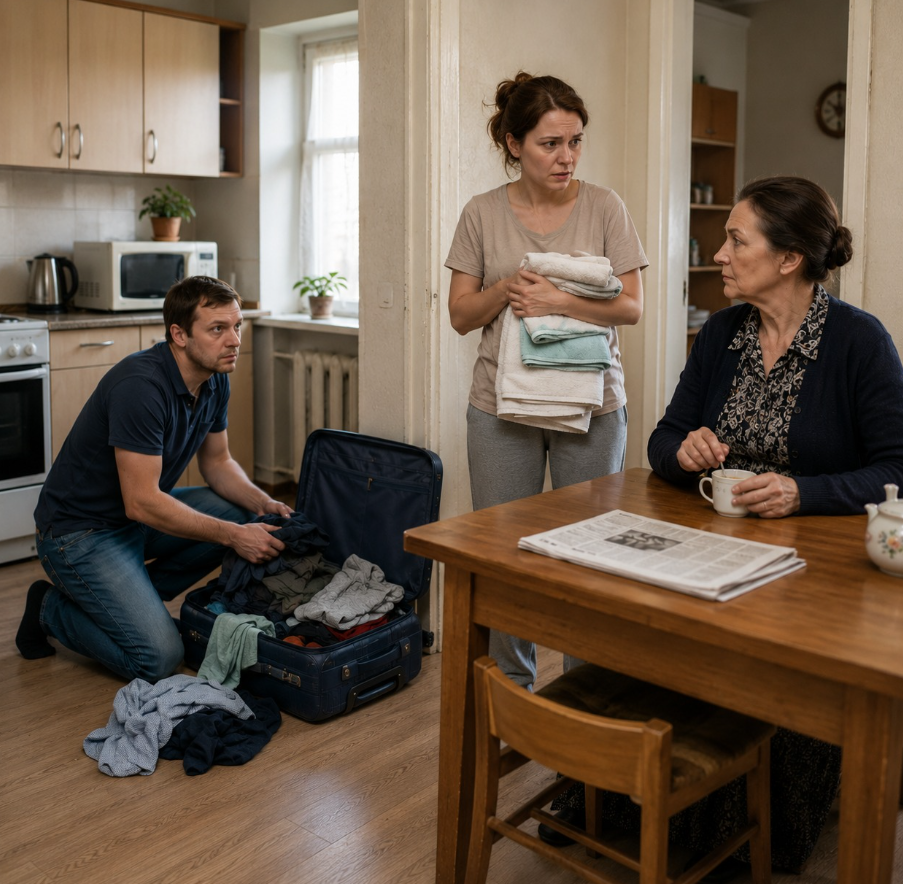
The gray checkered suitcase hit the parquet floor of the hallway with a dull thud. Daria froze in the kitchen doorway, clutching a stack of freshly washed towels against her chest.
In an instant, everything became too loud: their breathing, the rustle of clothes, and that strange, unsettling silence that always arrives when something irreversibly goes wrong.
Matvey avoided her eyes, restless and tense. He opened the built-in wardrobe and began ripping Daria’s clothes off the hangers one by one—hangar and all.
He wasn’t careful. He wasn’t choosing. He was just clearing things out, as if he could also throw out his guilt in the same motion. Fabrics collapsed into the suitcase in crumpled heaps, and the metallic snap of the zipper cut through the air like a blade with every movement.
The apartment was filled with a suffocating, sweet lavender scent. Tamara Vasilyevna sprayed it everywhere—curtains, pillows, even the hallway rug.
She called it “soothing,” but to Daria it felt more like someone slowly sealing off the oxygen in the room. She had been living with constant headaches for two months because of it.
The mother-in-law sat at the kitchen table, perfectly calm. She stirred her tea, the spoon tapping porcelain with an irritating little rhythm.
Clink. Clink. Like a slow judgment being hammered into Daria’s nerves.
“Matvey, what are you doing?” Daria’s voice was quiet, but tight.
He shrugged without really looking at her and kept packing.
“Move out of the apartment. I want to live alone,” Tamara Vasilyevna said suddenly, as casually as if she were commenting on the weather. “It’s not good for me here. Too cramped. Too чужой… too unfamiliar.”
Daria slowly set the towels down. Her stomach tightened.
It had all started the previous autumn. Back then, everything had seemed simple: work, plans, a shared future with Matvey. She had spent years saving for a dream—a seaside house. Every overtime shift, every unnecessary expense cut, every sacrifice had gone into it.
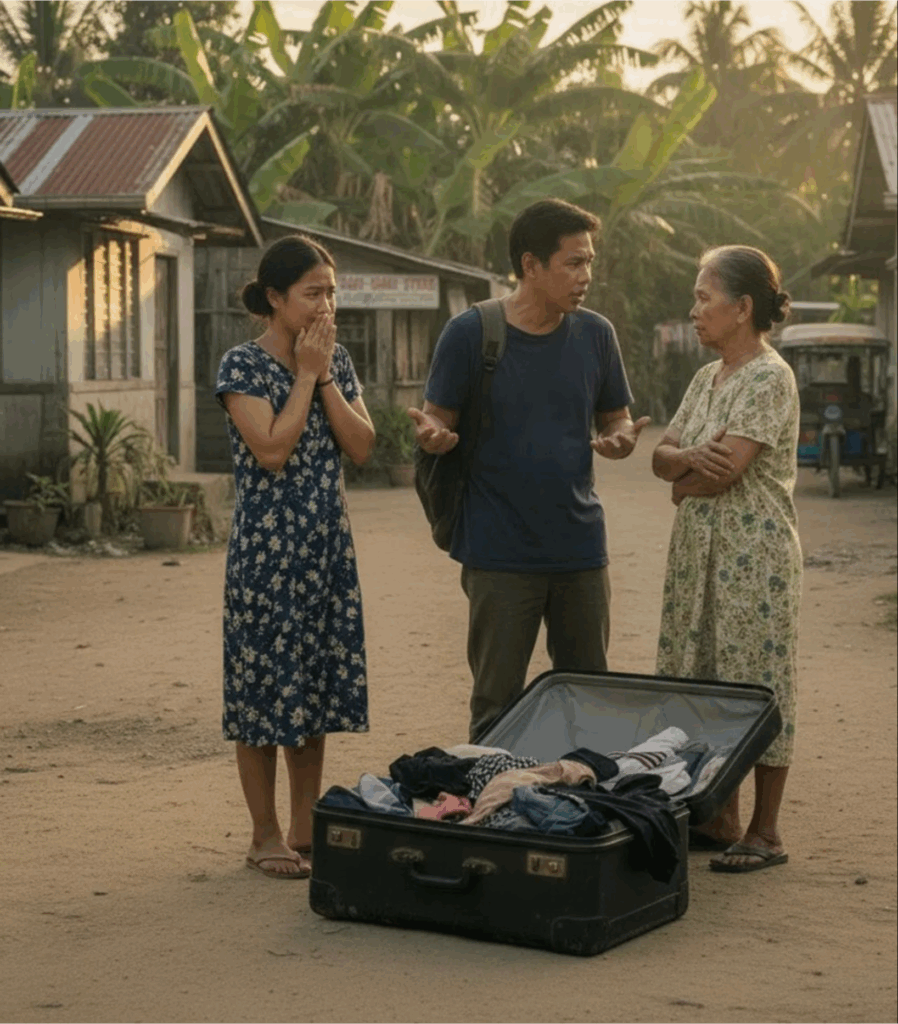
When she was almost there, her father helped with the remaining amount. The house was registered in his name first, then transferred to Daria through a gift deed.
Matvey hadn’t objected. He’d only said, “Fine. Whatever.”
He hadn’t contributed anything. Instead, he spent his money tinkering with his car, buying spare parts, disappearing into the garage on weekends.
The plan had been simple: rent the house out for a while, then move in together someday.
But then Tamara Vasilyevna arrived.
At first, it was “just for a week.” Four suitcases, tearful eyes, exhaustion, drama. She said she needed to rest, then she would leave.
She never left.
A week became a month. The guest room became “her room.” She rearranged the kitchen, threw out the plants, and interfered in everything—how Daria cooked, how she dressed, how she lived.
And Matvey always said the same thing:
“My mother is old. Be patient.”
So Daria was patient.
Until now.
“This is my apartment,” she said quietly. “I bought it before the marriage. You really want me to move into an unfinished, unheated house in the middle of winter?”
Tamara Vasilyevna smiled and sipped her tea.
“Don’t be dramatic, Dashenka. You’re young, you’ll manage. I need a doctor nearby. And besides—we’re family.”
“Say something,” Daria turned to Matvey.
He stared at the floor, uneasy.
“Dasha… just until spring. I’ll find work there. Mom shouldn’t be stressed.”
Something inside Daria snapped. Not loudly. Not dramatically. Quietly—deep and final.
She stepped toward the suitcase and unzipped it in one sharp motion. Clothes spilled across the floor.
“Enough,” she said.
“You’ve lost your mind!” Matvey snapped.
“Pack your things. You have one hour.”
“This is insane!” Tamara Vasilyevna hissed. “Matvey, are you hearing this?!”
But Matvey said nothing. He just stood there.
Then chaos slowly unfolded—slamming doors, shouting, frantic movement. Daria locked herself in the bedroom and watched the clock on her phone. She didn’t cry. Didn’t shake. Just waited.
Exactly one hour later, the door slammed shut.
The next day she called a locksmith. The new lock was heavy, solid metal—final, unyielding.
“No one’s picking this one,” the locksmith said.
He was right.
When they came back the next day, there was no key.
“Dasha! Open up!” Matvey shouted. “My mother will freeze!”
“You’re in the wrong place,” she replied calmly. “At the dacha.”
“This isn’t over!” Tamara screamed. “I’ll sue you!”
“Go ahead.”
Matvey banged on the door in rage.
“We’re getting divorced! I’m entitled to half the apartment!”
Daria smiled faintly.
“Try it.”
And went back to her tea.
Two weeks later, the court summons arrived. Matvey sued.
At the hearing, he was confident—but hollow.
“Joint property!” his lawyer insisted.
Daria stood and placed the documents on the table.
“Gift deed. Financial support from my father. Full documentation.”
The judge read silently.
“Gifted property is not marital property. The claim is dismissed.”
Silence.
Matvey’s face went pale.
He lost the case. And the house.
Later it came out that Tamara Vasilyevna had fallen into debt through failed “investments.” Creditors had already reached the dacha.
In spring, Daria quit her job, sold the apartment, and bought a ticket to the sea.
On her last day, Matvey showed up at a shop where she was finishing errands. He looked exhausted. Broken.
“Dasha… let’s start over.”
She looked at him.
Then pulled out a small box.
“What’s that?”
“A sedative.”
“…Seriously?”
“Three hundred and fifty.”
Silence.
Matvey turned and walked away.
Three days later, Daria sat on a seaside terrace. Waves rolled gently over the pebbles. The air was salty, clean—and finally, there was no lavender in it.
Only silence.
And the beginning of a new life.