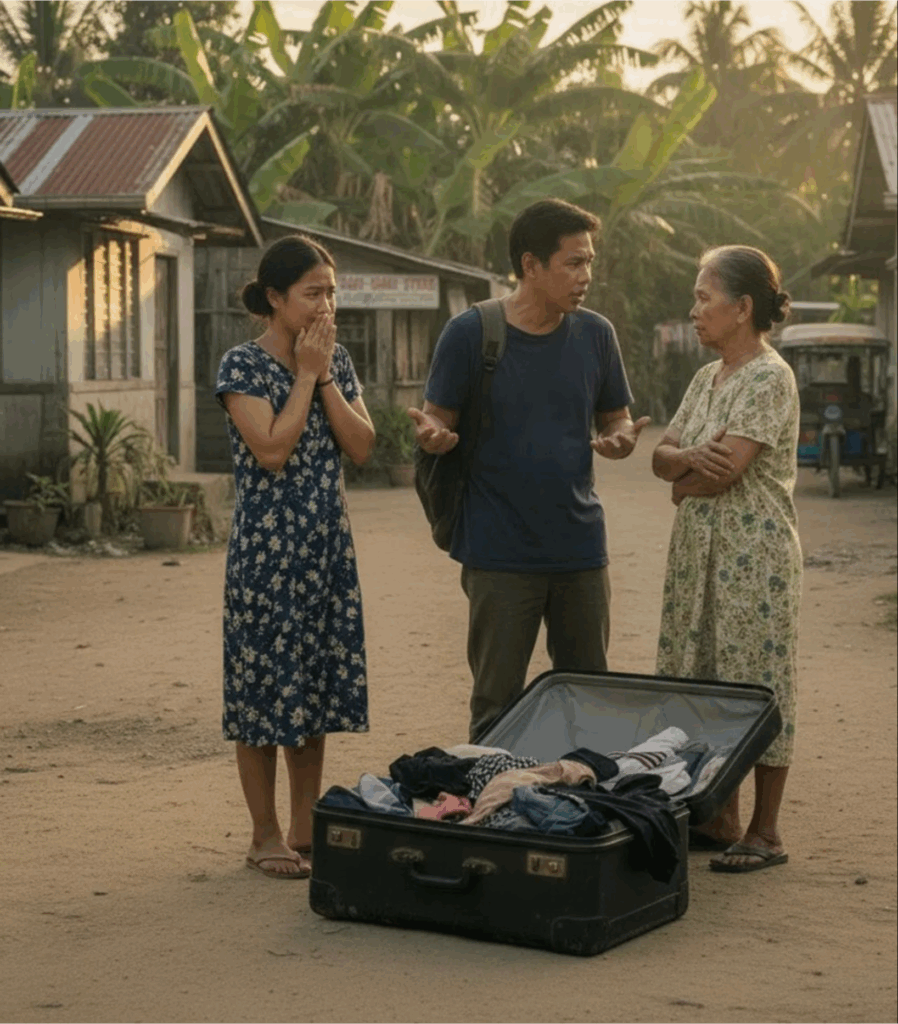
— Get out of my house! And don’t you ever set foot here again! — Zinaida Arkadyevna’s sharp voice cut through the air of the old Saint Petersburg apartment like shattered glass.
The high-ceilinged living room seemed to echo her words endlessly. Crystal chandeliers trembled slightly, their tiny fragments of light flickering like nervous breaths. The space was luxurious, yet suffocating—heavy with the scent of expensive perfume mixed with the bitter sharpness of calming drops.
Darya stood in the doorway, her fingers clenched so tightly around the strap of her worn canvas bag that her knuckles had gone pale. She didn’t speak. She didn’t move. She only watched the woman who ruled this house like a queen holding court in a crumbling kingdom.
Zinaida sank back into the antique armchair with deliberate grace, adjusting her silk scarf as if nothing in the world could disturb her authority.
Roman stepped forward.
“Enough of this,” he said quietly, standing in front of his wife as if shielding her from a storm. His voice trembled, but not with fear—anger held tightly under control. “Darya is my wife. She is carrying my child. If she’s not welcome here, neither am I.”
Zinaida slowly lifted her chin. The fragile mask of a wounded mother disappeared, replaced by something colder, sharper.
“A child?” she repeated with quiet contempt. “From a provincial girl who can’t even tell a fish fork from a dessert fork? You are a Voskresensky! Our name has stood for generations!”
“Then maybe it’s time it stopped standing on lies,” Roman replied bitterly. “Like the kind you built this house on.”
From the hallway came a hoarse cough.
Boris Leonidovich, Roman’s father, stood there barely holding himself upright. His face was pale, his breathing uneven.
“Zina… stop…” he whispered. “You’re destroying everything…”
But she didn’t look at him.
“Leave,” she said coldly. “If you walk out, don’t expect anything from this family again.”
Roman didn’t hesitate. He took Darya’s hand.
“Let’s go.”
They left.
The door shut behind them with a dull, final sound—like something inside the house had died.
Outside, Saint Petersburg was drowning in cold rain. Streetlights blurred across wet pavement. The city looked beautiful in a distant, indifferent way.
Roman wrapped his coat around Darya’s shoulders.
“I’m sorry,” he said quietly. “I didn’t think she would go this far.”
Darya leaned into him.
“We’ll survive,” she whispered. “Together.”
They moved into a tiny apartment on the edge of the city. Damp walls, a crooked table, heating that worked only when it wanted to. But it was theirs.
Roman worked long shifts at a logistics company. Darya took translation jobs, often working late into the night under a flickering lamp. Exhaustion became routine. Silence became comfort.
Three weeks later, the phone rang.
Boris had died.
The funeral was silent in the way grief often is when anger is still present underneath.
Zinaida sat at the head of the table dressed in black, unmoving like a statue carved from ice. When Darya tried to pour her water, Zinaida suddenly pushed her hand away.
Water spilled across the white tablecloth.
“Don’t touch me,” she said quietly. “This is your fault. Everything is.”
The room froze.
Darya said nothing. She simply stood, placed the jug down, and walked out.
Roman followed her, but Zinaida grabbed his sleeve.
“Sit down! Show respect!”
He gently removed her hand.
“Respect is earned,” he said. “And you lost it a long time ago.”
The truth came later, not from anger—but from memory.
Roman’s grandmother, Serafima Ivanovna, spoke quietly in her apartment filled with old books and the smell of wax polish.
“Zina was always afraid of being nothing,” she said. “So she tried to become everything—and destroyed anything that didn’t fit.”
Then she told him about Illya.
The older brother.
A love story that was real, simple, and crushed under Zinaida’s control. The girl died under pressure she couldn’t survive. Illya never recovered. And then he, too, was gone.
Roman said nothing for a long time.
Finally, he said:
“We’re leaving.”
Years passed.
In Karelia, near a vast silent lake surrounded by endless forest, life began again.
Wooden cottages replaced apartments. Guests came and went. The air smelled of pine instead of exhaustion. Roman and Darya built everything with their own hands—slowly, painfully, but truly.
Their son was born.
They named him Illya.
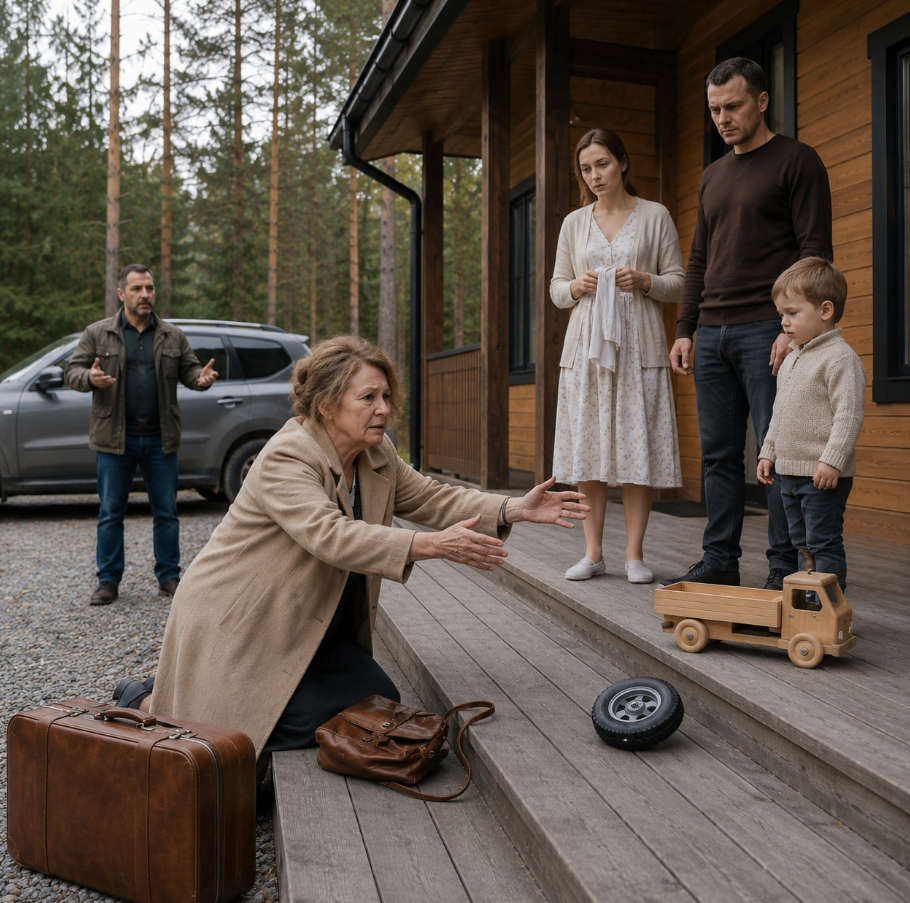
One autumn morning, a dusty SUV stopped at the gate.
Zinaida stepped out.
She was no longer a queen. No longer even close. Her coat was expensive but worn, her posture broken, her face lined with exhaustion and time.
“I have nowhere to go,” said the man who brought her.
Darya looked at her for a long moment.
“There are no free rooms here,” she said calmly.
Then the boy ran out.
Small. Laughing. Holding a toy car.
“It’s broken!” he shouted happily.
He stopped.
Right in front of Zinaida.
The woman froze.
The eyes.
The face.
The resemblance.
Illya.
Her breath caught. Her knees weakened.
“Illya…” she whispered.
She sank slowly to the ground.
Roman appeared behind her.
“It’s too late,” he said quietly. “You can’t take back what you broke.”
They did not let her into the house.
But they didn’t throw her into the street either.
There was a small staff house near the property.
“You can stay there,” Roman said. “If you work.”
Zinaida said nothing.
For the first time in her life, there was no command, no threat, no control.
Only silence.
She picked up her suitcase.
And walked away.
Not as a ruler.
Not as a mother demanding obedience.
But as someone finally forced to learn what it means to lose everything—and to live with it.