Eleanor Grace Whitmore was sixty-eight years old when her life, as she had known it for nearly half a century, was quietly dismantled. For decades, she had been a wife,
a mother, and the steady, unspoken force behind Hazelbrook Orchards, a small but thriving organic apple farm nestled among the rolling hills of Pennsylvania.
Together with her husband, Richard, she had built not just a business, but a life rooted in hard work, shared purpose, and deep love. Every tree, every harvest, every corner of their home carried the imprint of their partnership.
Richard’s death from pancreatic cancer marked the beginning of a painful unraveling. For fourteen long months, Eleanor had watched the strongest man she knew slowly fade,
his vitality slipping away day by day. At his request, she kept the truth from their children, Darren and Samantha, hoping to preserve their sense of normalcy a little longer.
But by the time Richard passed, the emotional distance between them had already grown too wide. What Eleanor had once believed was a close-knit family had, over the years, quietly drifted apart.
Darren, their eldest, had built a fast-paced career in Boston’s financial world, rarely returning home and viewing life increasingly through a lens of efficiency and profit. Samantha, in contrast,
had spent years chasing unstable business ventures, often relying on her father’s financial support to stay afloat. Eleanor had always believed that beneath their differences, there remained a shared foundation—a connection to the orchard, to family, to the values Richard had lived by.
She was wrong.When her children arrived for Richard’s funeral, Eleanor expected grief, or at least a shared sense of loss. Instead, she saw calculation.
Their conversations were measured, their attention focused not on memories or mourning, but on the estate, the property, and what would come next. The warmth she had hoped for never appeared. In its place was a cold, professional detachment that unsettled her deeply.
The morning after the funeral confirmed her fears. Darren and Samantha approached her not as grieving children, but as decision-makers. They spoke about “settling the estate,”
about the impracticality of her continuing to live in such a large house, about her need to move somewhere more “suitable” for her age. They presented her with documents that allegedly reflected Richard’s wishes—documents that transferred control of the orchard and business to Darren.
But Eleanor noticed something immediately: the signature. After months of illness, Richard’s handwriting had become shaky, uneven. The signature on those papers, however, was firm and flawless.
It did not belong to the man she had cared for until his final breath. Though she did not confront them outright, she understood what was happening. Her children were not honoring their father’s legacy—they were attempting to seize it.
They spoke openly of selling the orchard to developers for millions, reducing decades of labor, care, and community connection into a financial transaction. To them, the land was no longer a home or a legacy. It was an asset.
Eleanor felt the sting of betrayal, but she did not react impulsively. Instead, she remained calm, observing, thinking, preparing. While her children believed she was overwhelmed and compliant, she quietly began to protect herself.
Upstairs, under the pretense of gathering personal belongings, she retrieved essential documents—her identification, her passport, and something far more important: a hidden deed.
Decades earlier, before her marriage, she had purchased twenty acres of land in her own name. This land, largely unknown to her children, contained the orchard’s only natural water source. Without it, neither the farm nor any future development could survive.
It was a safeguard Richard had once called their “just-in-case.” Now, it was her lifeline.When she returned downstairs, she allowed her children to believe she had accepted their plan.
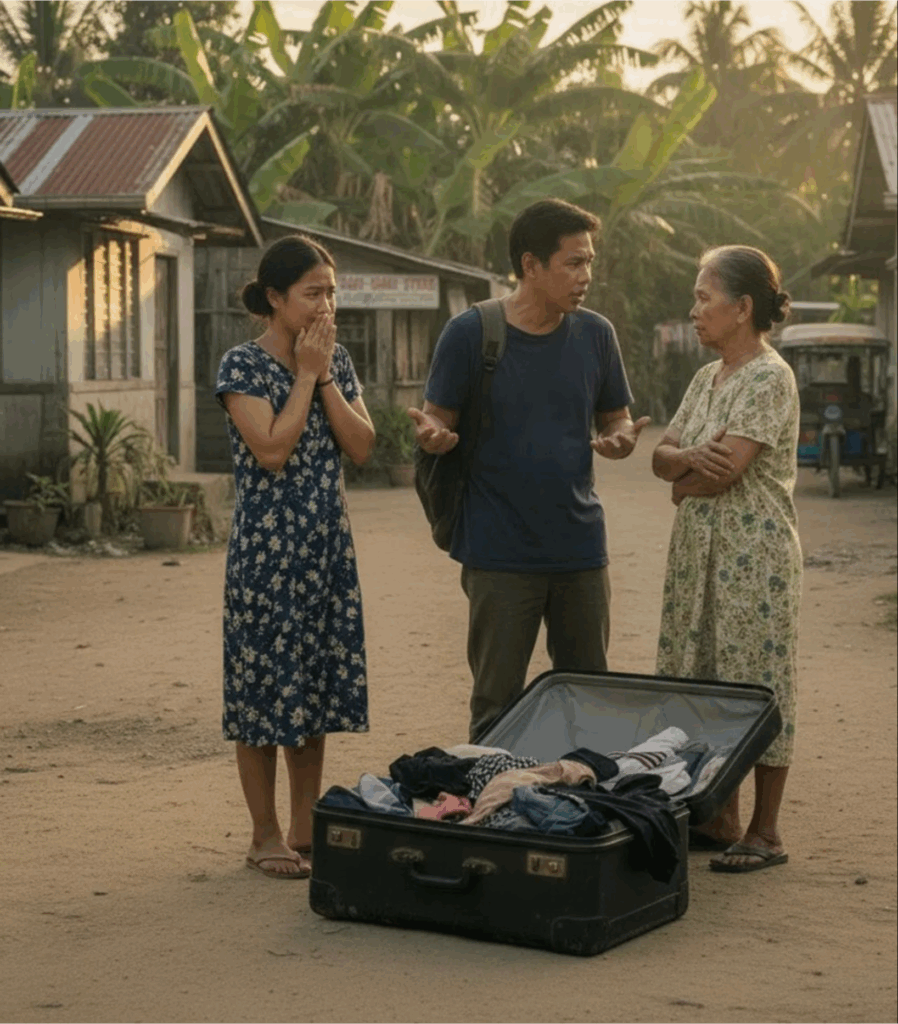
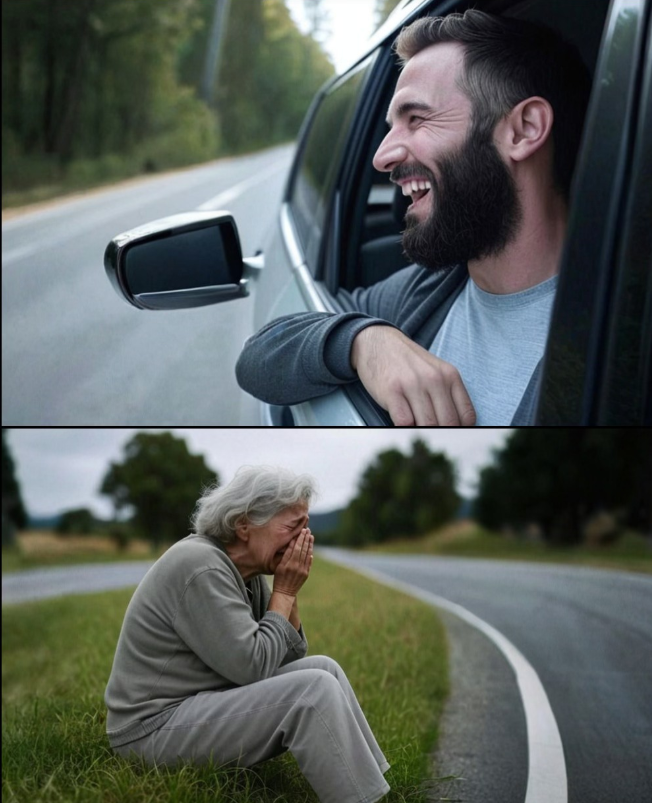
She got into the car with them, carrying only a small suitcase. But instead of taking her to the retirement community they had mentioned, Darren drove her to a remote stretch of road and told her to get out.
There was no hesitation in his voice, no visible remorse. He justified it as a practical decision, a way to avoid complications. Samantha, though momentarily uncertain, did not stop him. And just like that, they left her there—alone, discarded, and presumed powerless.
But Eleanor was not broken.Standing on that gravel road, watching the dust settle as their car disappeared, she felt something unexpected. Not despair, but clarity.
Not fear, but freedom. In that moment, she understood that everything she had believed about her children—their loyalty, their love, their sense of family—had been an illusion. And with that realization came a quiet but powerful resolve.
She began to walk.Not toward the gas station Darren had mentioned, but toward town, toward action. Every step, though physically painful, strengthened her determination.
She was no longer a passive figure in someone else’s plan. She was reclaiming control of her own story.When she reached Miller’s Gas and Grocery, she encountered a familiar face—Ray Miller,
a longtime acquaintance who immediately sensed something was wrong. His kindness offered her a brief moment of relief, but she remained focused. Using the phone, she contacted Harold Jennings, the family lawyer.
What she learned confirmed her suspicions.Harold had never approved the will Darren presented. In fact, he had concerns about its authenticity.
When Eleanor met him and revealed the deed to the twenty acres, he immediately recognized its significance. The land, and more importantly its water rights, gave Eleanor legal leverage that her children had completely overlooked.
Together, they acted quickly. Harold filed an emergency injunction to halt the sale of the orchard and informed the developers that the property was legally incomplete. Faced with potential legal complications and the absence of critical resources, the developers withdrew.
Darren and Samantha’s carefully constructed plan collapsed almost overnight.In the days that followed, they attempted to reach Eleanor—not with genuine remorse, but with urgency and frustration.
Their messages focused on resolving the situation, on salvaging the deal. There were no apologies, no acknowledgment of the harm they had caused. Eleanor chose not to respond.
Instead, she focused on rebuilding her life.She moved into a modest apartment in town, embracing its simplicity and independence. She reconnected with her community,
sharing her knowledge through workshops and teaching. Slowly, she rediscovered herself—not just as a mother or a widow, but as an individual with her own strength, purpose, and voice.
In a final, defining act, Eleanor placed the water rights to her land into a trust for a local agricultural cooperative. This ensured that the orchard’s future would remain rooted in sustainability and community,
rather than profit and exploitation. It was not an act of revenge, but of preservation—of honoring the life she and Richard had built.
Though her children faced legal and personal consequences, Eleanor did not dwell on their downfall. She chose peace, but not silence. She stood firmly in truth, refusing to allow herself to be erased or diminished.
Looking back on the moment she was abandoned, Eleanor understood that it had not been the end of her story, but the beginning of a new chapter. It forced her to confront painful realities, but also to rediscover her own resilience.
Her journey became a testament to quiet strength—the kind that does not rely on anger or confrontation, but on clarity, dignity, and self-respect. She learned that love does not mean accepting betrayal, and that being underestimated does not define one’s worth.
In the end, Eleanor did more than reclaim her land. She reclaimed herself.The orchard still stood, its trees blooming as they always had, rooted in the same soil that had witnessed decades of care and dedication.
And Eleanor, like the land she protected, remained strong, enduring, and alive—no longer defined by what she had lost, but by what she had chosen to protect and rebuild.