I had been in the shower for just ten minutes. The baby had just fallen asleep, and I thought I could wash my hair in peace, enjoying a little quiet. My husband had gone to the store, and my brother, Kin, was sitting in the living room with headphones on, completely absorbed in a puzzle app on his phone.
It was as if the world around him didn’t exist. This scene had become almost daily, and I had gotten used to it.Kin almost never spoke. He was diagnosed with autism at the age of four, and over the years, his words had almost completely disappeared.
He was always calm, sweet, slightly withdrawn, but in a special way affectionate. He loved order, repetition, and his little rituals.After our mother passed away, we decided he would live with us. At first, I was afraid: would we manage? Could we create a space where he would feel safe?
He simply nodded when we offered, and slowly we found our rhythm together.Suddenly, I heard the baby cry—that piercing, alarming cry that tightens your heart. My heart raced, my stomach clenched in fear, and I quickly rinsed the shampoo out of my hair. And then—absolute silence.
I ran into the living room and froze. Kin was sitting in my armchair, holding the baby in his arms. He cradled him gently against his chest, as if he wanted to share his warmth and the rhythm of his heartbeat. One hand supported the baby’s back, and the other stroked him steadily and calmly.
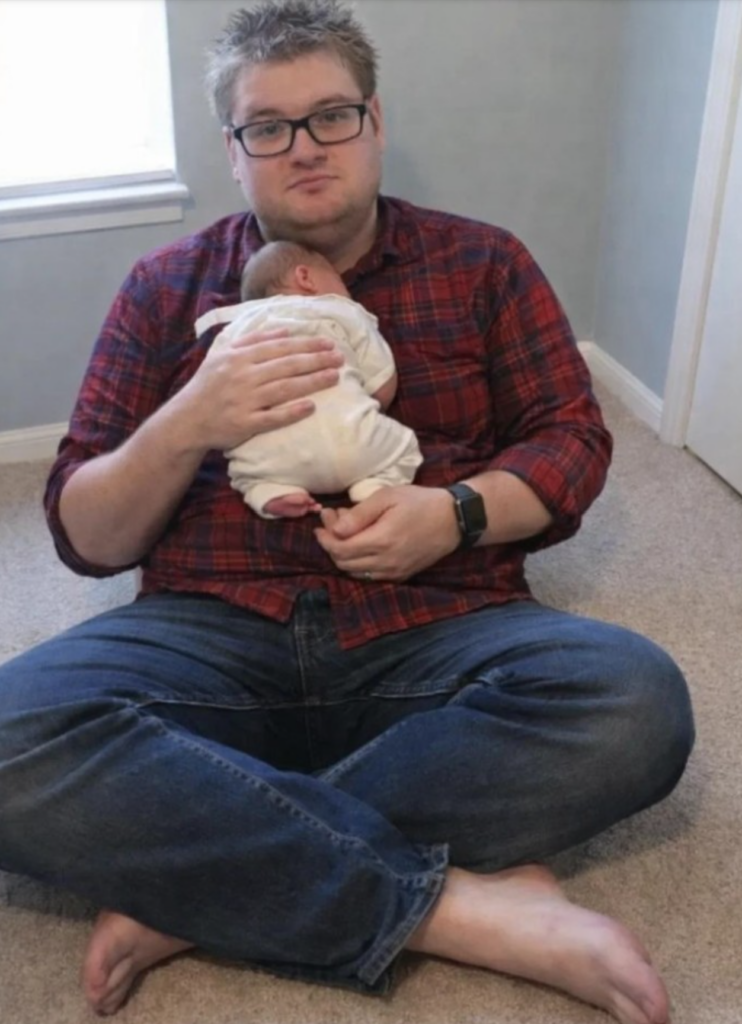
At his feet, our cat Mango purred softly.The baby slowly calmed down. His breathing steadied, his eyes closed, and soon he was asleep, deep and peaceful. Not a tear, not a sound.I couldn’t believe my eyes. Kin, who for years seemed to live only in his own world, was sitting there calmly,
as if it were the most natural thing in the world.And then, in a whisper, he spoke his first words in more than twenty years:— “He was scared. I gave him my heartbeat.”Tears filled my eyes. In that moment, I realized that we had made the right decision in welcoming him into our family.
We had given him space, support, and love—and he showed us that he could be part of it in a way we had never imagined.The next day, Kin followed me into the kitchen. He looked me in the eyes for the first time and said:— “Coffee.”— “I’ll watch Milo.”
Simple words, but full of meaning. The presence of the baby had changed Kin: he began to open up, to observe, and to care. His voice had returned, and with it came the certainty that he could be a full member of the family.
Every day we watched him speak more, smile, and show attentiveness and care. He gathered the toys, read children’s books, and imitated the habits he saw in us. Small steps, but full of significance.It was incredible to see how a person who had lived almost entirely in his inner world for so many years could form a pure,
sincere, and deep bond with another being. For Kin, Milo became a bridge to emotions he had rarely shown.This story taught me something invaluable: sometimes love and patience can open even the most closed hearts. And sometimes a small child can give back a voice to someone who seemed lost to the world.
To this day, we remember that day as a miracle. Kin now speaks more often, shows attention, cares for the baby, and his presence has become invaluable to all of us. His transformation gave us hope: love, patience, and care can truly change a life.