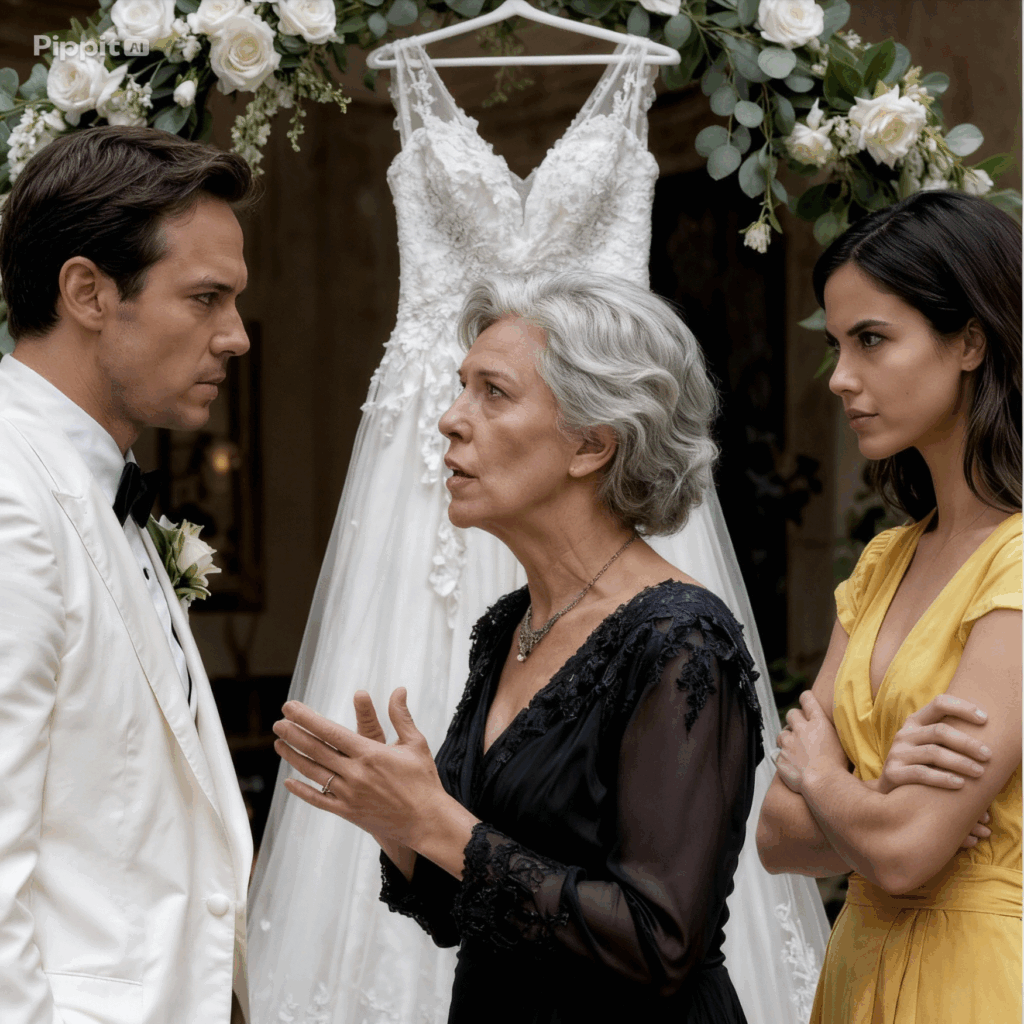
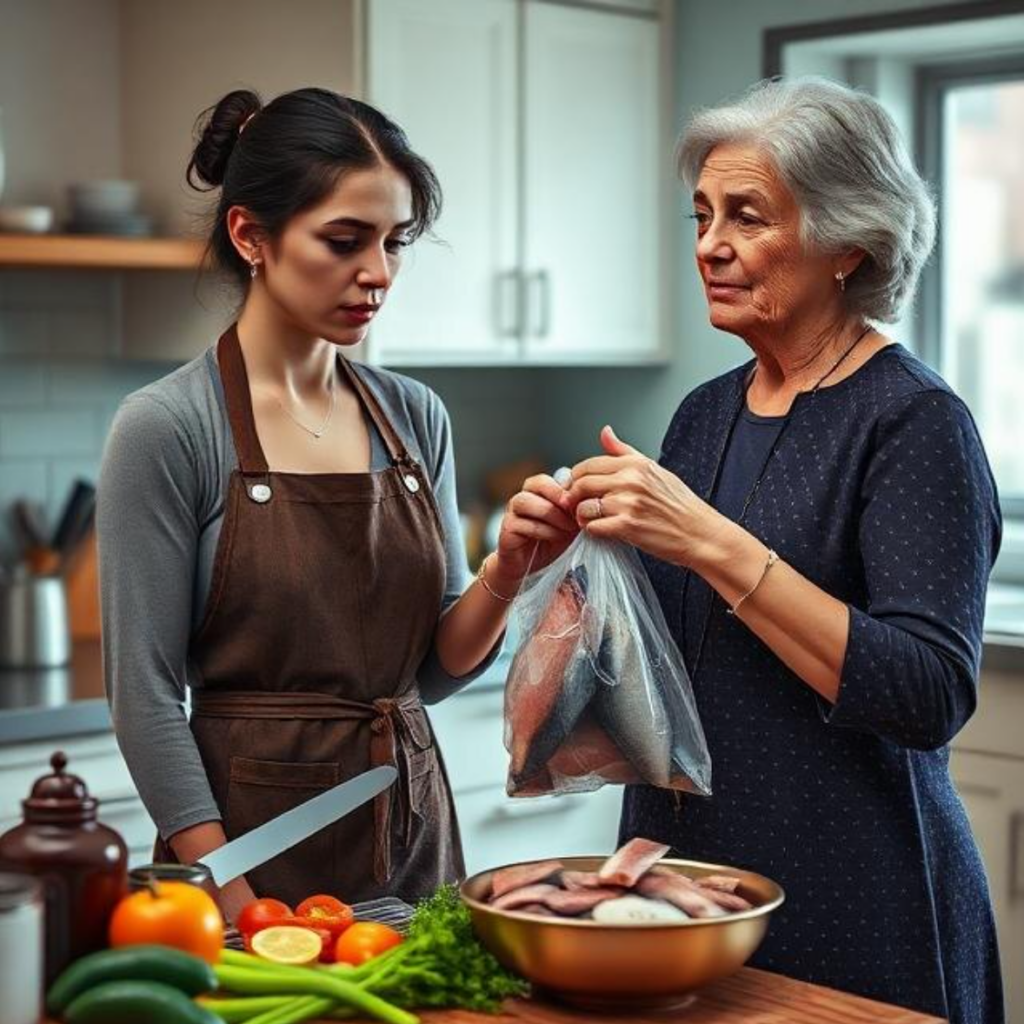
“Polina, my sunshine, what are you dreaming about?” – Nadezhda Ivanovna’s voice behind me was as sweet as syrup and as poisonous as cyanide. – “The Olivier salad won’t cut itself. Guests arrive in half an hour.”I slowly turned around. She stood in the kitchen doorway,
perfect as always, in a new wine-colored suit, her hair flawless. Arms crossed, her gaze sharp as a scalpel, inspecting every speck of dust on my apron, every drop of sweat on my forehead.“I’m cutting already, Nadezhda Ivanovna,” I said, my voice strange, muffled, almost like someone else’s.
“The chicken. For the salad.”“And the potatoes?” – Olga slipped into the kitchen, holding an empty candy dish, brushing past her mother. “Not in the skins again, like last time! Festive means peeled, sliced, aesthetic. Understand?”Yes, Olgachen, I understand. Aesthetic means:
you stand in your new dress, giving orders, while I, in my onion-scented apron, do everything. But I said nothing. My eyes fell back to the bowl of cooled chicken.“The potatoes are cooked and peeled,” I pressed out. “Everything’s on schedule.”
“Good girl,” Nadezhda Ivanovna nodded, as if praising a dog for the command “Sit!” “And don’t forget to take the aspic from the fridge and arrange it nicely. Grate the horseradish too. Mischa loves my aspic with horseradish.”My aspic I had cooked it for six hours, skimming off the foam,
while she talked on the phone or looked at her nails. Yet it would always be “Nadezhda Ivanovna’s aspic.”“And open the red wine,” Olga added, placing a shiny vase on the table. “Not the cheap one you bought, the one we brought. Italian. Let it breathe.”
I felt anger running down my back like cold water. They went back into the living room, loudly discussing cakes, seating, the perfect presentation. I was alone. The kitchen I had been cleaning since five in the morning smelled of mayonnaise, boiled carrots, and broken hopes.
Seven years ago, when I married Mischa, I thought I’d get a family. Mine had been quiet, a little sad—my mother had died young, my father lived in memories. And here? Loud, close-knit, the Karelins. I thought this would be fresh air. It was a torture chamber.
Mischa… my Mischa. Once attentive, loving, noticing flowers, romantic evenings. Now? He came home from work, buried in his phone, not noticing his wife had become part of the kitchen machinery. And if he did notice? He considered it normal.
“You have a certain character, Polya. No offense. You’re used to everything being perfect.”Perfect for whom, Mischa? For you? For them? For me?The balcony door squeaked. He came in. My husband, my ruler. Expensive jeans, freshly ironed shirt, perfume.
“Well, comrade-in-arms, holding up?” – he put his arms around me, kissed my temple. – “Mom says you’re a true hero. Everything turns out perfectly for you.”I pulled away; mayonnaise dripped onto the salad. My hand trembled.
“All fine, Mischa. Go to the guests. Uncle Kolya and Aunt Galya are already here.”“Yeah…” – he grabbed a piece of sausage. – “Mom still wants herring under a fur coat. You make it so well. I already bought everything.” – He pointed to a bag by the door.
Something inside me snapped. Quiet, sharp, like a thread tearing.“Are you crazy?” I whispered. “I’ve got sauces, pâtés, salads—and you talk about herring? Half an hour before the guests arrive?”“Polina, don’t exaggerate,” he said strictly. “It’s not a big job. Quickly chop, layer… You can do it.”
“‘Quickly chop’…” – I looked at him – “Have you ever prepared herring for thirty people quickly? Quickly cleaned the floor when someone spilled wine?”He looked at me, confused.“I’m helping! I’ll load the dishwasher!”“Bravo,” I smiled falsely. “Hero of our time.”
“No sarcasm,” he growled. “You could have asked Mom or Olga.”That was the last straw.“Mom?” – my voice metallic, hard – “The mom who’s been doing her makeup for hours? Or Olga, who criticizes and controls? They’re supposed to help me? On my birthday?”
“Polina, calm down,” he commanded.“No, Mischa! That’s how slaves live. And I don’t want that anymore!”I grabbed the bag and hurled it into the sink. The herring hit the metal with a dull thud.“Here’s your fur coat! Do it yourself! Or let your perfect mom handle it!”
Nadezhda Ivanovna burst in.“Polina! What kind of insolence is this?”“This is not fish,” I said, tearing off my apron. “This is a symbol. My symbol of liberation.”“I’m on strike,” I declared calmly. “From now on.”I closed the bedroom door. Silence. For the first time in years.
In the morning, no clattering cutlery. Just silence. Freedom.Mischa came, rumpled, tired.“Finished with your little theater?”“Yes,” I said. “The play is over.”We argued. He shouted. I laughed. Then I calmly said:“I want a divorce.”He laughed in disbelief. Threatened. Said I’d come back.
“Maybe,” I answered. “But better dry bread in freedom than caviar in a cage.”I packed my old jeans, my jacket, my bag.“I love you,” he whispered.“No,” I said. “You’re just used to me.”I left quietly. No slam.In the car, I breathed deeply, drove away. Away from foreign traditions, foreign holidays, foreign life.
The rain washed the past away.And for the first time in seven years, I was only with myself.Scary. But right.