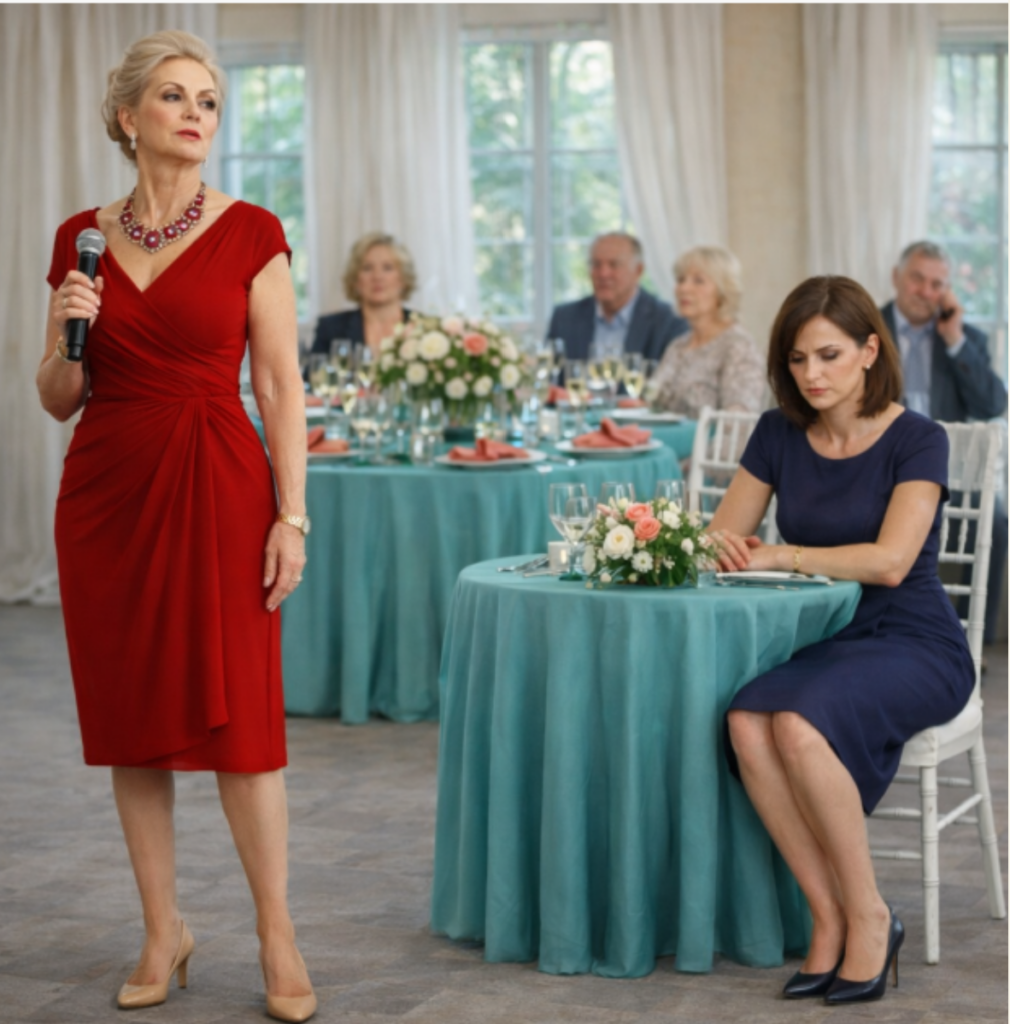
Sofia set the glass down and slowly raised her eyes. Her mother held the microphone like a judge holding a gavel just before the strike. In the hall, conversations died out, as if someone had taken the air away.“If you truly loved me,” said Margarita Stepanovna in a voice that sounded almost cheerful,
“you would finally free me from your presence. You remind me of my age. And of your father, who would still be alive if you hadn’t been so… lost back then.”No whispering, no rustling. Only silence.Sofia remained motionless in her chair. A woman in the front row pressed a hand to her mouth in shock.
One of her mother’s friends lowered her eyes. Margarita slowly, savoring each sip, finished her red wine and smiled, as if she had just raised a toast to her daughter’s health.Sofia stood up. Reached for her handbag.Her mother watched her with the mild impatience one reserves for a waiter who is taking too long with the bill.
As Sofia left the hall, she turned once more. Margarita was already laughing, leaning toward a friend.On her wrist glittered a gold watch engraved:“To the dearest Mama.”Sofia had given it to her three hours earlier.As a child, her father had taught her how to fix a bicycle chain.
She remembered his oil-stained hands, the smell of the garage, his calm voice explaining why every cog had its place.When she was twelve, she came home from school one afternoon. Her father lay on the sofa, still in his work clothes. She called him. Shook him. Then called the ambulance.
When her mother returned from the sanatorium, she said only:“You should have called earlier. This is your fault.”Sofia was twelve.And she believed it.For thirty years she paid for that single sentence.She paid bills, insurance, private clinics. Took over credit-card debts for antique vases.
Listened to nighttime calls because a transfer had not been announced in advance.“I couldn’t plan. My blood pressure is acting up again.”Sofia understood. She always understood.Half a year before the anniversary, her mother appeared unannounced in her office,
sitting in the conference room like a chief executive.“I urgently need money. For a friend’s operation. Cancer.”Without a word, Sofia opened the app and transferred the money.A week later she saw photos of that same friend with her mother at an exhibition — both in new dresses, smiling, perfectly groomed.
Sofia said nothing. She kept working.On the Monday after the anniversary, she stood before the director.“I would like to be transferred to Nakhodka.”“The salary there is only half.”“I know.”She closed the joint account. Canceled the standing orders. Revoked the powers of attorney.
That evening she placed an envelope on her mother’s table.“Your wish is fulfilled. You are free from my presence. And I am free from yours.”Beside it lay the apartment keys.She took only one photograph with her — a picture of her father.
Nakhodka greeted her with rain and harbor wind. A small apartment with a view of cranes and ships. A new phone number.In the first week she barely spoke. No one called. No one demanded anything.The silence hurt.And healed.
Slowly she learned to shop only for herself. To stop checking her phone every hour. To stop waiting for the next reproach.Margarita understood what had happened only when the electricity was cut off. Two months without payments. Sofia’s number unreachable. The neighbor no longer lent her money.
She sold the large apartment and moved to the outskirts of the city.The doctor said:“Everything is fine. Just move more.”For the first time, there was no one she could call.One day she saw her reflection in a shop window: an old woman with tired eyes.And for the first time she thought:
What if Sofia never comes back?Sofia met Konstantin in a supermarket. Quietly, without drama, they became a couple.He asked only once:“Why did you move so far away?”“I wanted to disappear.”A year later she had to return to her hometown on business.
In the park she saw her mother sitting on a bench — gray hair, a cheap jacket, alone.She did not go to her.Later she wrote only:“I saw you. Take care of yourself.”No reply came.Margarita read the message that evening. She wanted to write back — but did not know what.
She thought of the time when Sofia had been small, before she had decided that someone had to be to blame.Back in Nakhodka, Konstantin asked:“Do you regret it?”“No. We said everything. She back then. I, when I left.”By the window Sofia said softly:
“For thirty years I thought I owed something. Now I know: I owe no one my life.”She smiled.“I’m not cruel. I’m simply alive. For the first time in forty-two years.”Sometimes disappearing from someone’s life is not betrayal.Sometimes it is the only way to allow them to grow — or to fall.
And to stand up again on their own.Sofia turned off her phone.Tomorrow she would wake up without guilt.It would simply be her life.