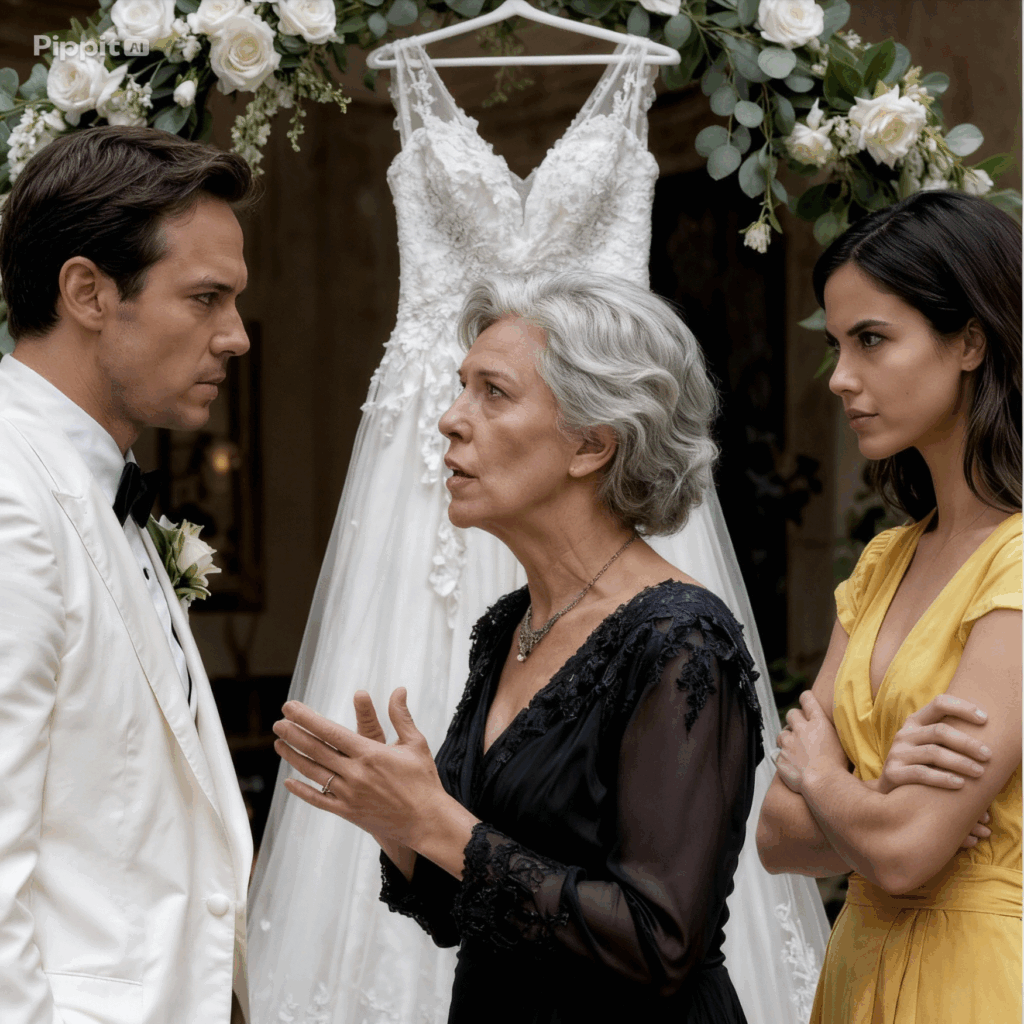
At my son’s wedding, his fiancée’s family openly mocked me in front of two hundred guests. Her mother said it loud enough for everyone to hear: “That’s not a mother, that’s a wardrobe mistake.” The bride laughed, but my son did not.
He stood up, canceled the wedding right there in the middle of the ceremony, and the next day did something that would forever shake their family.It all began three weeks earlier, when my son, Diego, called me.
That nervous, hesitant voice he had carried since childhood whenever he’d done something embarrassing had returned: “Mom, I need to talk to you about the wedding.”I was sitting in my favorite chair, the one I had bought fifteen years ago after divorcing his father.
That chair was my symbol of freedom, of independence. At fifty-two, I had learned to live alone, and I liked it.“What’s wrong, mijo?” I asked.“Valeria’s family…” he began hesitantly. “They have certain expectations about how everything should go.”
I felt it immediately—the tension in the air like the smell of rain before a storm. “Expectations?”“Valeria thinks… maybe you could dress more elegantly, and… not speak too much Spanish during the ceremony. You know… for the guests who don’t understand.”

I swallowed. My own son was asking me to change, to become someone who would please an entitled family.“Diego, you know who I am. I’m Mexican, I speak Spanish, and I wear what I want.”
“Mom… it’s just one day… please… it’s important to me.”And, as always, I loved him more than anything. So, like the fool I was, I agreed to try.A week later, the first warning sign appeared. Valeria invited me to lunch—to get to know each other better, she said.
The restaurant was ostentatious, the kind where the waiters look at you like you’re an insect if you mispronounce the French names on the menu. Valeria arrived with her mother, Esperanza Morales de la Vega—perfectly styled, radiating an aura of wealth and superiority.
“Diego has told us so much about you. I hope all good things…” she began. I sipped my coffee, which cost more than an entire lunch at home.“Oh yes… he said you work in a cleaning service.”I nearly choked. “I work in building administration,” I corrected her.
“How sweet… physical labor is so noble, isn’t it?” said Valeria, her fake smile mirroring her mother’s.“It must be hard to run a household without a husband to help,” added Esperanza.I stayed silent. In my head, the words I should have said roared, and I imagined the entire restaurant rising to defend my family.
“We believe in traditional values, family, respect, proper presentation. Surely you understand why this is important for the wedding,” Valeria continued.“Proper presentation?” I asked.“Yes, a very elegant ceremony. Catholic church, three hundred guests, many important families from the community.
Everything must be perfect. No place for a divorced, fifty-two-year-old woman who speaks Spanish with an accent.”“Of course, I understand,” I lied.But inside, a spark ignited, a tiny flame in my chest that couldn’t be extinguished. At home, in front of the mirror,
I saw Carmen Ruiz—single mother, working woman, survivor. When had that ever not been enough? But for Diego… for him, I would be the perfect mother.What I didn’t know: it was already too late. Esperanza Morales de la Vega had already prepared the battlefield.
Three days after that lunch, the dress arrived at my door—in a chic box, beige, boring, without personality, beige like hospital walls, like oatmeal without salt. A conservative dress that would erase anything special about me.
“Mom, it’s more suitable for the occasion,” Diego said over the phone. I knew they would reject the red dress I had confidently chosen—too bold, too visible. “It’s okay, son. I’ll wear the beige.” I lied. I would not wear that dress. Never.
The next day, Valeria called to discuss “details”: seating arrangements, behavior, even which reactions during my father’s speech were “appropriate.” I was no longer the mother of the groom; I was a subordinate guest, a character in a meticulously staged play.
They wanted me invisible. Silent. Humiliated, along with my son.I didn’t understand anymore. How could Diego allow this? How could he let his own mother be treated like this?That night, I called my sister Rosa. “Why are you doing this, Carmen? These people don’t respect you.”
“It’s Diego’s wedding… I want it to be perfect for him…” My voice faltered on the phone.Rosa was silent. “If someone shows you who they really are, believe them the first time.”I lay awake, staring at the beige dress. Peace… at what cost? Pride, identity, everything I had fought for after the divorce.
And then it hit me: maybe it was time to show Diego how far I would go—or how far he would.On Friday, a week before the wedding, Diego called. His voice sounded distant, almost foreign: “Mom, can we talk in person?”
He arrived, nervous, uncertain, avoiding eye contact. On the couch, he looked like a stranger.“Mom… I’ve been thinking about the wedding. And… I think it would be better if you acted more like a guest, not like the mother of the groom.”
The words hit me like a slap in the face.“Valeria’s family has certain traditions, a way of doing things, and I don’t want conflicts.”“What conflicts?” I asked, my voice trembling.Diego ran his hands through his hair—his old, nervous gesture, like always. I barely recognized him.
“Mom, you’re intense. They’re… different. Their mothers are discreet, protective, present. We… we want everything to be perfect.”Everything I had built, my strength, my dignity, my life—suddenly meant nothing.