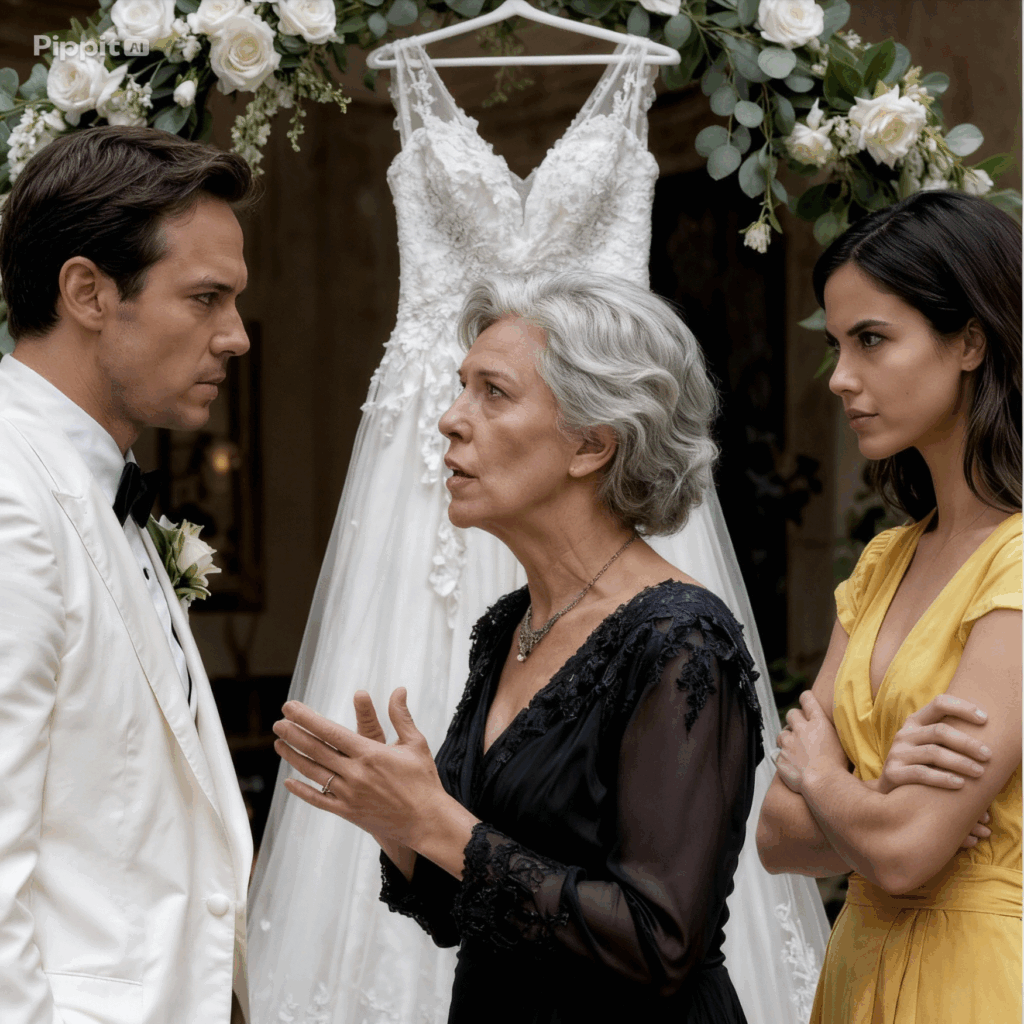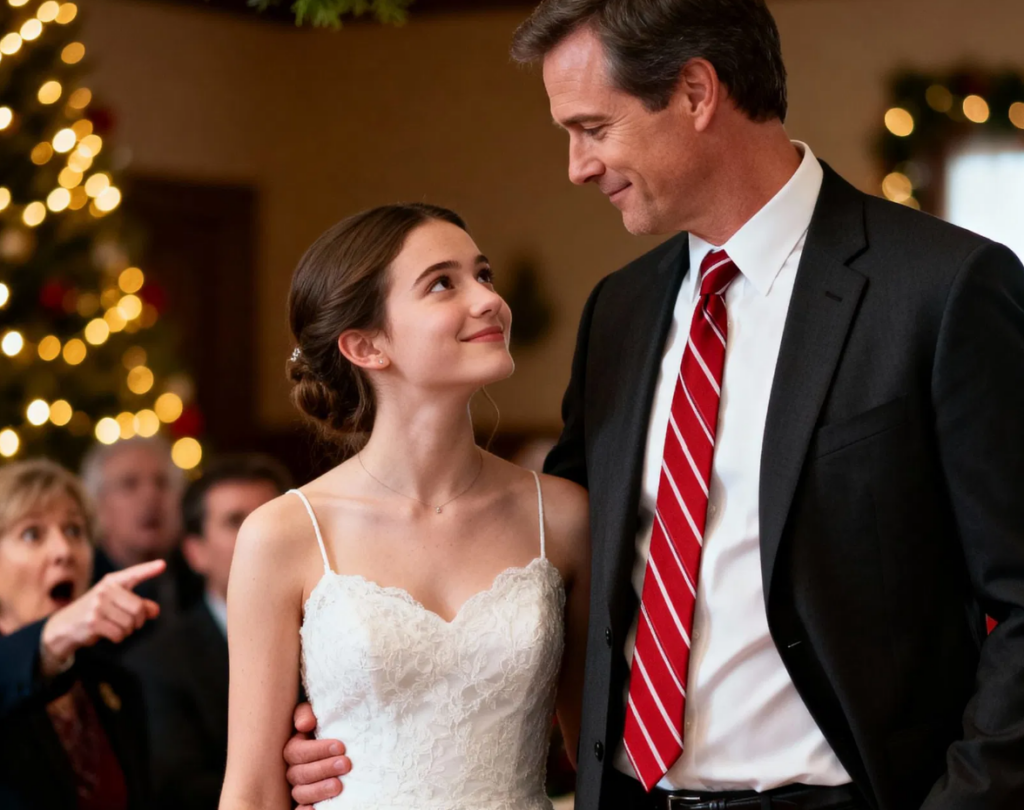
They say weddings bring families together, but mine almost tore us apart. I thought the hardest part would be watching my daughter marry my ex-husband—until my son pulled me aside and revealed something that changed everything.
I never imagined I’d live to see my ex-husband walk down the aisle… toward my daughter. And I certainly never expected the truth to hit like a lightning bolt on their wedding day—delivered by my son, in a way so public that my knees nearly buckled.
But let me start at the beginning, because the ending doesn’t make sense without it. I married my first husband, Mark, when I was twenty. We weren’t in love—we were “expected.” Both of our families were old-money, country-club types, obsessed with appearances, reputations, and perfectly curated lives.
Our parents vacationed together, hosted charity galas, exchanged professional holiday portraits, and even threw engagement parties before we were actually engaged. Looking back, we were two beautifully dressed puppets tangled in strings of obligation.
We walked down the aisle in designer outfits chosen for us. Everyone insisted we were perfect for each other—two polished young adults sliding into the life our families had mapped out. For a while, we believed it. Rowan came the same year we married, and Caleb two years later.
We continued the show: holiday cards, dinner parties, charity events. Our home even had a manicured lawn and perfect décor—but behind the smiles and staged photos, we were quietly suffocating. Privilege hadn’t prepared us for a loveless marriage.
And we didn’t fight. Silence became our cage. You can’t fix silence. You can’t heal what you refuse to look at. After seventeen years, we untied the knot quietly. No drama—just numbness. We both breathed in private relief. Five years later, I met Arthur.
He was a breath of fresh air: charming, grounded, divorced, raising three kids, a high school teacher who loved poetry and classic cars. With him, I could be myself. I felt understood. I fell fast. Too fast. We married within months. Six months later, it quietly fell apart.

No shouting, no betrayal—just an unraveling. Arthur pulled away, practically more than emotionally, and I accepted it, thinking we’d both move on. Then, two years later, Rowan sat me down in our living room. Her cheeks were flushed, her eyes shining.
“Mom… I’m in love,” she said. I smiled, instinctively. And then she said the name. “Arthur.” Time stopped. “You mean… my Arthur?” She nodded. “It just happened. We talked, and… he understands me. And now that you’re not together…” I wanted to scream. I wanted to stop it.
But Rowan’s ultimatum was ice-cold and unyielding: “You either accept this, or I cut you out of my life.” So I lied. I said I supported it. A year later, I stood at the wedding, eucalyptus garlands hanging, soft jazz playing. My daughter walked down the aisle to the man I once promised forever.
I smiled, posed, toasted—because that’s what mothers do. But my stomach was a knot. Then Caleb found me. The quieter of my two, methodical, steady. At twenty-two, he ran a tech startup and still checked in on his grandparents every Sunday. He gripped my arm and said:
“Mom, we need to talk.” He led me outside, tapping through his phone. “I waited until today because I needed proof,” he said. “I hired a private investigator. I have everything.” My blood ran cold. Arthur had hidden a trail of bankruptcy, unpaid debts, business lawsuits, and alimony disputes.
He was manipulating Rowan—using her ambition, her youth, and her inheritance for his gain. Caleb’s voice shook with anger. “He’s a serial manipulator. He did the same to you, Mom. He just lost interest when he couldn’t control your finances.” I realized, finally, what ended my marriage to Arthur.
It wasn’t love or timing—it was control. “Then let’s make it public,” Caleb said. Back inside, the reception glowed with candles and laughter. Guests were unaware that the truth was about to storm the room. Caleb stepped onto the small stage, microphone in hand.
“I want to congratulate my sister and her… husband,” he said. “Marriage is built on love, trust, and honesty. Arthur—how’s your ex-wife doing these days? Still waiting on alimony?” Gasps spread through the crowd. Arthur’s face drained of color. Caleb held up legal documents.
“These aren’t accusations—they’re public records.” Rowan froze. “Is it true?” she asked, her voice trembling. Arthur tried to speak. “It’s complicated, my love…” “No,” she said, sharp and clear. “It’s not.” She walked out of her own wedding, into my arms, leaving murmurs and stunned guests behind.
Within an hour, the wedding was over. Rowan filed for annulment, citing fraud. She moved back in with me, and for the first time in years, we talked—really talked. A few days later, she asked quietly: “Did you love him?” “I thought I did,” I admitted. “But I loved the quiet, not him.
” She nodded slowly. “Same.” We laughed softly, shakily, the kind of laughter that follows grief—but it felt real. In the weeks that followed, I watched her heal. From Arthur, from the pressures of our families, from the illusion of perfection. She rediscovered herself.
One night, over coffee, she reached across the table, squeezed my hand, and whispered: “I don’t know what’s next, but I know who I am again.” I smiled, and for the first time in forever, I believed we’d be okay.