Spring melted into summer, and the ranch hummed with life in ways both predictable and surprising. Foals pranced across the pastures, their legs still awkward but determined. The scent of hay and earth and sun-warmed leather became a kind of music in the mornings.
Declan found himself rising earlier than he had ever thought possible, not because the work demanded it, but because he wanted to watch Lillian move through the day—the way she knelt to tie a bootlace or sorted seed with quiet precision, how her laughter could slice through fatigue like sunlight through clouds.
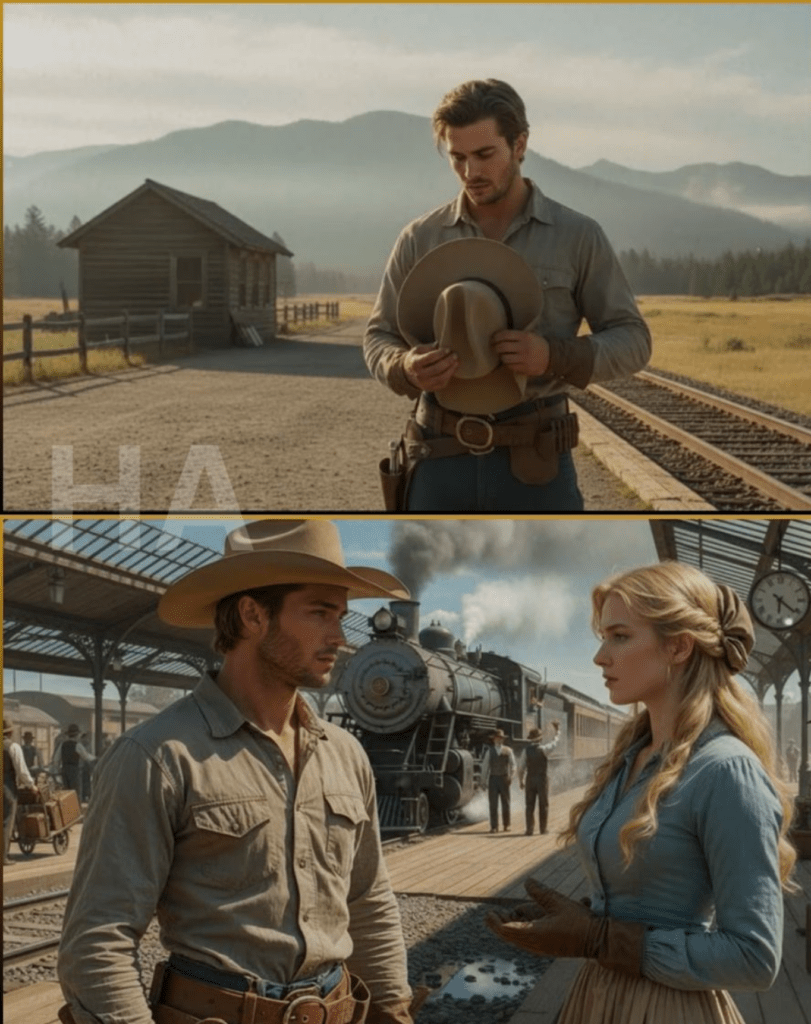
One morning, a rider came across the field, dust spiraling in his wake. He dismounted with a polite nod, hat in hand, revealing a face etched with lines that spoke of long roads and careful observation.
He introduced himself as a writer from a regional paper, drawn by the whispers of Birch Hollow’s “defiant ranchers.” He wanted to document their story—not the drama, but the texture: the long days, the stubborn fences, the small victories that were earned and not given.
Declan, for the first time, felt the weight of being seen—not as a man who had been tested, but as one who had endured and chosen carefully. Lillian brushed her hands on her apron, wary of attention, but the writer’s genuine curiosity made her pause, then laugh softly.
“I suppose it’s easier to recount what’s here than what was nearly taken,” she said, gesturing at the land. “This is our ledger, if you insist.”The article ran a month later. The photographs showed fences straining under the summer sun, a mare looking knowingly into the camera, a stack of hay bales leaning like the spine of a story.
Readers wrote letters, some offering help, some offering admiration. One letter came with a check enclosed, unsigned but heartfelt. Lillian pinned it to the kitchen wall, a reminder that courage sometimes resonates farther than you expect.
But peace, as they had learned, was always a fragile companion. One afternoon, when the heat clung to the ground and the cicadas sang relentlessly, a man arrived with a wagon that carried not goods but rumors: Haines & Co. had new investors, men who had no patience for delays or scruples.
They sought the ranch again—not just to purchase it, but to test how far Declan and Lillian’s stubbornness would go.Declan’s first instinct was anger, a hot rod of it that pulsed through his chest. Lillian, however, met him in the doorway, her hands gripping his forearm with a firmness that grounded him.
“We do not fight them with rage,” she said, her eyes steady as the horizon. “We fight them with the story they cannot argue against. With people. With proof. With patience.”They worked together, gathering every ledger, every receipt, every witness who remembered fences built, cattle saved, and barns raised.
Lillian organized the evidence with the precision of a mind trained to see both the small and the monumental. Declan became the front line, showing the town—and, by extension, the company—that a life is measured not in ownership alone but in stewardship, in continuity, in the hands that nurtured it.
One evening, after the sun had dipped into the western hills and the sky burned like an open wound, they sat together on the porch. Lillian leaned her head against his shoulder. “Do you ever wonder what would have happened if I hadn’t come?” she asked quietly.
Declan shook his head. “I’d have been a man with fences and cattle, but no one to argue with about the right way to hold a foal. No one to make me see that land is more than soil. It’s memory and muscle and heart.”
Lillian smiled, a shadowed, soft thing. “And you? Do you ever regret the stubbornness that brought us here?”He chuckled low, a sound like gravel shifting. “I regret nothing that brought me to this porch.”
Winter came again, harsher than the last, with winds that cut like knives and snow that buried fences faster than they could dig them out. But Declan and Lillian moved like water around obstacles: hauling hay, tending to sick animals, patching roofs.
The storms tested them, tested their endurance, and yet it was the small, unrecorded acts—the cup of cocoa offered without words, a hand brushed across a cheek, the quiet acknowledgment of effort—that became their ledger entries. These were the notes no lawyer, no company, no outsider could ever dispute.
One night, when the wind was a wolf at the cabin’s edges, Lillian spoke of a plan that had been forming in her mind for months. “We can expand,” she said, her eyes shining with the audacity of hope. “Not just fences and barns, but teaching. Sharing what we know.
There’s a gap in this county for people who want to learn the land the way we do. We could start a school—practical, hands-on, grounded in what it means to live with care.”Declan turned to her, heart pounding in the hollow spaces where fear and longing had once lived. “You mean… bring more people here? Trust strangers?”
“I mean,” she said, tilting her head, “that the ledger grows. Not with debts and deeds, but with knowledge passed down. We protect what we have by giving it wings.”And so they did. Over the next years, Hope Ranch became more than land and livestock—it became a place of learning, of community, a living testament to resilience.
Children from Birch Hollow and beyond came to learn the rhythms of work, the patience of craft, the integrity of care. Declan found himself teaching, in small doses at first, but with a quiet pride that surprised him. Lillian, ever meticulous, became the heart of the school, her laughter and firmness shaping students as surely as she had shaped the ranch.
Matthew Haines never returned. His presence became a shadow of the past, a reminder of the battles fought and won not through force alone, but through steadiness, partnership, and relentless truth.
In the evenings, as the sun painted the prairie gold and the wind softened, Declan and Lillian would sit together, hands entwined, listening to the land breathe. And sometimes, in those rare moments of stillness, Declan would whisper, “We’ve built more than a ranch.”
Lillian would smile, her gaze drifting over the fields, the foals, the fences that had been challenged and repaired, the children learning what it meant to care. “We’ve built a life,” she said. “One that no ledger can ever fully capture.”
And in that truth, in the quiet pulse of land and labor, they found not just survival, but a stubborn, human joy that would not be measured, only lived.