I won fifty million dollars in the lottery. Three months later, I asked for ten dollars to refill my heart medication—and they laughed at me.“Are you ever going to stop being such a useless failure and get a real job?” my daughter-in-law snapped, her voice sharp, mocking, deliberately cruel. Every word felt carefully chosen to carve pain into my skin.
I only smiled. Quietly. Patiently. Because this was the moment I had been waiting for.When she finally saw the white limousine—escorted by three black SUVs—she screamed. Not in anger, but in fear. The voice that had been dripping with contempt moments earlier now trembled like cracking ice.
My name is Anita. I am seventy-seven years old. And today, I finally learned what my family truly thinks of me.Deep down, I had always known. But sensing the truth and having it thrown in your face are two very different experiences.
One thing is to hear cruelty from a distance; another is to feel it plunge into you like a knife, to see the indifference and resentment staring back from the eyes of the people you raised.
That morning, I stood in Damon’s kitchen, my arthritic fingers wrapped around an empty prescription bottle. It was cold, the faded label catching the weak morning light: Heart medication — refill required.
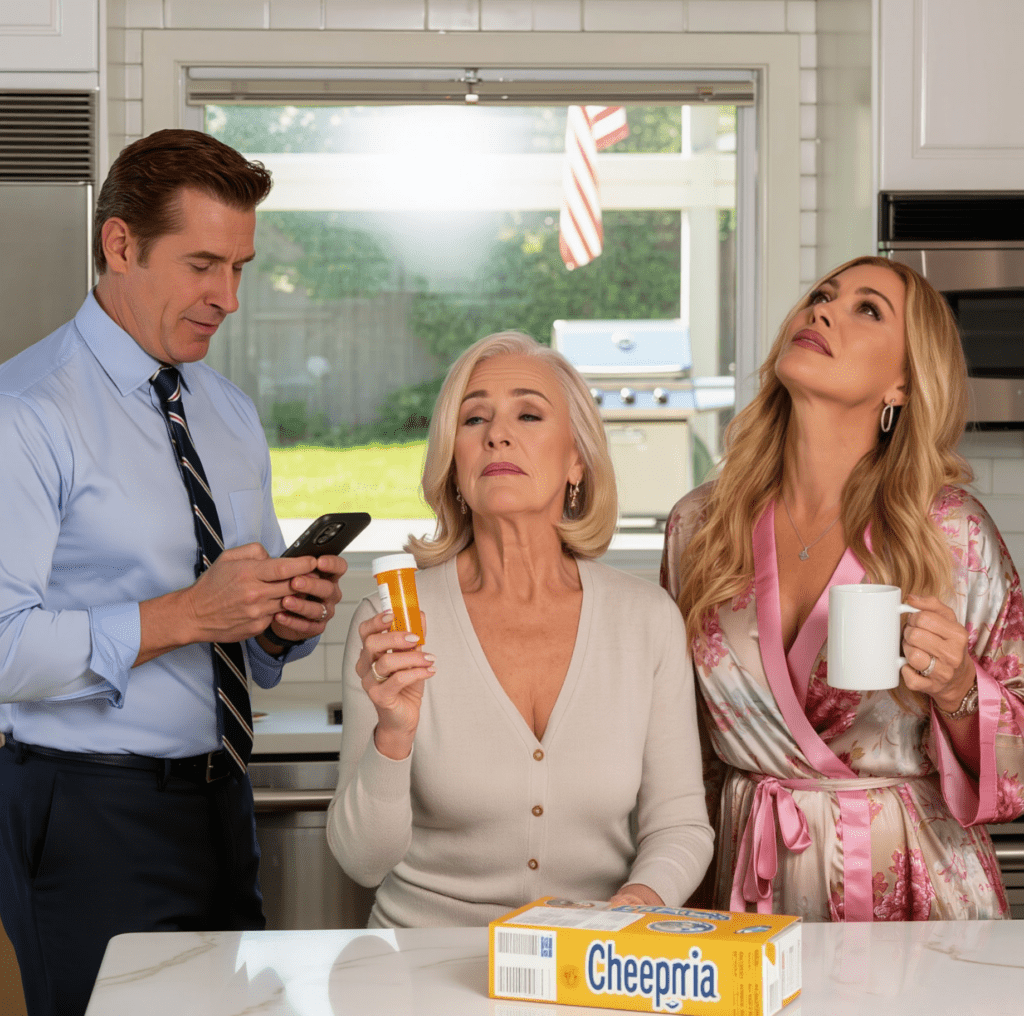
Ten dollars. Just ten dollars to keep my heart beating steadily for another month. Ten dollars to avoid lying awake every night, terrified that my heart might simply give up.“Damon,” I whispered, careful not to wake the children. It was seven in the morning, and I knew my son was already getting ready for his insurance job.
He stepped into the hallway, phone pressed to his ear, and raised one finger without looking at me. Wait.I had been waiting for three years. Ever since I moved into his house because my pension could no longer cover my tiny apartment.
My days passed quietly, my footsteps soft, my presence carefully minimized. I lived as if I were invisible, carrying the weight of unreturned love in every movement.“Yes, Dave, I’ll send the numbers by noon,” Damon said into the phone. Then he looked at me—impatient, irritated, as though my existence itself were an inconvenience.
“What’s wrong, Mom?”I held up the bottle. My voice barely rose above the silence.“I need my heart medication. Ten dollars. My pension comes next week, and I spent everything yesterday on groceries.”
Nothing. No concern. No sympathy. Just that familiar look that said, Here we go again. Another problem. Another burden.Before he could answer, Kalia’s voice sliced through the room like a blade.
“Are you kidding me right now?”She stood in the doorway, perfectly styled, wrapped in a silk robe that probably cost more than my entire monthly pension. Her hair gleamed in the morning light, her lips curled into a cool smile, her eyes calculating and cold.
“Anita, we’ve talked about this. You can’t keep asking us for money.”My chest tightened.“It’s just ten dollars. For my medication. Just ten.”She laughed. Cold. Mocking.“Yesterday groceries, last week a doctor. Where does it end?”
I looked at Damon, hoping—desperately—for a word, a glance, a sign that he still saw me. That he remembered the woman who raised him alone after his father died, working double shifts as a seamstress, sacrificing every dream she ever had.
Damon stared at his phone, pretending I didn’t exist.“Maybe you should get a job,” Kalia continued. “You’re seventy-seven, not dead. Walmart is always hiring greeters.”It felt like a slap.“I worked my whole life,” I said calmly, though rage burned inside me. “I raised your husband alone. I have the right to grow old with dignity.”
“Oh, here comes the guilt speech,” she sneered. “No one owes you anything. Damon turned out fine despite your sacrifices.”Despite your sacrifices.As if widowhood were a personal flaw. As if survival were a shameful failure.
That’s when Tyler and Emma, my grandchildren—seven and nine—wandered in. Emma slipped her small hand into mine.“What’s wrong, Grandma?”Kalia scooped them up with sugary sweetness that reeked of poison.“Grandma needs to learn how to be independent.”
And that’s when I felt it.The folded paper in my pocket. The lottery ticket.I had bought it three months earlier, using Robert’s birthdates. Yesterday, I checked the numbers.Fifty million dollars.And I said nothing.
Because I needed to know who would love me when I had nothing left to give. Who would stand beside me when I was no longer useful, no longer convenient, no longer visible.Now I had my answer.
“You’re right,” I said softly, pulling out my old flip phone. “I will be more independent.”I dialed.“Good morning, Mrs. Henderson,” I said in a calm, professional voice. “Are you ready?”“Yes,” I continued. “Bring the vehicles.”
Outside, engines purred.A white limousine. Three black SUVs.Kalia’s coffee mug shattered on the floor.I turned toward them.“The test is over,” I said, my voice steady, ice-cold. “And you failed.”Then I opened the door.
I left behind my old life—the woman in the guest room counting every penny, swallowing her pain, apologizing for needing help. The invisible mother. The ignored grandmother.Today, everything was different.
The cars were waiting. The drivers were waiting. My heart beat strong and free as I stepped into my new life. Sunlight warmed my skin. The air felt clean. Every step carried the taste of freedom.
My family showed me who they truly were.And at last, I showed them who I am.