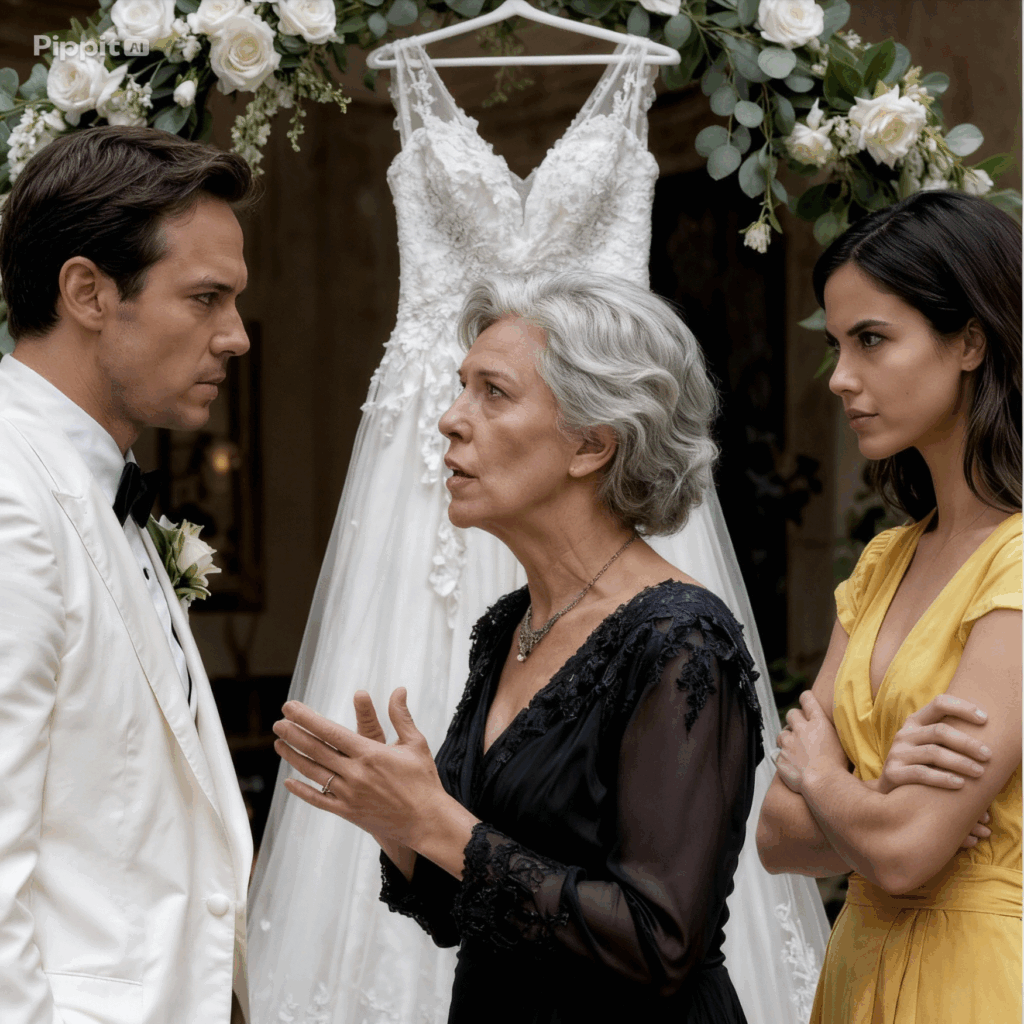
The bass from the DJ booth reverberated through Emily’s chest, a rhythmic, suffocating pulse that matched the throbbing headache behind her eyes. This was supposed to be a celebration. Her sister’s wedding. The Vineyard Estate in Napa was drenched in the scent of jasmine and Sauvignon Blanc,
that peculiar blend of sweet flowers and sharp alcohol that screamed wealth and taste, whispering: This is happiness, if you can afford it. Twinkle lights strung across the towering white tent softened every face, polished every smile, hid every flaw. Everyone looked happy. Everyone looked perfect.
Everyone except Emily. She sat alone at a round table in the far corner—the kind the planners probably labeled “overflow” but she privately called “exile.” Her crimson bridesmaid dress, glamorous in the morning light, now creased at the knees from hours of fidgeting.
A smear of frosting stained her fingers, remnants of the untouched wedding cake she stabbed with a fork, watching the frosting crumble into ridges and valleys, trying desperately not to look up. Because looking up meant seeing him. Her ex.
The man who had spent three years eroding her confidence, telling her she was “too intense,” “too emotional,” “hard to love.” The man who had ended things with a text, as if three years of shared life could fit inside a tiny digital bubble.
And now he was the Best Man, because of course, he was her brother-in-law’s college roommate. Fate didn’t just have a sense of humor—it had a cruel streak. Emily had managed the first hour of the reception. She walked down the aisle without tripping, held the bouquet, smiled for photos.
She toasted her sister, held back tears, hugged relatives whose perfume clung to her. She even endured the first dance, eyes on her sister’s joy, not on Eric a few steps away. But Eric wasn’t alone. Draped over his arm like a prize carefully chosen to match his tie was Jessica—twenty-three,
champagne-colored dress, hair perfect, laugh practiced to broadcast victory. Every time Emily’s gaze flicked toward them, he caught it, offering that familiar, condescending smirk—the same one from nights when she cried over work, the same dismissive half-smile when he said,
“You’re overreacting. Your anxiety is exhausting, Em.” The humiliation pressed against her like a stone in her stomach. Eyes were on her, devouring, curious, craving drama. “Slow down on the champagne, Em,” an aunt murmured, patting her shoulder with condescending sympathy.
Emily hadn’t touched her glass. She swallowed, feeling the first cracks in the dam forming behind her eyes. When the DJ cued Ed Sheeran’s Perfect, couples flooded the floor. Her sister spun in her husband’s arms, glowing in the spotlight.
Eric took Jessica’s hand with ceremony, pulled her close, kissed her forehead—a gesture he had never given Emily. The room “awed.” Emily felt bile rise. Whispers hovered. “Is that the ex?” “She’s still single. Poor thing.” “He upgraded, didn’t he?” Emily pushed back her chair,
muttered an excuse, and fled through the French doors onto the stone patio. Night air hit her like a shock, crisp and scented with earth, grapes, and distant smoke. She gripped the railing, inhaling shakily, grounding herself in the rough stone. Get it together, Emily.
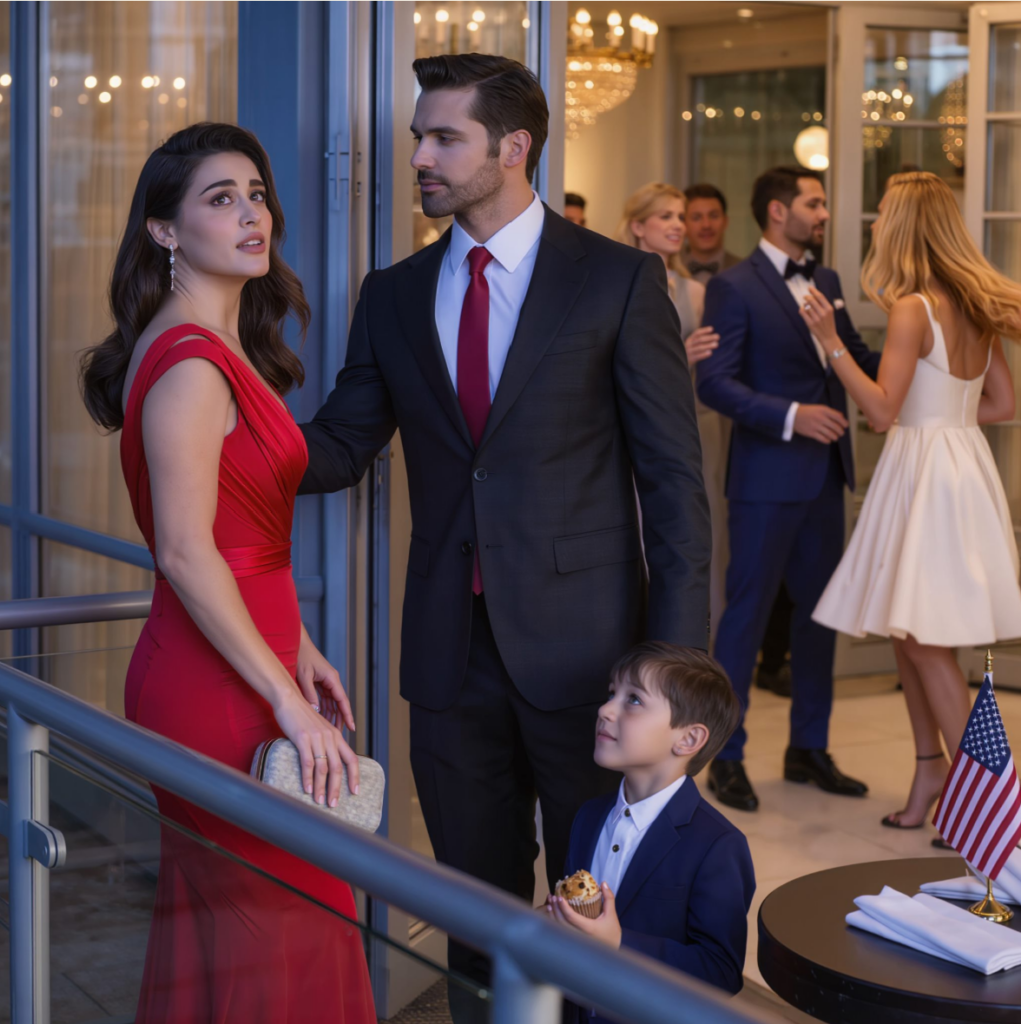
Do not cry. Do not let him win. “Are you melting?” Emily looked down to see a little boy, no more than six, dark hair flopping over one eye, half-eaten muffin in hand. His eyes studied her like a tiny inspector. Emily chuckled through tears. “Melting? No, honey.
Why?” “My dad says women melt when they cry. Like the witch in the movie. You look like you’re melting.” She knelt to his level, skirt puddling around her. “I’m trying very hard not to melt,” she said, voice wobbling. “I’m Max,” he said seriously. “This is a bad party.
The music is too loud and the cake tastes like soap.” Emily laughed genuinely. Soap cake. That was the night’s absurd truth. A man appeared behind Max—tall, kind eyes, rumpled suit, exuding calm authority. Daniel. He apologized for Max’s bluntness, his voice rough but gentle, more soothing than commanding.
Emily stood, wiping tears, taking in his presence. There was no pity, only steady, fierce kindness. “You look like you need a partner,” he said softly, gesturing toward the tent. “Walk with me. Let’s ruin his little victory lap.” Emily hesitated. Then she took his hand. Inside, the energy shifted.
Heads turned. Eric froze mid-drink, gaze flicking from Daniel to Emily. For the first time in months, Emily felt a spark of rebellion—she was no longer a victim. She danced. Laughed. Became visible in her own story. Her sister noticed, whispered approval.
Happy, the word landed in her chest like a bird, light and alive. Later, at the bar, Eric approached. She faced him calmly. His words aimed to provoke jealousy, but Emily didn’t flinch. “His name is Daniel. And he’s… kind. You wouldn’t understand.
” Daniel appeared, arm steady around her waist, Max in tow, and led her outside. Under the stars, with soft fairy lights casting a glow, Emily realized: she didn’t hate Eric. She didn’t love him. She felt… nothing. Just peace. Two weeks later, she found herself in Trader Joe’s, jeans and sweatshirt, no makeup, normal.
Daniel and Max appeared—unassuming, warm, alive. Pizza, laughter, and mundane ordinary moments became their world. They healed together slowly, gently, without performance. Months later, she ran into Eric at a party. Alone. Smaller. She met him with calm confidence, her happiness untouchable.
“I’m happy,” she said, the same words as at the wedding, now deeper, truer. “Truly happy. And I hope one day you find that too. But you won’t find it with me.” Emily walked away, toward Daniel—toward life that was messy, imperfect, and wholly, wonderfully hers.