For the first time in my entire life, I was no longer living as though my existence belonged to someone else. No one’s expectations, no one’s emotional debts, no one’s unspoken rules dictated my steps or my choices. I felt, for the first time, truly untethered.
Sunday mornings became my sanctuary. I wandered along the Mediterranean shore barefoot, letting the cool sand slip between my toes as the waves murmured their endless stories of renewal.
Each step against the wet sand felt like a quiet rebellion, a small act of defiance against the woman I had been for seventy years—the woman who had given everything and asked for nothing in return. Here, no one knew my history.
No one referred to me as someone’s mother, someone’s wife, someone’s caretaker. I was simply Stephanie. And in that simple naming, in that quiet anonymity, I found freedom.
I discovered pleasures I had once denied myself. Freshly baked bread, warm from the oven at dawn, filling the kitchen with its comforting aroma. Long, unhurried conversations that ended in laughter rather than financial requests.
Silence that carried calm instead of the weight of disappointment. Even joy was unfamiliar—it was purer, unsullied by duty, untainted by obligation. I reveled in it like a traveler tasting sunlight for the first time.
The foundation I had quietly built began to flourish in ways I never imagined. Letters arrived from women all over the world—single mothers, adoptive mothers, women who had been told they were “not real enough.” Their words were filled with gratitude, trembling with relief and recognition.
“Your story gave me strength,” one wrote.“You reminded me that love defines motherhood, not blood,” another confessed.I used the foundation to breathe life into stalled adoptions, to pay legal fees, school tuition, therapy sessions.
I watched as lives transformed—not because it was expected of me, not because someone demanded it, but because I chose to act from a place of abundance, not deprivation. For the first time, generosity felt like a gift freely given, not a duty endured.
And then there was Ethan. He tried to reach me—again and again. Emails full of regret. Letters soaked in guilt. A handwritten note delivered through my lawyer, each word trembling with desperation, as though he feared I might disappear entirely.
I didn’t respond. Not out of cruelty, but because peace, once earned, must be guarded like a delicate flame. Some doors, once closed, should remain that way—not in anger, not in spite, but in preservation of the self that had finally learned to breathe.
One evening, as the sun melted into the horizon and the sky burned gold and crimson, my neighbor María joined me on the terrace. A widow in her seventies, she was sharp-witted, generous, and unafraid of truth.
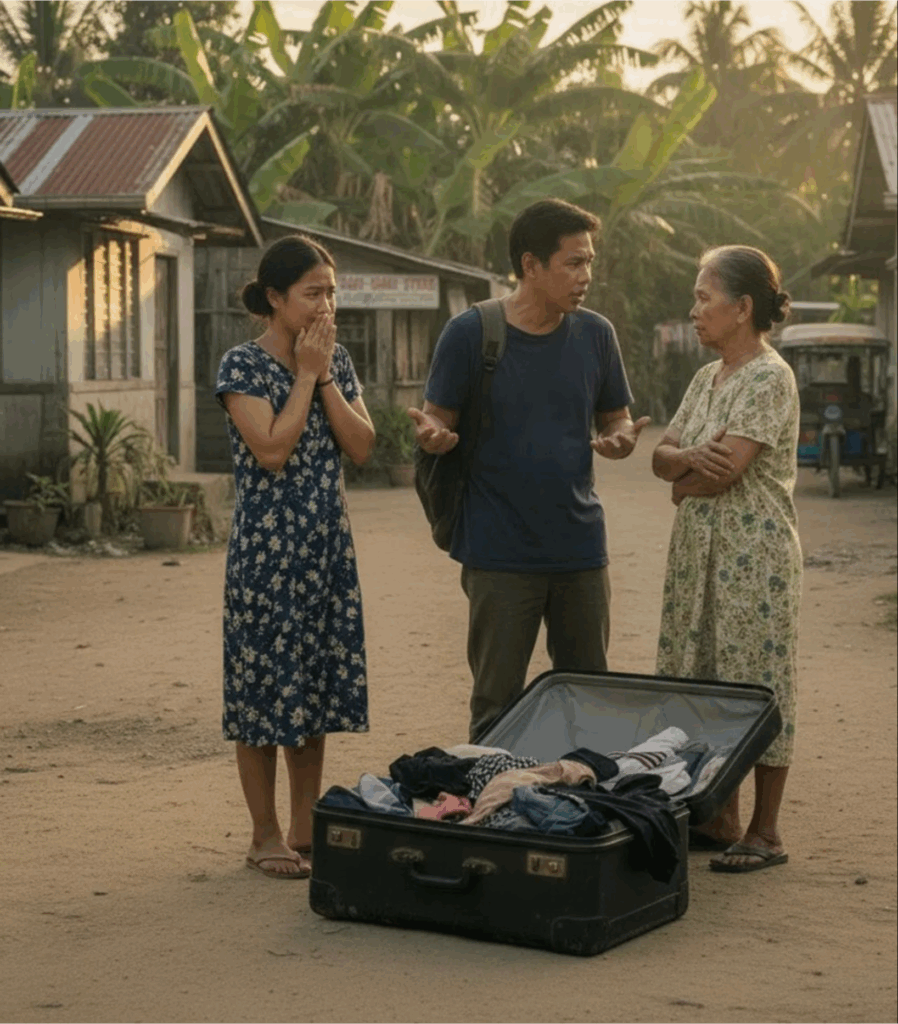
“You look lighter,” she said, lifting her glass. “Like someone finally set down a suitcase they carried far too long.”I smiled, feeling the weight of years lift off my chest in the simple clarity of her observation.
“I finally understood,” I whispered, “that it was never mine to carry.”She nodded, and that was all that needed to be said. The rest of the world, the rest of my past, could wait.
Later that night, I opened the old photo album I had brought with me across the ocean. Ethan as a child—missing teeth, scraped knees, candles on birthdays, laughter frozen in silver halide. His graduation, his wedding day, the moments captured just before everything had shattered.
I didn’t cry.I closed the album carefully and set it back on the shelf—not with anger, not with resentment, but with the quiet clarity of acceptance. Love does not vanish because it is no longer returned. But love can be released. It can be freed, like birds let out of a cage, to soar where it may.
In the stillness of my apartment, I spoke words I had never allowed myself to say, not fully, not honestly:“I was your mother.I did my part.”And for the first time, those words felt whole. Complete. They carried no question, no bitterness, no lingering doubt—only the finality of a life lived fully, and the deep, unshakable satisfaction of having loved entirely.
I closed the balcony doors, turned off the lights, and slipped into bed in my Barcelona home. Whole. Dignified. Free.
Because sometimes, the bravest act of love is not giving more than you have, not sacrificing until there’s nothing left of yourself. Sometimes the bravest act of love is choosing yourself—finally, courageously, and without apology—after a lifetime of choosing everyone else.
And in that choice, I discovered the extraordinary truth: that the heart has infinite capacity, not just to give, but also to reclaim, to heal, and to soar.