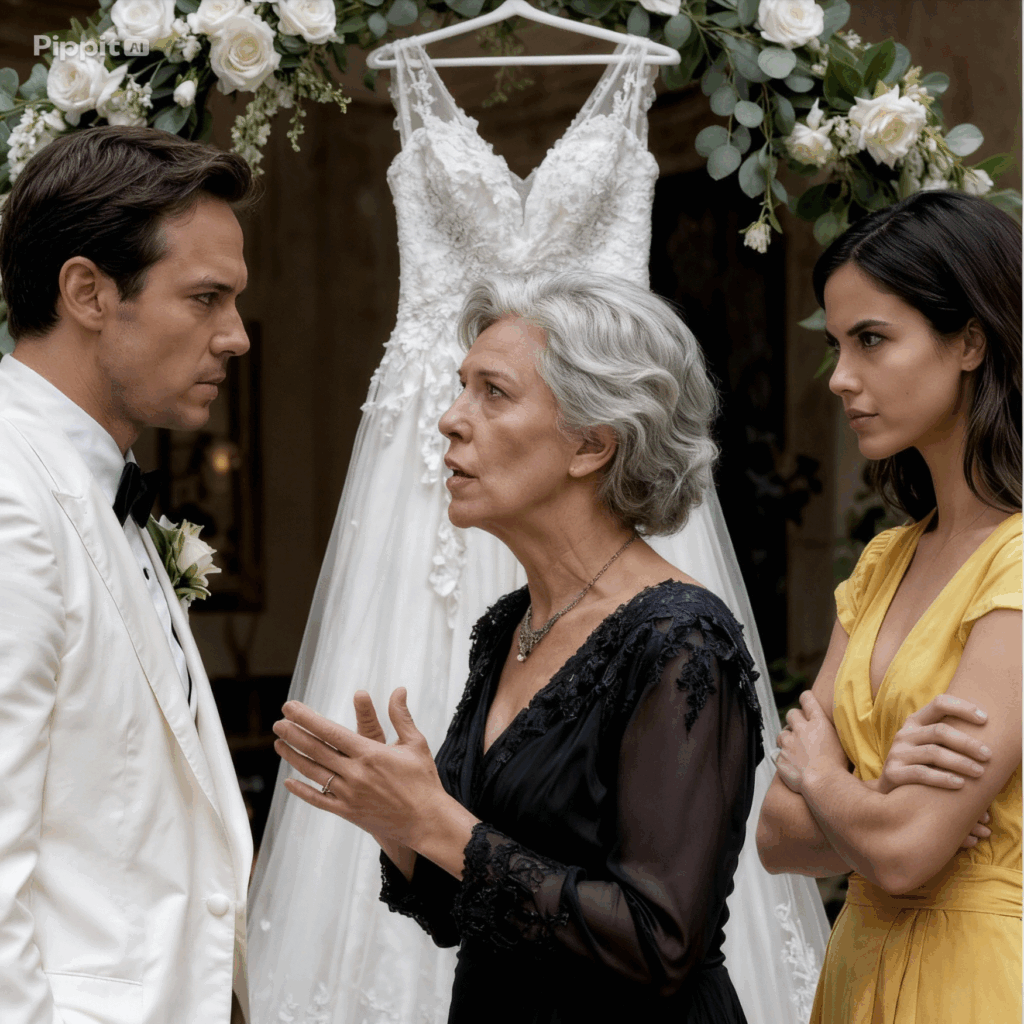
This was my grandson.For thirty years, I had believed my son’s betrayal was the worst pain I would ever endure—the emptied accounts, my husband’s heart attack when he discovered the theft, the decades of isolation that followed.
I never imagined I would stand in mud under a concrete overpass in Ohio, rain soaking my expensive coat, staring at my husband’s eyes in a stranger’s face.“James Sterling?” I asked, voice barely audible over the storm.
He looked up, suspicious, protective, shielding a baby girl bundled against his chest. “Who are you?”“My name is Alice Sterling,” I said, crouching despite the mud. “I know your father told you I was dead, but I am your grandmother.”
Confusion and disbelief crossed his face. That moment, I knew everything was about to change.I had found him through a private investigation. Thirty thousand dollars for a six-page report and one photograph:
James Sterling, age twenty-eight, formerly employed at Midwest Manufacturing, recently laid off, living unhoused with a sixteen-month-old daughter, Sophie. His request for help from his father—my son Gregory—had been coldly denied.
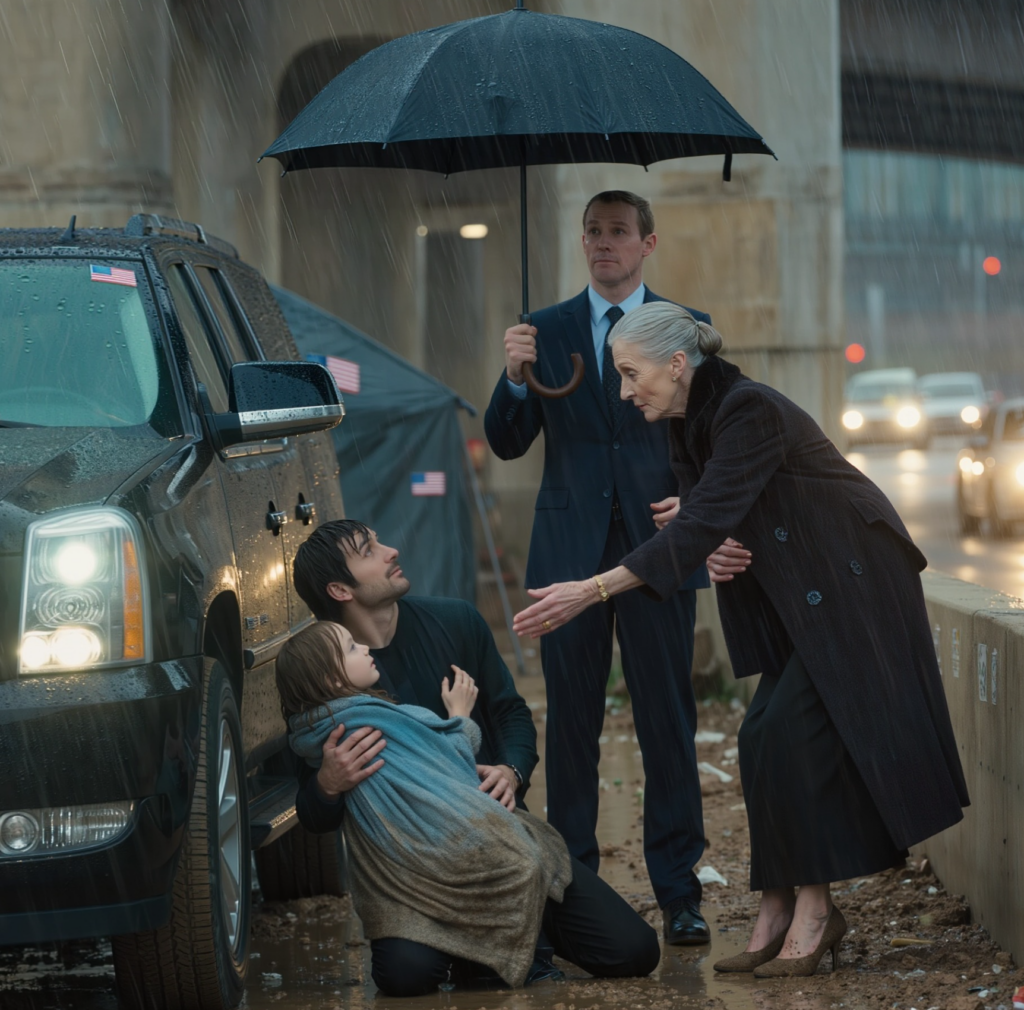
The final page of the report was a photograph. A man hunched beneath a highway overpass, cradling a small child. I set it down, time collapsing thirty years in an instant. Spencer’s grandson, Gregory’s child, living in mud because his own father refused to shelter him.
The rain hammered down as I approached the encampment. The baby’s cries were thin, exhausted. James’ posture was defensive, wary of the stranger approaching, yet I saw him—the strong jawline, deep-set eyes, the echo of Spencer.
“She’s hot,” I said quietly. “Fever.”“What do you want? We don’t have anything.”I’m not here to take anything. My name is Alice Sterling. I am your grandmother.”Recognition didn’t come immediately. Suspicion hardened on his face.
“She needs a doctor,” I added.“You think I don’t know that?” His voice cracked with fear and frustration. “The ER said it’s just a cold. Three days she’s been like this.”“When did you last eat?”“Yesterday. Maybe.”
I offered him warmth, food, and a pediatrician. He laughed, bitter, distrustful. “Right. And what do you want in return?”“Nothing you aren’t willing to give,” I said. “This is about your daughter, Sophie.”
He studied her small, exhausted frame. Relief flickered across his face as he finally agreed. Within an hour, Sophie was in a hotel room, receiving care from a pediatrician. Her fever receded, her tiny body relaxing against us.
Over the following days, I gave James space, letting him acclimate, letting him process. Sophie healed, James gained strength, and slowly, a bond formed—not of forced obligation, but of trust and necessity.
I introduced him to Spencer’s legacy: Havenwood Properties. I offered him a chance to join—not as a gift, but as an opportunity to start at the bottom, to prove himself.He hesitated. “I have no experience.”
“Neither did Spencer when he began,” I reminded him. “But you have perspective. The life you’ve lived gives you insight most people never understand.”
He began at the company, unnoticed. No special treatment, no recognition of family ties. And he thrived. Months became years. He advanced through diligence, empathy, and a quiet focus, connecting with clients not by luxury or promise, but by understanding their lives, their needs, their families.
By his third year, James led major projects, creating communities with heart—sidewalks wide for strollers, green spaces for children, homes designed for living, not just display. Sophie grew healthy, curious, bright—a testament to care, love, and second chances.
Our shared routine of dinners, bedtime stories, and quiet weekends restored something I thought lost forever: family.At thirty-one, James became senior project manager. He didn’t command attention with words or wealth, but with competence and vision.
Eventually, I appointed him CEO. The board questioned it, but I told him quietly, “Because you are Spencer’s legacy—and mine.”Under his leadership, Havenwood evolved while preserving its soul: homes were not just structures, but places where families could thrive.
James never sought recognition for his connection to me or Spencer. He earned every inch through work, empathy, and perspective.And then the ghosts of the past appeared. My son Gregory and his wife Brenda, persistent and entitled, trying to reclaim a family they had abandoned.
I knew what I had to do. Thirty years of betrayal, of grief, of loss—it ended now. The legacy would remain with those who deserved it: James, Sophie, and the family we had rebuilt through care, integrity, and love.
I had come full circle. From rain-soaked overpasses to the restored warmth of Havenwood, from suspicion to trust, despair to hope. The past was never erased, but the future, our future, belonged to James.
And Sophie, wrapped safely in his arms, smiled—proof that even in the darkest moments, family, love, and second chances could endure.