I spent fifteen years building Patterson Construction from the ground up. Every blueprint, every subcontractor’s temper, every schedule, every steel beam—each detail had my fingerprints all over it. I was the quiet engine keeping the company running,
the one everyone relied on to fix mistakes that could have sunk us. And Ryan? He got the corner office with floor-to-ceiling windows, the praise, the keys to Dad’s truck. He got the inheritance I had earned with sweat, sleepless nights, and relentless dedication.
Favoritism wasn’t new. I still remember my fifth birthday: a modest gift from Mom, a simple grocery-store cake, and a whispered “I’m proud of you.” Ryan’s fifth? A custom-built playhouse, complete with working windows, a porch,
and a sign that read RYAN’S FORT. Dad ruffled my hair and said, “You like books anyway. Ryan needs something to play in.” The message was clear: Ryan mattered. I didn’t.
I buried my hurt in work. By sixteen, I was shadowing foremen, filing paperwork, and learning every aspect of running a construction company. Ryan drifted through high school, winning praise for simply showing up.
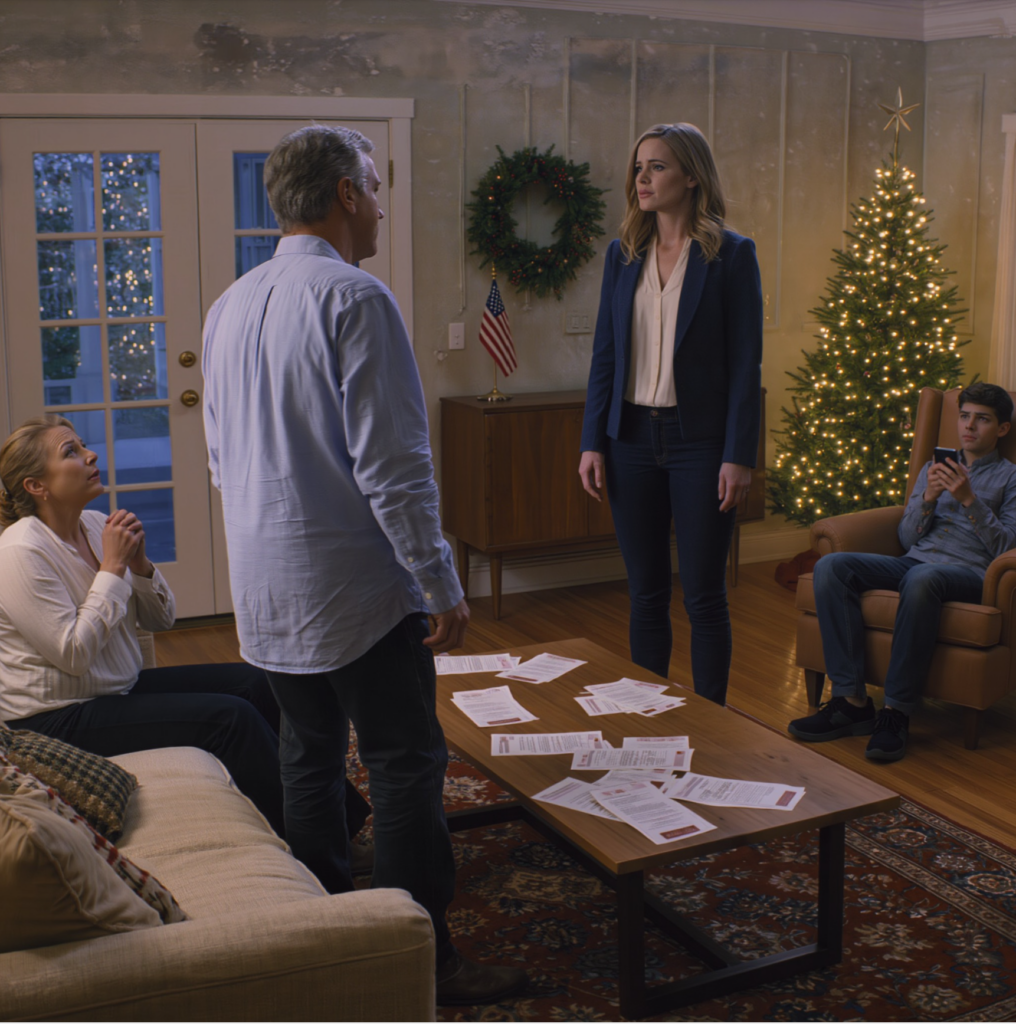
I believed results would speak for themselves. They never did.The breaking point came on a Thursday in late fall. The air outside had that crisp New England bite that makes you clutch a mug of coffee like a lifeline. Dad called a family dinner.
I walked into the dining room expecting recognition, maybe an offer of shares. Instead, he looked at me and said, “Your brother deserves it. The house, the cash, the entire family company.”Time froze.
A stack of legal documents slid toward Ryan, and I walked away with nothing but my car, my laptop, and a suitcase packed in quiet fury. By sunrise, I was on a plane to Chicago, carrying only my experience, my pride,
and a single photo of my grandfather beside his first truck, the name Patterson Construction painted on the door.Chicago was harsh—wind, concrete, endless possibility. My first office was tiny, my apartment smaller, the radiator hissing all night.
I knocked on doors, sent cold emails, and introduced myself as a consultant who could rescue failing construction projects. Most ignored me. A few desperate clients, however, gave me a chance.
One of my first rescues was a mid-rise renovation spiraling into financial disaster. The developer, Luis, showed me the chaos with clenched fists and furrowed brows. I spent days crawling floors, reviewing documents,
and negotiating with subcontractors. Through sheer stubbornness—and an alarming amount of coffee—we finished a week behind schedule and under budget. Luis hugged me in the lobby and said, “From now on, you’re my first call.”
Word spread. My reputation grew. Maya, an overlooked architect, and Tasha, a former project coordinator fired for speaking up about safety, joined me. We worked in a cramped office overlooking a busy street,
the hum of buses and street vendors our constant soundtrack. Slowly, I reclaimed control over my life, my career, and my self-respect.
Then came the messages from Boston. First Barbara, a neighbor: the yard at my parents’ house was overgrown, the shutters peeling. Then Martin, a former head estimator: Ryan had fired essential staff, and the company was faltering.
Each message was a drop in a storm, painting the picture I had feared for years: Patterson Construction—the company I had nurtured—was bleeding under Ryan’s care.
The final straw came on a rainy night. An unknown number sent a blurry screenshot: employees unpaid, the bank threatening the line of credit. Underneath, a message: “You should call your parents.”
I did.Mom texted: “Mortgage’s due. Can we talk?”I replied simply: “Ask your heir.”For the first time, the power shifted. The company that had once ignored me now needed me. I returned to Boston—not as the overlooked daughter,
but as the only person capable of saving the company.I demanded majority ownership, full control, transparency, and Ryan stripped of all operational authority. There was resistance, fury, disbelief—but signatures were obtained.
I reclaimed the company. Rebuilding wasn’t glamorous. It meant early mornings inspecting sites, nights buried in spreadsheets, and months regaining client trust. I reinstated employees who valued integrity,
forced Ryan into client relations with zero authority, and slowly healed the damage.By month four, the bleeding stopped. By month nine, profitability returned. Patterson Construction thrived—not because of my brother or my parents’ approval,
but because I refused to accept favoritism as destiny.The real victory wasn’t in contracts or balance sheets. It was reclaiming my place in a story that had tried to erase me. Forty-seven families depended on someone who chose right over favoritism. I was that someone.
Mom texted one evening: “Thank you for saving our legacy.”I stared at it, then typed back slowly: “It was never about legacy. It was about doing what was right.”For the first time, I felt seen—not as a daughter in the shadows, but as a woman who refused to be ignored.