When I unfolded that tiny, crumpled piece of paper, I never imagined five words could change my life: Pretend to be sick and leave. Scribbled in my daughter’s familiar handwriting, the note trembled in my hands.
I looked at Sarah, confused, and she shook her head frantically, eyes wide with a silent plea: Trust me. I didn’t understand then—but I would, soon enough.
That Saturday morning began like any other in our quiet Chicago suburb. Two years had passed since I married Richard, a charming, successful businessman I met after my divorce. From the outside, our life seemed perfect:
a comfortable home, a steady income, and my daughter Sarah finally enjoying stability. Sarah was painfully observant, quiet beyond her fourteen years. She noticed everything: whispers, glances, small gestures.
At first, her relationship with Richard had been rocky, as expected, but over time they seemed to have found a fragile balance. Or so I thought.
Richard had invited his partners for brunch that morning, an event he had meticulously planned all week. I spent hours preparing, arranging flowers, planning the menu, and perfecting every detail.
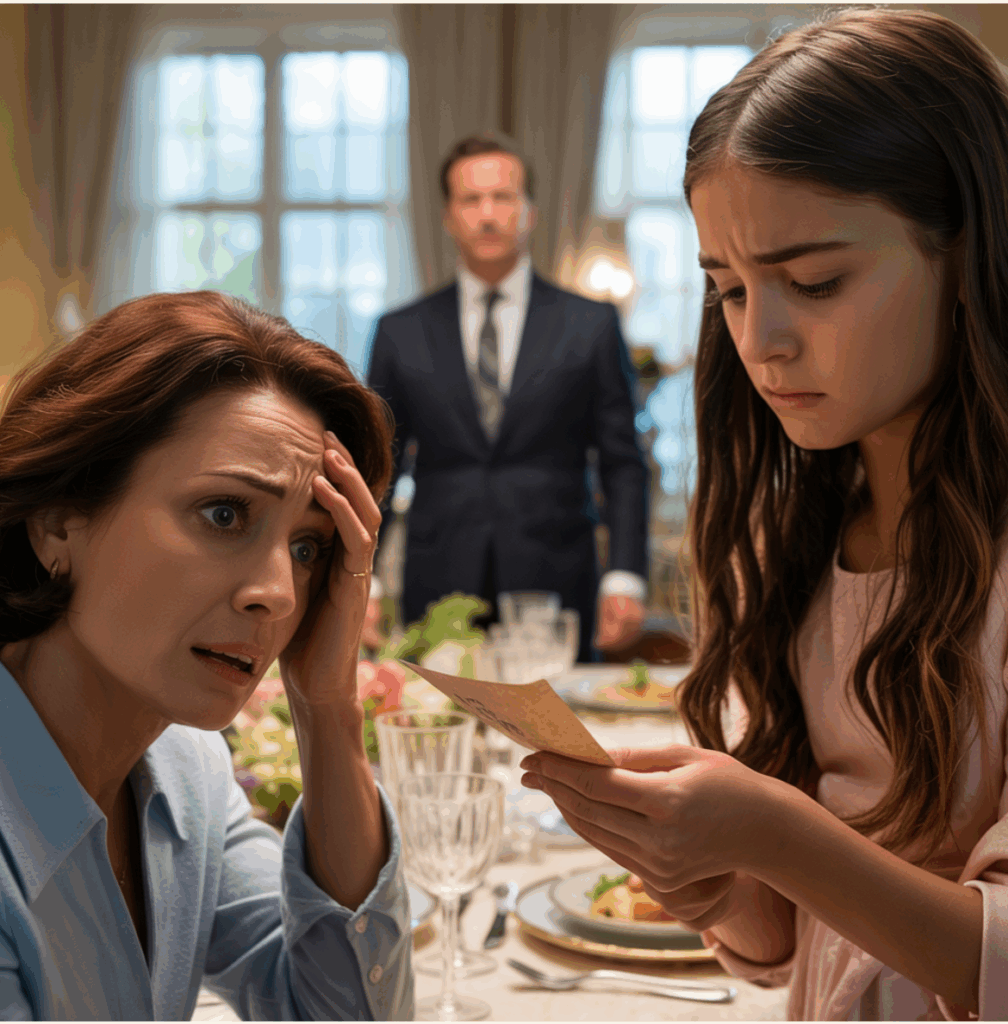
I was in the kitchen, finishing a salad, when Sarah appeared. Her face was pale, her eyes darting around nervously. Fear.“Mom,” she murmured, hesitant as if speaking too loudly could draw attention. “I need to show you something in my room.”
Richard strolled in, adjusting his tie, his smile polite but his eyes cold. “What are you two whispering about?”“Nothing important,” I said automatically. “Sarah needs help with school work.”“Be quick,” he said, checking his watch. “Guests arrive in thirty minutes.”
I followed Sarah down the hall, my heart pounding. She slammed her door behind us with force, handing me a folded note. I unfolded it and read the hurried words: Pretend to be sick and leave. Now.
“Sarah, this isn’t funny,” I said, trying to mask my irritation.“It’s not a joke,” she whispered, voice trembling. “Please, Mom. Leave now. Say you feel sick, but get out.”
Her fear froze me. I had never seen her like this—so serious, so terrified. The hallway echoed with Richard’s approaching footsteps. He was coming.
On impulse, I obeyed. “I’m sorry, Richard,” I said, touching my forehead. “I feel dizzy… a migraine. Go ahead without me.”
Richard frowned, but the doorbell rang. He left to greet the guests.“Mom, we need to go. Now,” Sarah urged. “Say we’re going to the pharmacy. I’ll come.”“This is insane! I can’t abandon the guests,” I protested.
“Mom, this isn’t a game. It’s your life.”Her fear was raw, real. I grabbed my purse and keys, and we slipped past Richard into the car.“Drive,” Sarah said, glancing back at the house like it had turned into a cage. “I’ll explain everything.”
She did.“Richard is trying to kill you,” she said, voice breaking. “I overheard him last night. He’s going to poison your tea.”I slammed the brakes, the world tilting. My daughter’s words sounded absurd, like a thriller, but the conviction in her eyes left no doubt.
Sarah recounted everything: Richard, whispering on the phone, planning the exact timing, mentioning insurance money, and a method to make my death look like a heart attack. She showed me bank transfers, hidden debts, and documents proving he had siphoned money from accounts tied to me for months.
I felt sick. The man I loved, the father figure to my daughter, was a calculating thief.“We need proof,” I said, my voice suddenly sharp. “Something we can take to the police.”
Sarah handed me pictures of a small, unlabeled bottle in Richard’s office—a potential poison. We planned a risky, desperate strategy: distract Richard, gather evidence, and escape if needed.
Returning home felt like walking into a lion’s den. Richard welcomed us back with charm, unaware—or so he thought—that we knew. I feigned illness, Sarah played along, and we executed our plan.
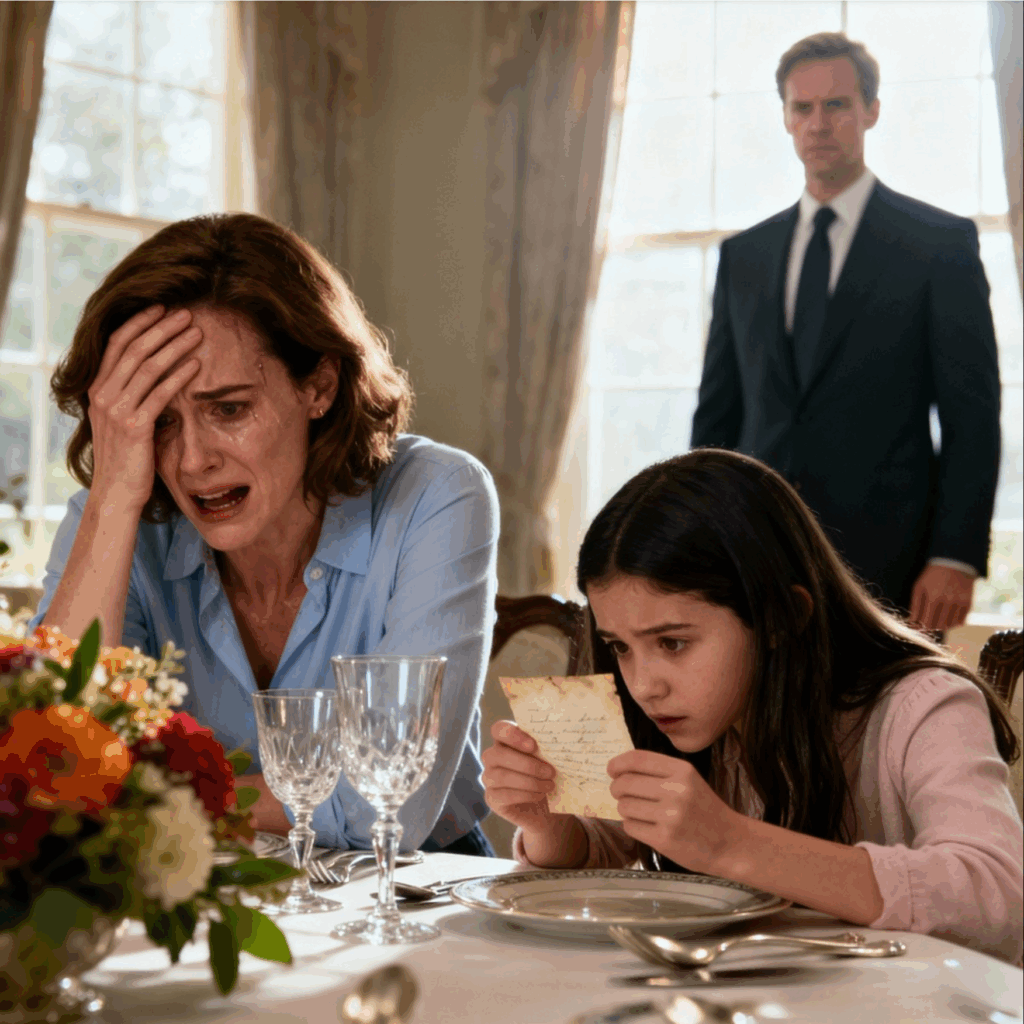
Every glance from Richard was loaded with menace. Every step was dangerous. When we finally photographed the poison, we escaped through the bedroom window, fifteen feet down to the grass. Adrenaline made the fall barely register.
We ran through the woods, breaths ragged, hearts pounding. Sarah showed me the images: the amber bottle, a timeline in Richard’s handwriting detailing the plot—when guests would arrive, when the tea would be served, the expected effects.
At a quiet street, we hailed a taxi and went to a crowded mall to blend in. Messages from Richard poured in, feigning concern. I called Francesca, a criminal lawyer and old friend, who ordered us to stay put until she arrived.
Richard’s web of lies included framing us as unstable. But Francesca dismantled it: photographs, the timeline, and Sarah’s testimony were compelling. The police confirmed our story—the blood in Sarah’s room was his, the bottle contained arsenic, and his intentions were clear.
Richard’s facade crumbled. Rage and hatred twisted his face as officers dragged him away.
The trial was a media spectacle. Richard’s plan to murder me for money was exposed. Evidence showed he had targeted others before me. He was sentenced to thirty years for attempted murder, fifteen for financial crimes, and a life sentence was likely as investigations continued.
Months later, Sarah and I moved into a new apartment. I found a small note tucked in a book—Sarah’s handwriting: Pretend to be sick and leave. I kept it in a wooden box, a reminder of danger, courage, and survival.
That evening, over a quiet dinner, we toasted to new beginnings. The scars remained, but they were marks of strength. Richard tried to destroy us, but instead, he strengthened us. Our survival proved that even in the face of betrayal, fear, and deception,
hope and courage could prevail. And sometimes, salvation comes from the most unexpected places—even a teenager’s desperate warning. Five words that had saved our lives.