“Ma’am, please put that cheese back!” The cashier’s voice cut through the hum of the Saturday morning at Biedronka like a knife. I froze, holding the package of yellow cheese in my hands, feeling the eyes of everyone in line piercing me.
Someone behind me sighed loudly, and my cheeks burned as if they’d been set on fire.“But… it’s mine,” I whispered, trying to make sense of what was happening while panic welled up inside me.
“That cheese has no barcode! I can’t scan it!” The cashier, young—maybe in her early twenties—spoke in a tone so cold it might have been carved from ice. “Please put it aside and don’t block the line!”
In that instant, all my confidence evaporated. I was 68 years old, and I felt like a child caught stealing candy. From behind me, someone muttered, “Always the same with old people…” My hands began to shake. “I’m sorry… I really didn’t know…”
“Hurry up, please!” The cashier’s tone hit me like a hammer.I put the cheese aside, but felt something inside me break. My whole life, I had tried to be quiet, polite, and unobtrusive. And now? I had become a problem, an obstacle in someone else’s day.

I looked around at the people in line—a young mother with her child, an elderly man in a coat, a teenager clutching a bag of chips. They all looked at me as if I didn’t belong.Suddenly, a security guard appeared. “What’s going on here?”
The cashier pointed at me. “This lady refuses to put aside the product without a barcode.”“That’s not true!” I shouted, feeling tears prick my eyes. “I just wanted to buy the cheese…”
The guard looked at me with a stern, icy gaze, as if trying to shrink me down to the size of an insect. “Calm down, and don’t make a scene.”
At that moment, I felt smaller and more helpless than ever before. People began whispering. Someone pulled out their phone and started recording every movement I made.
“Should we call the police?” asked the cashier.“No! That’s not necessary!” I tried to protest, but my voice cracked.
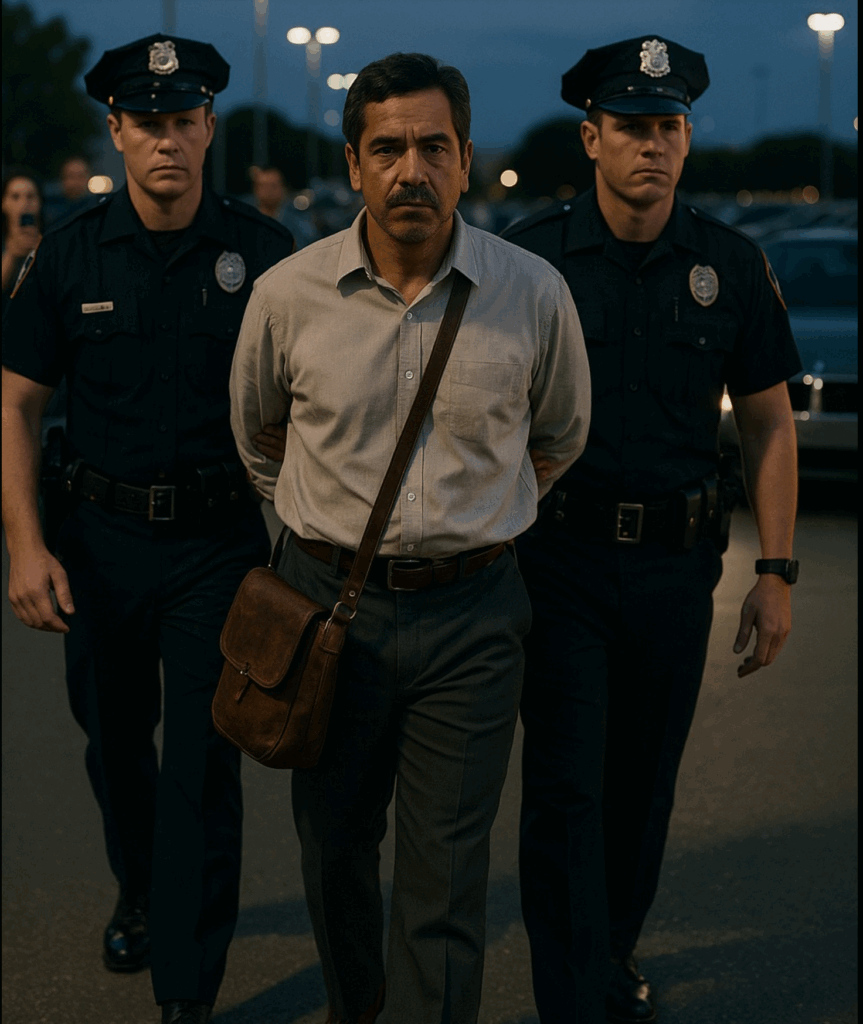
The guard was already speaking into his walkie-talkie. Moments later, I heard sirens. The police? Over a block of cheese?
The officers entered the store. “What happened?” they asked, and I felt my words stick in my throat. I tried to explain, but every sentence came out clumsy and awkward. The humiliation gripped my heart like an iron band.
One officer looked at me more gently. “Don’t worry, Mrs. Maria. It’s just a misunderstanding.”But for me, it was no longer “just.” I left the store empty-handed, my heart heavy. On the parking lot bench, I cried like a child, unable to stop the waves of shame and helplessness.
I got home later than usual. My son called. “Mom, is everything okay? You’ve been gone a long time.”
I wanted to tell the truth, but my voice caught in my throat. “Yes, everything’s fine,” I lied, and the lie hurt more than the incident in the store.
That night, I lay awake staring at the ceiling. Memories of other moments resurfaced: someone bumped into me on the sidewalk and didn’t even apologize; the neighbor upstairs complained that my radio was too loud; my granddaughter sighed,
“Grandma, you don’t understand any of these new things.” Is growing old only about being a burden, an invisible weight?
The next day, my neighbor, Mrs. Zofia, called. “Maria, I saw you at the store yesterday… Are you okay?”I told her the whole story. She listened carefully, then said, “You can’t just leave it like that. You need to file a complaint.”
But what would it accomplish? Would anyone apologize? Would anything change?For days, I avoided the store. I feared the stares, the next humiliation. I even took a side door to church, to avoid anyone.
Finally, I gathered my courage and wrote a letter to the store manager, describing everything: the cashier’s tone, the security guard’s reaction, my feelings. A week later, a reply came:
“We apologize for the incident. The staff have been instructed accordingly.”That’s it? That’s all?My son visited on Sunday. Seeing my sadness, he asked, “Mom, why do you let them treat you like this?”
I had no answer. All my life I had been quiet, humble. Now I saw it had been a mistake.
A few days later, I saw another elderly woman in the store. She stood at the register, fumbling for coins in her purse, while people behind her were starting to grumble. I approached her and said aloud, “Take your time. One day, we’ll all be old.”
She looked at me with gratitude, and for the first time in a long while, I felt a flicker of pride.
Since then, I try to speak louder about what happens to me. I support other older people, talk to neighbors about issues we’ve been ashamed to voice. I no longer want to be invisible.
Still, that day at the register sometimes comes back to me. The question lingers: is it really so difficult to show another human being a little respect? Must we wait until our own old age to understand the pain of humiliation?