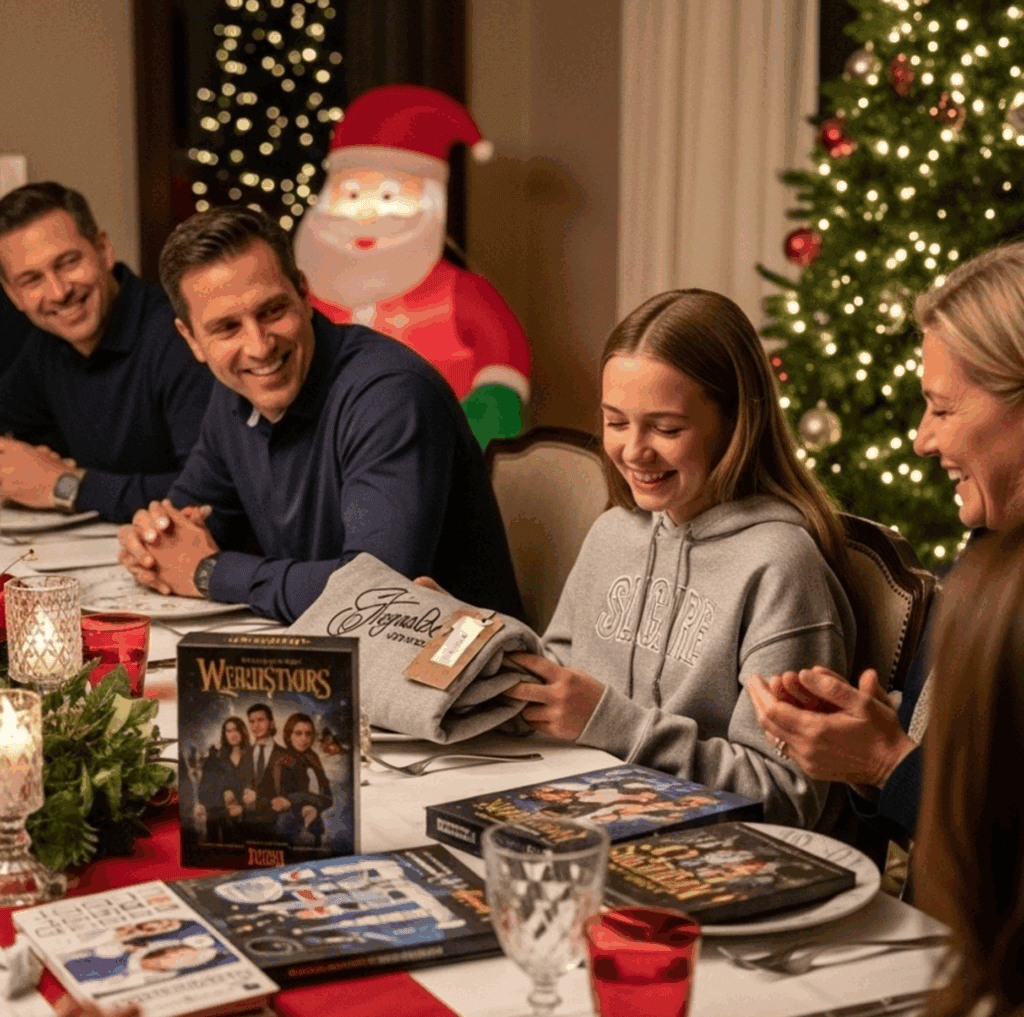
The Room Where Laughter Hurt.I’m Ruth Collins, thirty-three, a lawyer who reads rooms for a living—and somehow, I forgot to read my own family. Christmas at my brother Mark’s house was always a production: twinkling icicles dangling like fragile glass,
an inflatable Santa wheezing on the lawn, table settings so ornate you half expected an instruction manual just to set down a glass.I brought three gifts for my twelve-year-old niece, Madison, chosen with obsessive care:
a boutique sketch set with real blending stumps and heavyweight paper, a signed hoodie from the creator she worshipped, a boxed set of the book series she whispered about last September, assuming no one was listening.
Vanessa’s perfect lipstick met my cheek. Mark clapped me on the shoulder like I’d just closed a deal. I took my usual spot: the edge of the table, half in shadow, full view of the annual performance.
Then it happened.Madison tore into the hoodie first, checked the tag—not the signature—and dropped it on her lap. The books got a shrug. The sketch set—my favorite—barely a glance.And then, loud enough to carve into the room:“Dad says you always buy cheap stuff.”
The laughter bloomed. A few quiet giggles. A few averted eyes. Not a single adult intervened. Mark leaned back, satisfied, like the punchline had been rehearsed. I did what I’ve been trained to do since childhood: I froze.
Words slid past me like coins tossed into a fountain. Smallness. Fine. I accepted it.
Eleven Minutes of Clarity,I don’t remember dessert. I remember the cold air outside, clean and sharp compared to the house. At my apartment, I closed the door and stood still. My laptop waited, open to a budget draft.
Another tab hid a different ledger: the shared credit card I foolishly opened years ago, me as primary, Mark as “authorized” because he “just needed a bridge.”
Emergencies are bridges until they turn into highways. Groceries, rent, school supplies, a water heater, a “temporary” phone plan, another month of rent. I scrolled through the transactions like evidence in a case file. Patterns don’t lie.
One Gray Button,The portal offered a mercy disguised as a rectangle: Freeze Card. Polite gray. Unassuming.My oldest reflex whispered: *It’s Christmas. Be gracious. She’s a kid.*But boundaries aren’t punishments. They’re physics.
I clicked.Card status: frozen.The radiator ticked. The night exhaled. Guilt never came. Clarity did.Morning: “The Cashier Is Waiting”At 7:22 a.m., Vanessa:“The card isn’t working. We’re at checkout. What’s going on?”
Then: “Seriously, fix this. Madison’s with me.”Then, all caps: “THE CASHIER IS WAITING. WHAT DID YOU DO?”By noon, Mark called. I let it ring. By evening, the tone shifted: You’re overreacting. She’s twelve. You’re wealthy. What’s the big deal?
That night, I opened a sheet called *What I Paid* and replaced feelings with numbers. This year alone: $6,820. Not counting the invisible labor: my time, favors, birthdays I bankrolled from behind the camera.
The Knock That Always Comes,Mark arrived unannounced, chapped lips, Christmas sweater, entitlement personified.“Look, about the card,” he started. “We had a big run. A heads-up would’ve been nice. Family helps family.”
I set down my coffee. “In the last five years, what have you done for me?”He blinked. “That’s not fair. You never ask.”“No,” I said. “I stopped asking. Your answer was always no.”He tried a softer tone. “It’s not about keeping score. It’s about love.”
“Then stop sending me invoices for it.”He exhaled sharply. “You can’t just cut us off. Madison’s school trip, Vanessa’s car—”“Not my responsibility.”“You’re saying that to your own niece?”“I’m saying it to you.”
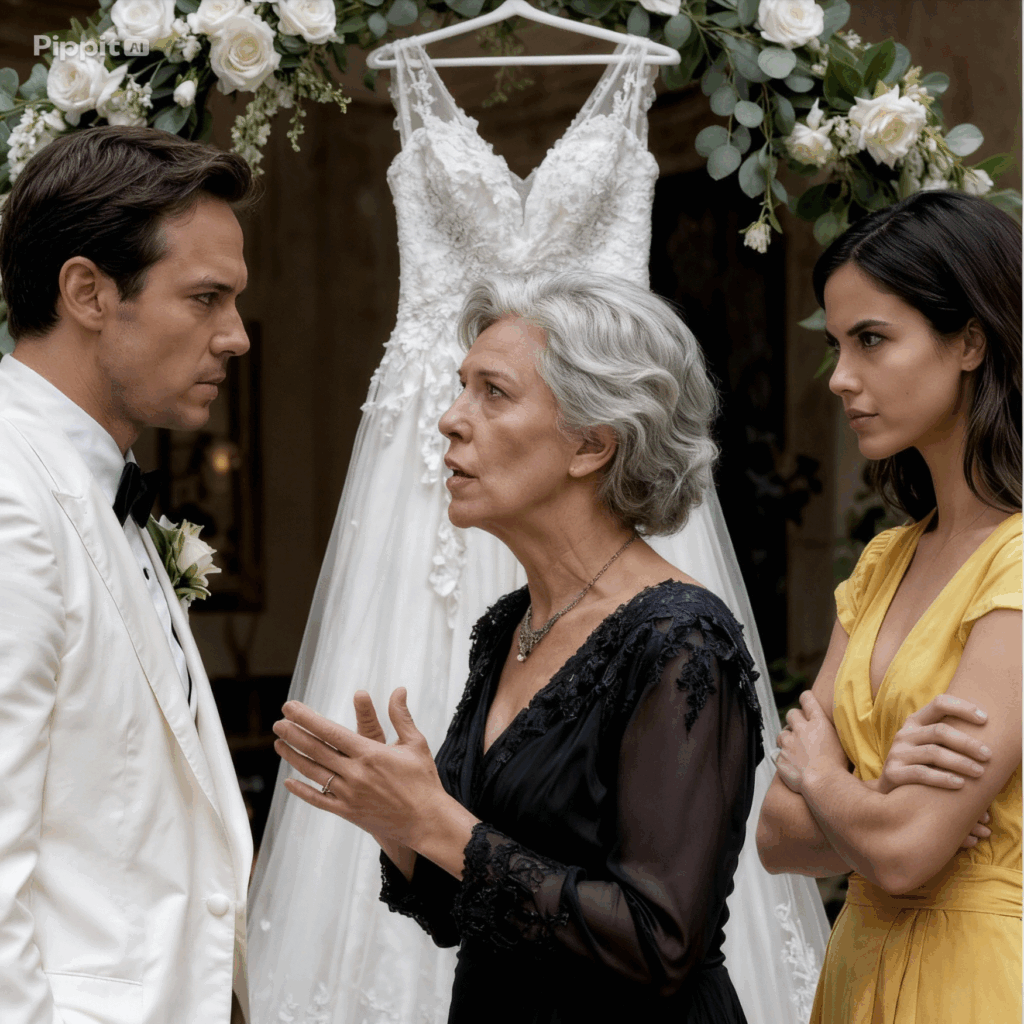
Threat looming, he said: “Mom and Dad will hear how you’re treating family.”“I hope they do,” I said, holding the door. “My story comes with receipts.”He left, grinning—a warning disguised as a smile.
The Call I Didn’t Expect, “Hi, sweetheart,” Mom said carefully. “Your brother sounded… upset.”“Not upset. Entitled. Mom, do you know how much I’ve covered this year?”Silence. Dishes clinked—Dad washing up.
“$6,820. Rent. Utilities. Camps. Fees. Groceries. Parties I paid for while being a guest.”Another pause. “That much?”“That much.”Mom exhaled. “Ruth, it was never your job.”
An hour later, Dad called, blunt and direct: “Your mother told me. I called your brother. He’s embarrassed—and should be. It’s shameful to expect your younger sister to bankroll your life. You don’t owe him a penny.”
I sank to the kitchen floor, crying like someone handed me a permission slip for my own life.
The Escalation,Three days of quiet. Then the oldest trick in the book: triangulation through Mom.“He hinted about bills,” she said softly. “We told him no.”I almost dropped the phone. They actually said no.
Later, Mark emailed: For the Record. Polished, wounded. A “harmless joke” from a kid? You’re using money as a weapon. Just $1,500 for rent and groceries. No apology. No accountability. Just rearranged guilt.
The Doorstep Gambit,Saturday morning, a knock. Madison stood, backpack and rolling suitcase in tow.“Dad dropped me off,” she said. “He said you owe me an apology, and I’m supposed to stay until you say it.”
No car. No adult. Just manipulation masquerading as parenting.I fed her breakfast, texted Mark: Unacceptable. His reply: *Maybe now you’ll see how unfair you’ve been. She’s just a kid.*No concern for her safety. None.
I drove her home that afternoon. She hugged me. “Thanks for breakfast.”“Anytime,” I said. “Don’t believe everything adults say when they’re angry.”Mark crossed his arms. Vanessa stared at her screen. No one said thank you.
On the drive back, a terrifying truth hit me: the war ends the second you stop showing up to fight. The Email to the SchoolA counselor wrote: We’ve heard Ms. Collins may be taking over pickup and paperwork for Madison—please confirm guardianship.
I replied immediately: No guardianship. No legal responsibility. Any statement otherwise is inaccurate.Saved the email. New folder: Boundary.The Family Group Text,Dad created it, which he never does.
Dad: Your mother and I will not be funding shortfalls. Ruth is not your emergency plan.Mom: We love you both. We will not referee money or manipulation.Me: The card remains frozen. I wish you well.
Mark: (typing… stops. Leaves the chat.)The kindest ending possible to a long, unkind arrangement.
Quiet, at Last,Weeks passed. No panicked texts. No late-night knocks. I painted my living room. Fixed the washing machine. Bought the winter coat I’d almost bought three years running. Booked a spring ticket to Italy—non-refundable.
Daniel raised his glass. “To finally living your life.”“To finally not apologizing for it,” I said.
What Boundaries Gave Back, I kept the spreadsheet—not for revenge, but memory. People rewrite history; numbers don’t. I also kept the signed hoodie. Madison may want it someday, when voices around her are kinder.
If she asks, I’ll be there. For her. Not for the stories told in my name.I didn’t unfreeze the card in January. Or February. I closed the account in March. I slept better than I have since law school.
The Conversation That Healed the Most,February. Dad and I on diner stools, splitting a grilled cheese like old times.“You know,” he said, staring into coffee, “I always hoped your generosity would make you loved. I never thought it would make you useful.”
I swallowed. “Me too.”He nodded. “I’m proud you chose self-respect over peace that wasn’t peace.”Gentlest absolution I’ve ever received.
The Lesson I Paid For (And Finally Own),Family might be forever. Boundaries are, too—and they’re the only reason love survives without breaking you. Generosity doesn’t prove your heart. It proves your access. Respect proves everything else.
On Christmas night, I pressed one gray button and rewrote a decade-long story. Silence wasn’t punishment. It was freedom.If you need words I didn’t have:
I love you. I am not your contingency plan, A boundary is not a betrayal.I won’t fund what you refuse to change. If you tell a story about me, include the receipts.
That night, my phone didn’t buzz. My bank account stayed mine. And for the first time in years, I didn’t measure my worth by how fast I could say yes.
I was called “cheap” to teach me my value. Most expensive lesson ever. Worth every cent.