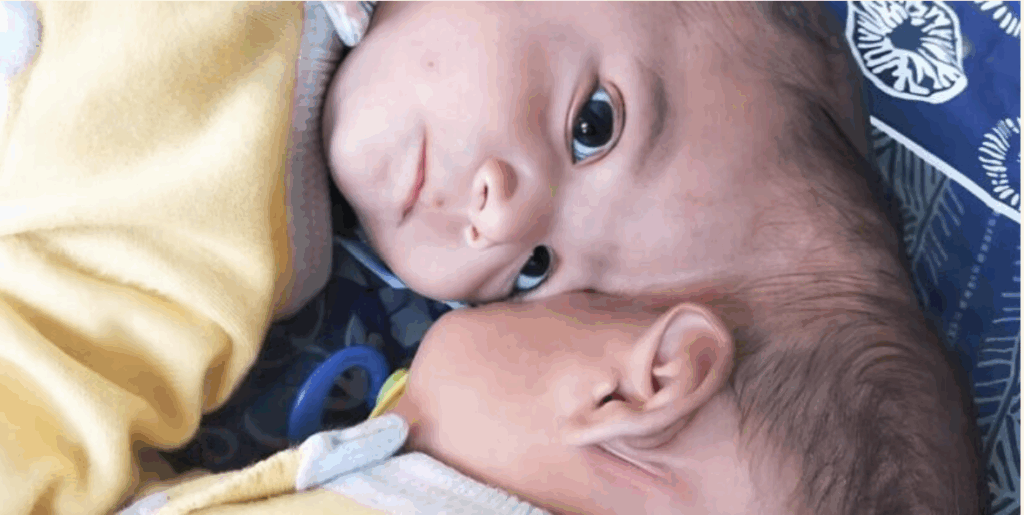
Manal and Mirhi were born in Pakistan with an extraordinarily rare and almost unimaginable condition – their heads were fused together. The girls shared a portion of their skulls, and their brains were connected by a complex, intricately intertwined network of blood vessels.
This type of fusion, known in medicine as cranial conjoined twins, is among the most extraordinary and simultaneously one of the most challenging cases to treat. The likelihood of a child being born with such a condition is extremely low – statistically, it occurs in only about one in every 60,000 births.
Furthermore, few of these children survive to the point where a surgical separation becomes possible.For the first three years of their lives, Manal and Mirhi’s parents lived in a constant state of tension. Every movement of their daughters, every reaction to stimuli in their environment,
was carefully observed. The parents tried to notice even the smallest signs of comfort or discomfort, constantly wondering if the day would ever come when separating the girls would be safe. Every decision, every step in this uncertain daily life,
was filled with fear but also with hope – hope that one day their daughters could live independently, fully healthy, and self-reliant.After extensive consultations with doctors from around the world, analyzing risks and potential outcomes,
the parents made a decision that could forever change the lives of their daughters. The risk was enormous – even the smallest mistake could cost the life of one or both girls – but the prospect of a full,independent life for Manal and Mirhi outweighed the fear.
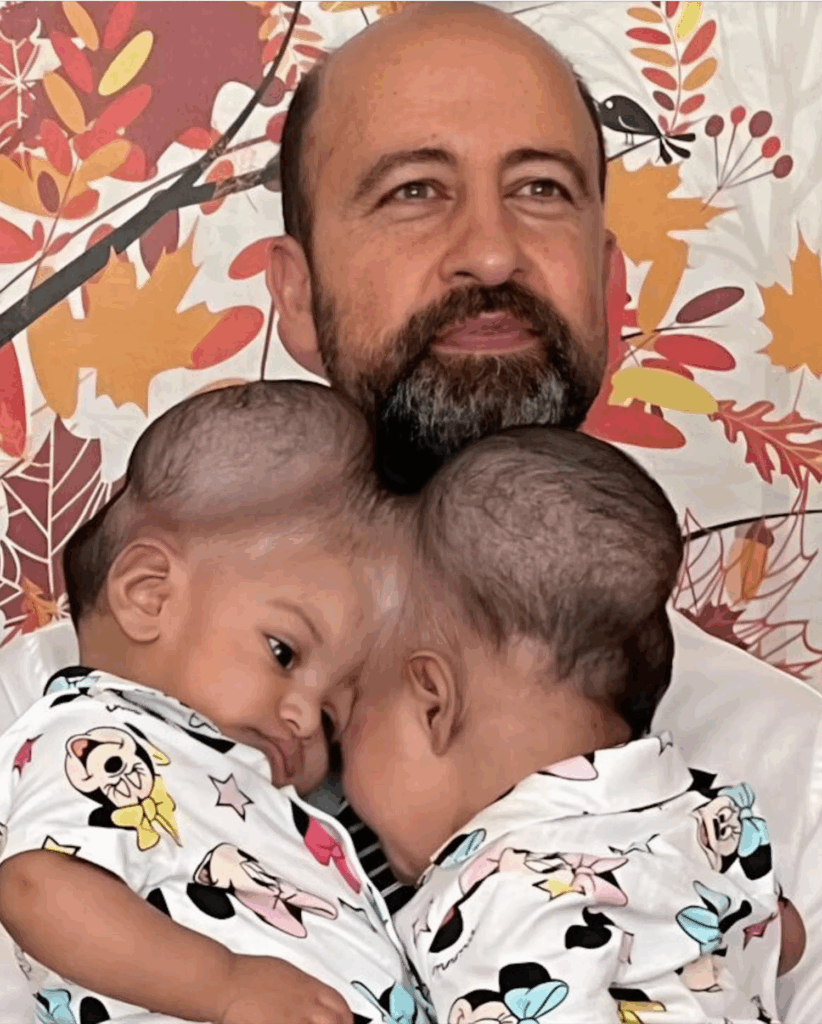
The girls were transported to Ankara, to the renowned Bilkent City Hospital, where an international team of outstanding surgeons, neurologists, and anesthesiologists awaited them.Every member of the team was fully aware that even the tiniest error during surgery could end in tragedy.
Preparations took months and were painstakingly detailed – the surgeons utilized the latest technology, including three-dimensional models of the skulls and brains, as well as mixed-reality simulations.These tools allowed them to practice every step multiple times,
anticipate potential complications, and develop a precise surgical strategy.The actual operation took place in two stages and lasted more than 14 hours. The surgeons meticulously separated the meninges,untangled the intricately intertwined blood vessels,
and then reconstructed the girls’ skulls, ensuring that every structure was placed precisely in its correct position. Every gesture required the utmost precision, every movement was closely monitored and consulted on in real-time.
The tension in the operating room was almost tangible – everyone knew that success depended on perfect teamwork and absolute focus.Despite the enormous risks, the surgery was a complete success. Within a few days, Manal and Mirhi began to breathe independently and respond to stimuli from their surroundings.
Doctors watched in awe as the girls recovered quickly. Their reactions were proof that the operation had not only succeeded but that each of them had a real chance at a normal, independent life. Prognoses were promising – Manal and Mirhi could now develop physically and intellectually like any other child,
lead an active life, acquire new skills, and experience the world separately.Today, the girls are undergoing intensive rehabilitation. Every day brings new challenges – learning to sit, walk, and function independently. For their parents, every small achievement is a true miracle.
For the first time, they can hug each daughter separately, celebrating every tiny success. Every smile, every step toward independence is evidence that courage, determination, and love can overcome even the most difficult obstacles.
The story of Manal and Mirhi is not only a triumph of modern medicine and a testament to the possibilities of advanced surgery. It is also a moving tale of parental love, hope, and bravery that can endure even the toughest times. Their story reflects determination,
the extraordinary cooperation of doctors, advanced technology, and an unyielding will to live. It shows that even in the most complicated cases, there is hope – hope for new life, independence, and a future full of possibilities.Manal and Mirhi have become a symbol that miracles are possible when people,
science, and love come together. Their story inspires, teaches patience, courage, and perseverance, and reminds us that even in the face of challenges, there is always a chance for a happy ending.