I noticed them almost by accident. Tiny, white, almost pearly spheres, scattered across the damp earth beneath the old apple tree. The morning was quiet, shrouded in mist, and everything around seemed to breathe peace — until my eyes fell on those strange little spheres.
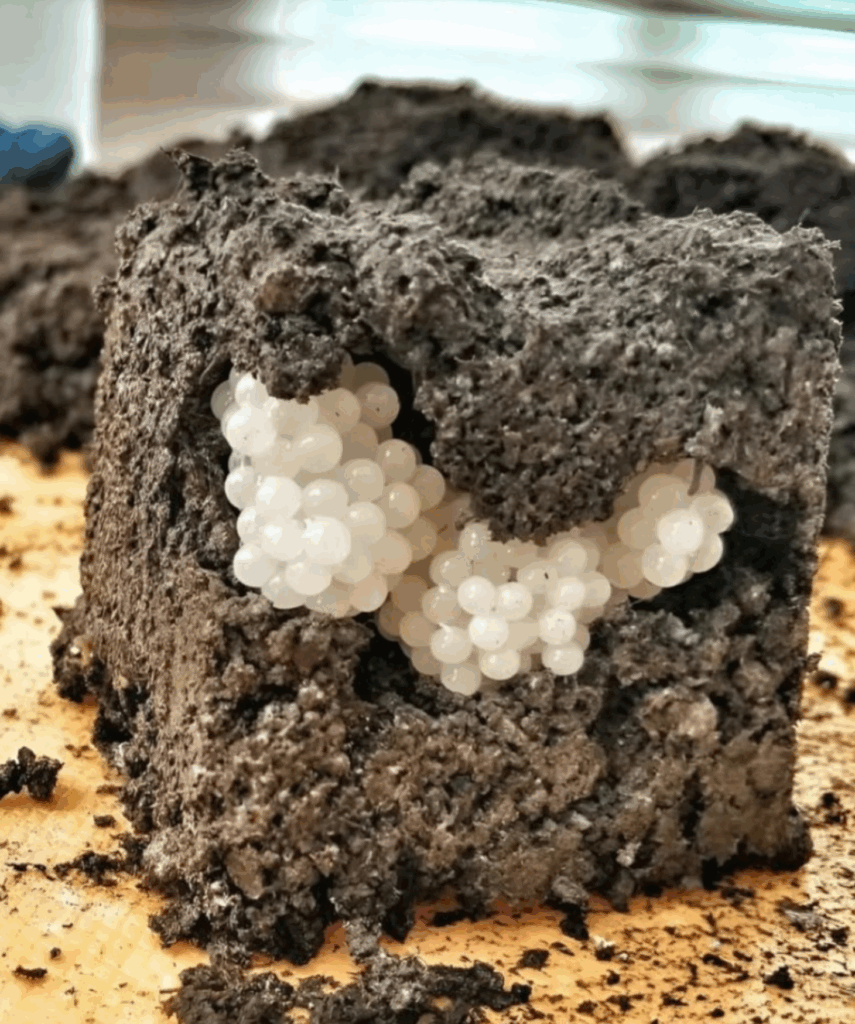
At first, I paid them no mind. There’s always something unusual in a garden: a fragment of chalk, a scrap of plastic, a forgotten seed. But these… these were different. The spheres weren’t randomly scattered; they formed dense clusters,
as if someone had arranged them with care, hiding them under a thin layer of soil. Curiosity, stronger than caution, drew me closer.
They were astonishingly regular — perfectly round, smooth, slightly moist. In the sunlight, they glimmered like tiny pearls. I touched one lightly with my gloved hand; it yielded, soft like glass or a drop of gel. A shiver ran down my spine. They weren’t mineral, they weren’t plastic — they were alive.
“Eggs…” I thought.But whose?The possibilities were endless: insects, lizards, snakes, birds… My garden is a microcosm, where life pulses in every centimeter, often in unpredictable forms. I took a few spheres inside, placed them on a white dish, and switched on my desk lamp.
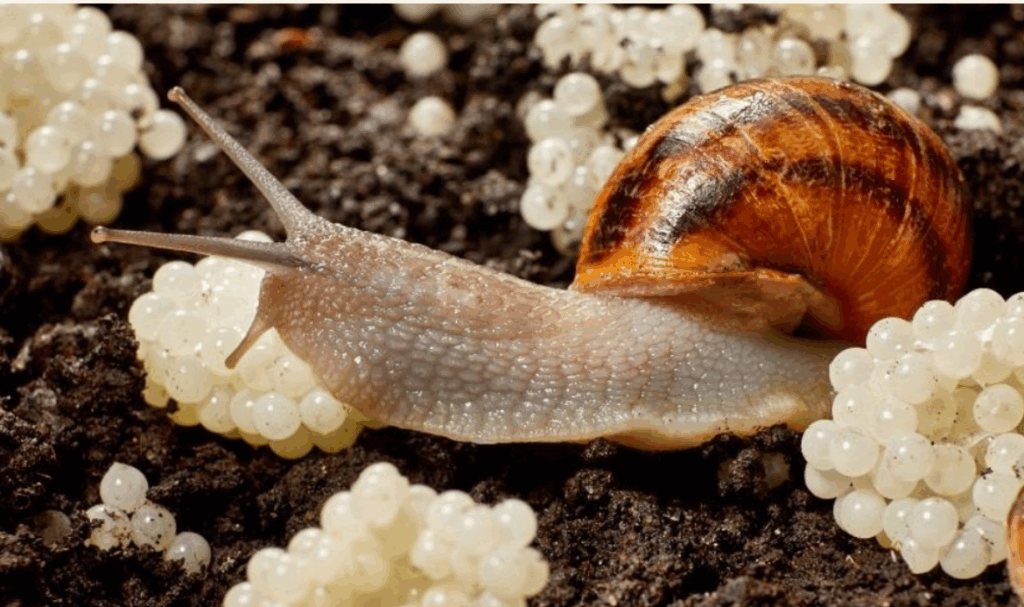
In the light, they seemed almost transparent, and inside each, a tiny dark dot — like a miniature embryo.
I’m someone who usually seeks answers in language, not biology. Yet language had taught me something essential: every phenomenon has its context. So I opened my computer and typed: “white round eggs in soil, garden.”
The internet responded instantly — a flood of pictures, comments, warnings. The answer was both simple and unsettling: snail eggs.Snail roe. “The pearls of the garden,” as entomologists and ecologists poetically call them.
A chill ran through me again. Snails — seemingly peaceful creatures — can become a real plague. Their offspring can destroy a flowerbed in days. Leaves, stems, roots — all food for them.
And behind the calm exterior of certain species lurks danger: tropical snails carry parasites harmful to humans.
My garden is my little world. Each flowerbed is a handwritten page I continue year after year. The thought that beneath these pages lies an army of living beings, ready to rewrite it, didn’t frighten me — it humbled me.
Nature reminded me it is not only beautiful — it is ruthlessly alive.
I collected the white spheres in a small container and poured boiling water over them. Harsh, but necessary. If I hadn’t stopped them now, in a month my garden would have become a sea of whispering snails. Then I sifted the soil, checked every bed, every corner.
No more eggs. Only damp earth, from which a thin wisp of steam rose — like a breath of purification.
I sat for a long time on the steps, hands on my knees. Everything alive around me suddenly acquired new meaning. Humans often think we control the space we inhabit. We plant, water, arrange, create order and harmony from the soil.
But a glance at a few white specks in the dirt reminds us: we are merely guests. Nature is the true host.I remembered a linguistics professor saying:“Words, like seeds, can sprout anywhere — you just have to give them soil.”
And perhaps life is the same. It doesn’t ask permission to grow. It simply appears — in a crack in the pavement, in a raindrop, in a quiet garden beneath an apple tree. Even in the form of tiny white spheres that inspire a faint, almost imperceptible fear.
Now, walking through the garden, I watch the ground more carefully. Not out of fear, but because I feel — beneath the soil exists another life, as real as my own. Silent, ancient, infinitely patient.
It asks no permission to exist — it simply does. And perhaps that is the greatest lesson those strange little white spheres taught me: respect for the invisible world that breathes beneath our feet, even when we believe everything is under our control.